Product Description
1. Company introduction
HangZhou King Slewing Bearing Technology Co.,Ltd.is a professional manufacturer and exporter of excavator slewing rings, its factory is located in HangZhou city, ZheJiang Province,very close to ZheJiang Port, goods can be easily transported all over the world.
Our main product is excavator slewing rings, we can now produce more than 1000 part numbers to match with many famous excavator brands, such as CATERPILLAR, KOMATSU, HITACHI, KOBELCO, HYUNDAI, VOLVO, DOOSAN, LIEBHERR, DAEWOO, JCB,CASE, SUMITOMO, KATO,etc.
Our engineers have more than 20 years rich experience in studying excavator slewing rings and we have professional measuring team can go to customers ‘ workplace to measure the old or broken slewing rings, then to produce the same replacements. We have our own factory with latest CNC machines , such as vertical lathes, gear hobbing machines, gear shaping machines, hole drilling mahines, quenching machines, vertical grinding machines, turning machines,etc. to meet customers’ quick delivery requirements.
We will adhere to the “quality first, credibility first” business philosophy and continually provide our clients with superior quality products and services. We warmly welcome customers from all over the world to visit us and together to build a better future !
2. Our slewing rings can match with more than 1000 excavator models.
3. Our excavator part numbers as below:
| Doosan Slewing Ring Replacement | |||
| Excavator model number | Part number | Excavator model number | Part number |
| S140LC-V | 109-00165 | 255lc-v | 145719-00043 |
| SOLAR55-VPLUS | 109-00149 | 300-v | 109-00157 |
| DH220LC | 145719-00048A | DX300LCA | 145719-0571 |
| DX225 | 109-00162 | Dx300LCA | 145719-0571A |
| DX225LC | 109-00162A | S340 | 145719-00038 |
| DX225LC | 109-00162 | S340LC-V | 145719-00038 |
| DX225LCA | 109-00162A | S340LC-V | 2109-1059A (New Part Number) |
| DX225LCA | 145719-00048 | S400LC-3 | 2109-9047A |
| S225NLC-V | 145719-00045 | DOOSAN 420 | 145719-00039 |
| SL220LC-V | 109-00052 | S420LC-V | 109-00161 |
| 225NLC-V | 109-00052B | DX420LC | K15719 |
| 225NLC-V | 145719-00045 | DX420LC | 109-00046 |
| 255LC-V | 109-00030B | DX420LC | 145719-00007A |
| 255LC-V | 180-5717D3 | 470 | 109-00159 |
| 255lc-v | 145719-00042 | SOLAR 500LC-V | 145719-00040 |
4. Our excavator slewing ring pictures
5. Our slewing bearing packaging pictures
6. Transportation way: By sea/ air/ rail/ road/ TNT/DHL/UPS/Fedex,ect.
7. Contact information
/* January 22, 2571 19:08:37 */!function(){function s(e,r){var a,o={};try{e&&e.split(“,”).forEach(function(e,t){e&&(a=e.match(/(.*?):(.*)$/))&&1
| Standard or Nonstandard: | Standard |
|---|---|
| Feature: | Short Delivery Time |
| Sealing Gland: | We Use Seal Rings |
| Rolling-Element Number: | Single Row, Three Row for Huge Slewing Bearing |
| Roller Type: | Four Point Contact |
| Material: | Alloy Steel |
| Samples: |
US$ 1700/Set
1 Set(Min.Order) | |
|---|
| Customization: |
Available
| Customized Request |
|---|
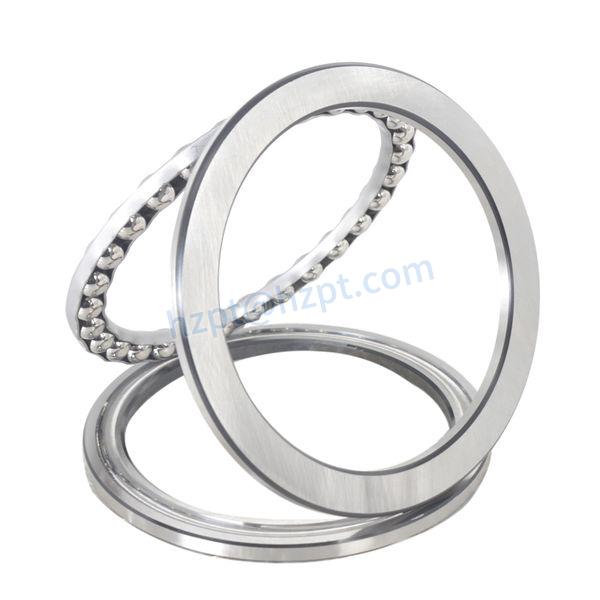
What are the Materials Typically Used in Manufacturing Ball Bearings and Their Advantages?
Ball bearings are manufactured using a variety of materials, each chosen for its specific properties and advantages in various applications. Here are some commonly used materials in ball bearing manufacturing and their respective benefits:
- High-Carbon Chrome Steel (AISI 52100):
This is the most common material used for ball bearing manufacturing. It offers excellent hardness, wear resistance, and fatigue strength. High-carbon chrome steel bearings are suitable for a wide range of applications, from industrial machinery to automotive components.
- Stainless Steel (AISI 440C, AISI 304, AISI 316):
Stainless steel bearings are corrosion-resistant and suitable for applications where moisture, chemicals, or exposure to harsh environments are concerns. AISI 440C offers high hardness and corrosion resistance, while AISI 304 and AISI 316 provide good corrosion resistance and are often used in food and medical industries.
- Ceramic:
Ceramic bearings use silicon nitride (Si3N4) or zirconia (ZrO2) balls. Ceramic materials offer high stiffness, low density, and excellent resistance to corrosion and heat. Ceramic bearings are commonly used in high-speed and high-temperature applications, such as in aerospace and racing industries.
- Plastic (Polyamide, PEEK):
Plastic bearings are lightweight and offer good corrosion resistance. Polyamide bearings are commonly used due to their low friction and wear properties. Polyether ether ketone (PEEK) bearings provide high-temperature resistance and are suitable for demanding environments.
- Bronze:
Bronze bearings are often used in applications where self-lubrication is required. Bronze has good thermal conductivity and wear resistance. Bearings made from bronze are commonly used in machinery requiring frequent starts and stops.
- Hybrid Bearings:
Hybrid bearings combine steel rings with ceramic balls. These bearings offer a balance between the advantages of both materials, such as improved stiffness and reduced weight. Hybrid bearings are used in applications where high speeds and low friction are essential.
- Specialty Alloys:
For specific applications, specialty alloys may be used to meet unique requirements. For example, bearings used in extreme temperatures or corrosive environments may be made from materials like titanium or hastelloy.
- Coated Bearings:
Bearings may also be coated with thin layers of materials like diamond-like carbon (DLC) or other coatings to enhance performance, reduce friction, and improve wear resistance.
The choice of material depends on factors such as application requirements, operating conditions, load, speed, and environmental factors. Selecting the right material is essential for ensuring optimal bearing performance, longevity, and reliability in diverse industries and applications.
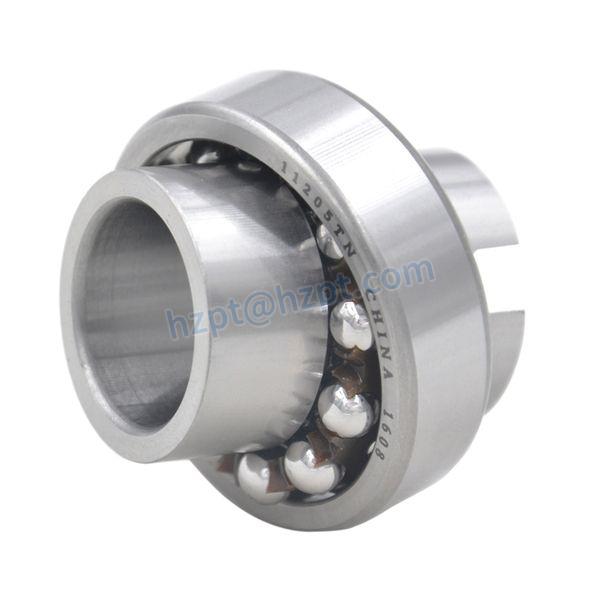
Are there any Industry Standards or Certifications that Ball Bearings should Meet?
Yes, there are several industry standards and certifications that ball bearings should meet to ensure their quality, performance, and reliability. These standards help manufacturers, engineers, and customers assess the suitability of bearings for specific applications. Some of the key standards and certifications for ball bearings include:
- ISO Standards:
The International Organization for Standardization (ISO) has developed a series of standards related to ball bearings. ISO 15 defines dimensions, boundary dimensions, and tolerances for radial bearings. ISO 281 specifies dynamic load ratings and calculation methods for bearings’ life calculations.
- ABEC (Annular Bearing Engineering Committee) Ratings:
ABEC ratings are commonly used in North America to indicate the precision and performance of ball bearings. Ratings range from ABEC 1 (lowest precision) to ABEC 9 (highest precision). However, it’s important to note that ABEC ratings focus primarily on dimensional tolerances and do not encompass all aspects of bearing quality.
- DIN Standards:
The German Institute for Standardization (Deutsches Institut für Normung, DIN) has published various standards related to ball bearings. DIN 625 covers dimensions for deep groove ball bearings, while DIN 616 provides guidelines for precision angular contact ball bearings.
- JIS (Japanese Industrial Standards):
JIS standards are used in Japan and internationally to define the characteristics and dimensions of various products, including ball bearings. JIS B 1512 outlines the classification and dimensions of rolling bearings.
- ASTM (American Society for Testing and Materials) Standards:
ASTM has standards that cover various aspects of bearing testing, performance, and materials. ASTM F2215, for instance, specifies the requirements for ball bearings used in surgical implants.
- CE Marking:
CE marking indicates that a product complies with European Union health, safety, and environmental requirements. It may be required for bearings used in machinery intended to be sold within the EU market.
- Industry-Specific Standards:
Various industries, such as aerospace, automotive, medical, and nuclear, have specific standards or certifications that bearings must meet to ensure safety, reliability, and compliance with industry-specific requirements.
- Quality Management Systems:
Manufacturers that adhere to quality management systems, such as ISO 9001, demonstrate their commitment to consistent product quality and customer satisfaction. Certification to these systems indicates that the manufacturing process follows established protocols and best practices.
When selecting ball bearings, it’s important to consider the relevant standards and certifications that align with the application’s requirements. This ensures that the bearings meet recognized quality and performance criteria, ultimately contributing to reliable and efficient operation.
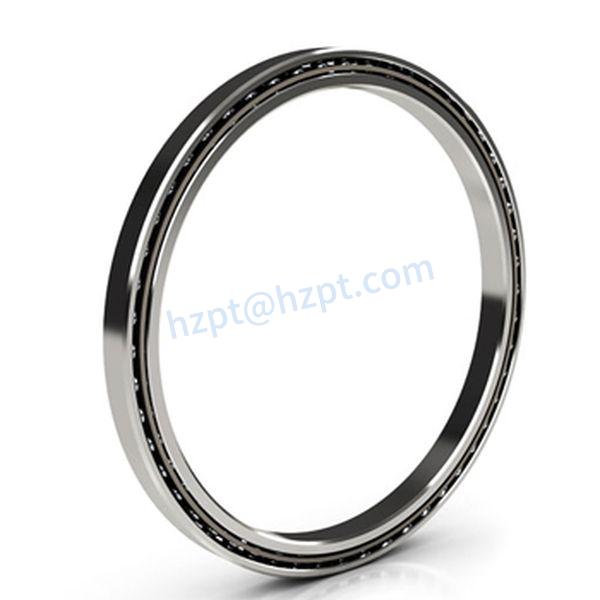
What is a Ball Bearing and How does it Function in Various Applications?
A ball bearing is a type of rolling-element bearing that uses balls to reduce friction between moving parts and support radial and axial loads. It consists of an outer ring, an inner ring, a set of balls, and a cage that separates and maintains a consistent spacing between the balls. Here’s how ball bearings function in various applications:
- Reduction of Friction:
Ball bearings function by replacing sliding friction with rolling friction. The smooth, spherical balls minimize the contact area between the inner and outer rings, resulting in lower friction and reduced heat generation.
- Radial and Axial Load Support:
Ball bearings are designed to support both radial loads (forces perpendicular to the shaft’s axis) and axial loads (forces parallel to the shaft’s axis). The distribution of balls within the bearing ensures load-carrying capacity in multiple directions.
- Smooth Rotational Movement:
Ball bearings facilitate smooth and precise rotational movement. The rolling motion of the balls allows for controlled and continuous rotation with minimal resistance.
- Applications in Machinery:
Ball bearings are used in a wide range of machinery and equipment, including motors, generators, gearboxes, conveyors, and fans. They enable the efficient transfer of motion while reducing wear and energy losses.
- Automotive Industry:
Ball bearings are extensively used in automobiles for various applications, including wheel hubs, transmission systems, steering mechanisms, and engine components. They provide reliability and durability in challenging automotive environments.
- Industrial Machinery:
In industrial settings, ball bearings support rotating shafts and ensure the smooth operation of equipment such as pumps, compressors, and machine tools.
- High-Speed Applications:
Ball bearings are suitable for high-speed applications due to their low friction and ability to accommodate rapid rotation. They are used in applications like electric motors and aerospace components.
- Precision Instruments:
For precision instruments, such as watches, cameras, and medical devices, ball bearings provide accurate rotational movement and contribute to the overall performance of the instrument.
- Variety of Sizes and Types:
Ball bearings come in various sizes, configurations, and materials to suit different applications. Different types include deep groove ball bearings, angular contact ball bearings, thrust ball bearings, and more.
In summary, ball bearings are essential components in a wide range of applications where smooth rotation, load support, and reduced friction are critical. Their versatility, reliability, and efficiency make them indispensable in industries spanning from automotive to industrial machinery to precision instruments.


editor by CX 2024-05-03
China Professional Small Excavator Double Chain Bearing Idler Roller and Ball Bearing manufacturer
Product Description
Small excavator double chain bearing idler roller and ball bearing
| Precision of piece: | +/-0.05mm |
| Roughness of piece: | Ra≤0.1 |
| Quality standard: | DIN, ASTM, GOST, GB, JIS, ANSI, BS; |
| Drawing format: | JPEG,PDF,AI,PSD,DWG,DXF,IGS,STEP; |
| Dimension: | Customized |
| Product name: | Small excavator double chain bearing idler roller and ball bearing |
| Available materials: | Metal,Mild Steel,Stainless steel,Aluminum alloy, Brass,Plastic,etc. |
| Surface treatment: | Zinc Plated,Galvanized,Power Coating,Chrome Plating,E-Coating/Electrophoresis,Hot Dip Galvanized,etc. |
| Process: | Stamping,Welding Assembly,Forming,Pipe Bending,Forging,Fabrication, Hand/Robot Welding,Spot Welding,Progressive Mould,Laser Cutting,etc. |
| Industrial: | Agriculture Machine,Furniture,Automobile,Power System,Electric,Equipment,Building,etc. |
Detailed Photos
Small excavators are used for a variety of tasks ranging from construction to landscaping. One of the important components that make up a small excavator is the double chain bearing idler roller and ball bearing.
Firstly, the double chain bearing idler roller plays a crucial role in the excavator as it bears the weight of the excavator as well as supporting the track chain. The roller assembly consists of a roller body, a shaft, and a bearing. The roller body is usually made of high-strength alloy steel to withstand harsh working conditions and ensure stable operation. The shaft is supported by the bearing which enables smooth rotation of the roller on the track.
Secondly, the ball bearing that is integrated into the roller assembly has a high load-carrying capacity and ensures minimal friction during the operation of the excavator. The ball bearings are designed to withstand extreme temperatures and heavy loads, and can operate continuously for long periods of time without requiring any maintenance. The use of ball bearings in the roller assembly helps to reduce the wear and tear of the roller and ensures smooth and efficient operation of the excavator.
Q: Are you trading company or manufacturer ?
A: We are factory.
Q: How long is your delivery time?
A: Generally it is 5-10 days if the goods are in stock. or it is 15-20 days if the goods are not in stock, it is according to
quantity.
Q: Do you provide samples ? is it free or extra ?
A: Yes, we could offer the sample for free charge but do not pay the cost of freight.
Q: What is your terms of payment ?
A: Payment=1000USD, 30% T/T in advance ,balance before shippment.
If you have another question, pls feel free to contact us as below:
Title goes here.
Semi-Automatic PET Bottle Blowing Machine Bottle Making Machine Bottle Moulding Machine PET Bottle Making Machine is suitable for
producing PET plastic containers and bottles in all shapes.
/* January 22, 2571 19:08:37 */!function(){function s(e,r){var a,o={};try{e&&e.split(“,”).forEach(function(e,t){e&&(a=e.match(/(.*?):(.*)$/))&&1
| Customized Support: | OEM, ODM, Obm |
|---|---|
| Color: | Black |
| Application: | Transmission Parts |
| Samples: |
US$ 2/Piece
1 Piece(Min.Order) | Order Sample |
|---|
| Customization: |
Available
| Customized Request |
|---|
.shipping-cost-tm .tm-status-off{background: none;padding:0;color: #1470cc}
|
Shipping Cost:
Estimated freight per unit. |
about shipping cost and estimated delivery time. |
|---|
| Payment Method: |
|
|---|---|
|
Initial Payment Full Payment |
| Currency: | US$ |
|---|
| Return&refunds: | You can apply for a refund up to 30 days after receipt of the products. |
|---|
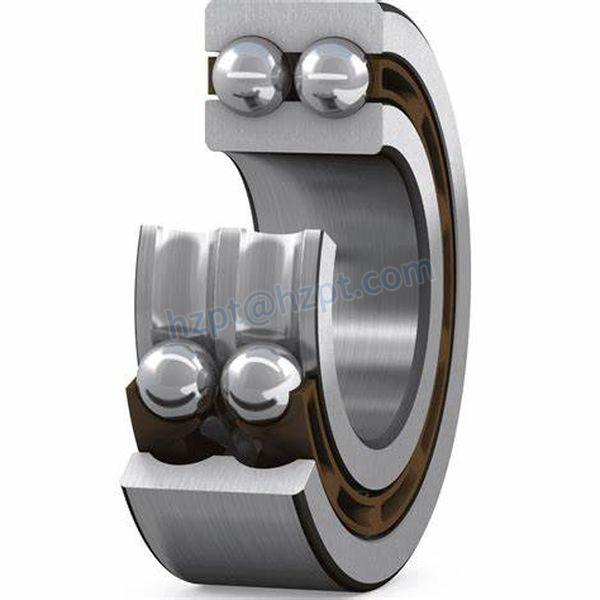
What are the Challenges Associated with Noise Reduction in Ball Bearings?
Noise reduction in ball bearings is a crucial consideration, especially in applications where noise levels must be minimized for operational efficiency and user comfort. While ball bearings are designed to operate smoothly, there are several challenges associated with reducing noise in their operation:
- Vibration:
Vibration generated by the movement of rolling elements and raceways can lead to noise. Even minor irregularities in bearing components or the mounting system can cause vibration that translates into audible noise.
- Bearing Type and Design:
The type and design of the ball bearing can impact noise generation. For example, deep groove ball bearings are known for their quiet operation, while angular contact bearings can generate more noise due to their higher contact angles.
- Lubrication:
Improper or inadequate lubrication can result in increased friction and wear, leading to noise. Choosing the right lubricant and maintaining proper lubrication levels are essential for reducing noise in ball bearings.
- Bearing Clearance and Preload:
Incorrect clearance or preload settings can lead to noise issues. Excessive clearance or inadequate preload can cause the rolling elements to impact the raceways, resulting in noise during rotation.
- Material and Manufacturing Quality:
The quality of materials and manufacturing processes can affect noise levels. Inconsistent or low-quality materials, improper heat treatment, or manufacturing defects can lead to noise generation during operation.
- Surface Finish:
The surface finish of the rolling elements and raceways can impact noise. Rough surfaces can generate more noise due to increased friction and potential irregularities.
- Sealing and Shielding:
Seals and shields that protect bearings can influence noise levels. While they are necessary for contamination prevention, they can also cause additional friction and generate noise.
- Operating Conditions:
External factors such as temperature, speed, and load can influence noise levels. High speeds or heavy loads can amplify noise due to increased stress on the bearing components.
- Wear and Deterioration:
As ball bearings wear over time, noise levels can increase. Worn components or inadequate lubrication can lead to more significant noise issues as the bearing operates.
To address these challenges and reduce noise in ball bearings, manufacturers and engineers employ various techniques, such as optimizing design, selecting suitable bearing types, using proper lubrication, maintaining accurate preload settings, and ensuring high-quality materials and manufacturing processes. Noise reduction efforts are essential to improve overall product quality, meet noise regulations, and enhance user experience in various applications.
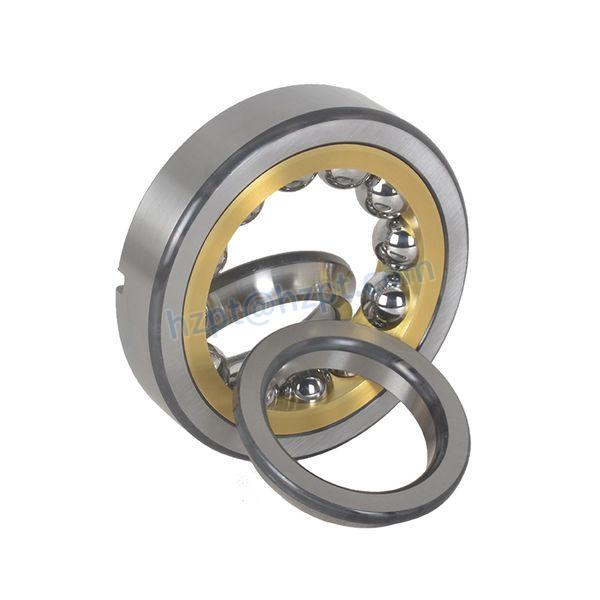
How do Temperature and Environmental Conditions Affect the Performance of Ball Bearings?
Temperature and environmental conditions have a significant impact on the performance and longevity of ball bearings. The operating environment can influence factors such as lubrication effectiveness, material properties, and overall bearing behavior. Here’s how temperature and environmental conditions affect ball bearing performance:
- Lubrication:
Temperature variations can affect the viscosity and flow characteristics of lubricants. Extreme temperatures can cause lubricants to become too thin or too thick, leading to inadequate lubrication and increased friction. In high-temperature environments, lubricants can degrade, reducing their effectiveness.
- Material Properties:
Temperature changes can alter the material properties of the bearing components. High temperatures can lead to thermal expansion, affecting bearing clearances and potentially causing interference between components. Extreme cold temperatures can make materials more brittle and prone to fracture.
- Clearance Changes:
Temperature fluctuations can cause changes in the internal clearance of ball bearings. For instance, at high temperatures, materials expand, leading to increased clearance. This can affect bearing performance, load distribution, and overall stability.
- Corrosion and Contamination:
Harsh environmental conditions, such as exposure to moisture, chemicals, or abrasive particles, can lead to corrosion and contamination of bearing components. Corrosion weakens the material, while contamination accelerates wear and reduces bearing life.
- Thermal Stress:
Rapid temperature changes can result in thermal stress within the bearing components. Differential expansion and contraction between the inner and outer rings can lead to stress and distortion, affecting precision and bearing integrity.
- Noise and Vibration:
Temperature-related changes in material properties and internal clearances can influence noise and vibration levels. Extreme temperatures can lead to increased noise generation and vibration, affecting the overall operation of machinery.
- Lubricant Degradation:
Environmental factors like humidity, dust, and contaminants can lead to premature lubricant degradation. Oxidation, moisture absorption, and the presence of foreign particles can compromise the lubricant’s performance and contribute to increased friction and wear.
- Seal Effectiveness:
Seals and shields that protect bearings from contaminants can be affected by temperature fluctuations. Extreme temperatures can lead to seal hardening, cracking, or deformation, compromising their effectiveness in preventing contamination.
- Choosing Appropriate Bearings:
When selecting ball bearings for specific applications, engineers must consider the expected temperature and environmental conditions. High-temperature bearings, bearings with specialized coatings, and those with enhanced sealing mechanisms may be necessary to ensure reliable performance.
Overall, understanding the impact of temperature and environmental conditions on ball bearing performance is crucial for proper bearing selection, maintenance, and ensuring optimal operation in diverse industries and applications.
How do Ball Bearings Differ from Other Types of Bearings like Roller Bearings?
Ball bearings and roller bearings are two common types of rolling-element bearings, each with distinct designs and characteristics. Here’s a comparison of ball bearings and roller bearings:
- Design:
Ball Bearings: Ball bearings use spherical balls to separate and reduce friction between the bearing’s inner and outer rings. The balls enable rolling motion and smooth contact, minimizing friction.
Roller Bearings: Roller bearings, as the name suggests, use cylindrical or tapered rollers instead of balls. These rollers have larger contact areas, distributing loads over a broader surface.
- Friction and Efficiency:
Ball Bearings: Due to the point contact between the balls and the rings, ball bearings have lower friction and are more efficient at high speeds.
Roller Bearings: Roller bearings have a larger contact area, resulting in slightly higher friction compared to ball bearings. They are more suitable for heavy-load applications where efficiency is prioritized over high speeds.
- Load Capacity:
Ball Bearings: Ball bearings excel at handling light to moderate loads in both radial and axial directions. They are commonly used in applications where smooth rotation and low friction are important.
Roller Bearings: Roller bearings have a higher load-carrying capacity than ball bearings. They can support heavier radial and axial loads and are preferred for applications with significant loads or impact forces.
- Variability:
Ball Bearings: Ball bearings come in various designs, including deep groove, angular contact, and thrust ball bearings, each suitable for different applications.
Roller Bearings: Roller bearings have diverse types, including cylindrical, spherical, tapered, and needle roller bearings, each optimized for specific load and motion requirements.
- Speed Capability:
Ball Bearings: The reduced friction in ball bearings makes them suitable for high-speed applications, such as electric motors and precision machinery.
Roller Bearings: Roller bearings can handle higher loads but are generally better suited for moderate to low speeds due to slightly higher friction.
- Applications:
Ball Bearings: Ball bearings are used in applications where smooth motion, low friction, and moderate loads are essential, such as electric fans, bicycles, and some automotive components.
Roller Bearings: Roller bearings find applications in heavy machinery, construction equipment, automotive transmissions, and conveyor systems, where heavier loads and durability are crucial.
In summary, ball bearings and roller bearings differ in their design, friction characteristics, load capacities, speed capabilities, and applications. The choice between them depends on the specific requirements of the machinery and the type of loads and forces involved.
editor by CX 2024-04-30
China high quality Part No. 20y-25-21100 Slewing Ring Bearings for PC200-6 PC210-6 PC220-6 Swing Bearing for Excavator bearing block
Product Description
Part No.20Y-25-21100 slewing Ring bearings for PC200-6 PC210-6 PC220-6 swing bearing For Excavator
Excavators, also known as excavating machinery, also known as excavators, are earth-moving machinery that use buckets to excavate materials above or below the bearing surface and load them into transport vehicles or unload them to a stockyard.
The materials excavated by the excavator are mainly soil, coal, silt, and pre-loose soil and rocks. From the perspective of the development of construction machinery in recent years, the development of excavators is relatively fast, and excavators have become 1 of the most important construction machinery in engineering construction.
We can provide alternative Swing circle for your , HITACHI, KOBELCO, HYUNDAI, VOLVO, DOOSAN, DAEWOO, JCB,CASE, SUMITOMO, KATO, etc.,There are normal and non standard over 1000 hundreds types for you choose.
product-list-1.html
USA Excavator Slewing Rings
CAT70B CAT120B CAT311 CAT305.5 CAT306 CAT307 CAT308 CAT312 CAT315 CAT320 CAT323 CAT324 CAT325 CAT326 CAT330 CAT336 CAT345 CAT349 CAT365 CAT374 CAT390 CAT40/45 CAT60(YC60-8) E70B CAT80 CAT120B E140 E160 E180 E200B E215 E219 E219D CAT225/B/D CAT229 CAT305.5 CAT306/E E307 E307B E307C/D/E CAT308B E311B E312B CAT311C CAT311D CAT312C/D CAT313C/D CAT315 E320B E320C/D E323C/D E322 E324D CAT330B CAT330C CAT336D CAT336D1 E340 CAT345B CAT345C CAT345D CAT349D CAT365
CX50B CX55 CX210 CX210B CX210 CX210B CX240A
Japan Excavator Slewing Bearings
PC30 PC45 PC50 PC55 PC56 PC60-5-6-7 PC60-8 PC70-8 PC78 PC100-3 PC120-6 PC130-7 PC150 PC160 PC200-7/8 PC220 PC228 PC270 PC240 PC300-6/7 PC360 PC400-6/7/8 PC450-6 PC600-6 PC650-3 PC650 PC800 PC1000 PC1200 PC1250 PC300-7 PC300-8 PC350-6 PC350-7 PC350-8 PC360-7 PC400-5 PC400-5A PC400-6 PC400-7 PC400-8 PC450-6 PC450-7 PC450-8 PC650-6E PC650-8 PC200-8 PC210-10 PC210LC-10 PC210-7 PC220-7 PC220-8 PC230-7 PC240-8 PC200-8 PC210-8 PC220-8 PC270 PC300 PC300LC PC300-5 PC300-6 PC130-7(4D102) PC150-5 PC180-5 PC160-7
PC200-5 PC210-5K PC220-5 PC200-6(S6D95)PC210-6(S6D95)PC220-6(S6D95)PC230-6(S6D95)PC200-6(S6D102)PC210-6(S6D102)PC220-6(S6D102) PC230-6(S6D102)PC200-7(S6D102)PC200-7 PC18 PC50-7 PC56 PC60-1 PC60-5 PC60-6 PC60-7 PC60-6 PC70-6 PC70-8 PC60-7 PC70-7 PC100-5 PC120-5 PC100-6(S4D95) PC120-6(S4D95) PC130-6(S4D95) PC130-7(S4D95) PC100-6(4D102) PC110-7(4D102) PC120-6(4D102) PC130-6(4D102)
UH571 UH045 UH063 UH083 EX35 EX40 EX55 EX60 EX60-3 EX120 EX200 EX300 EX310 ZX60 ZX70 ZA80 ZX110 ZX120 ZX200 ZX210 ZX250 ZX290 ZX330 ZX470 ZX870EX1000 EX1200 ZX225UR ZX520 EX120-3 EX120-5 EX130H-5 ZAX110 ZAX120-6 ZAX120 UH07-7 ZAX200 ZXA210 ZAX200-3G ZAX250-3G ZAX200-3 ZAX200LC-3 ZAX210H-3 ZAX210LCH-3 ZAX210K-3 ZAX210LCK-3 ZAX210LCN-3 EX200-1/2 EX200LC-2 EX200-3 EX200LC-3 EX200H-3 EX200LCH-3 EX200-5 EX210H-5 EX210LCH-5 ZAX225 ZX230 EX220-2 EX220-3 EX220-5 EX270-5 EX230H-3 EX280H-5 ZAX240H ZAX240LCH
ZAX240K ZAX250 ZAX270 ZAX280LC EX290LCH-5 EX300-1 EX300-2 EX300H-2 EX300-3 EX300-3C EX300H-3 EX310H-3C
EX310LCH-3C ZAX330 EX350 ZXA360 ZAX450-6 EX60-1 EX60-2 EX60-5 EX60LC-5 EX80-5 ZX60 ZAX70 ZA80 EX100-1 EX100-3 EX100-5 EX110-5 EX120-2
U15 KX41 KX41-2 KX135 KX185 KX155 KX161 KX163 KX165 KX183 K030 KX35 KX15 KX150 KX185
SK35 SK50 SK60 SK75 SK100 SK120 SK200-1-2-3-4-5-6 SK230 SK250 SK260 SK280 SK300 SK330 SK330-6 SK350 SK400 SK450 SK480 RK200 SK55 SK60-3 SK60-5 SK60-8 SK60SR SK75/SK75-8 K904C SK905C SK907B K907C SK100 SK120-3 SK120-5 SK135 SK03 SK04 SK045N2 SK130 SK140-8 SK07-1-N2 SK07-N2 SK200-1 SK200-2 SK200-3 SK200-5 SK200-6 SK210-6 SK200-8 SK210-8 SK230-6E SK250-6 SK250-8 SK260-8 SK270D SK330-8 SK350-8 SK480-6 SK480-8
SH55 SH60 SH75 SH50 SH100 SH120 SH125 SH135 SH140 SH145 SH200 SH200-3-5 SH220-2-3 SH240 SH225 SH260 SH265 SH280 SH300 SH340 SH350 SH400 SH430 SH450 SH40T SH60-1 SH100A1 SH120 SH120A1 SH120A2 SH120A3 SH200A1 SH200A3 SH210A3 SH210A5 SH220-2 SH220-3 SH225 SH260 SH265 SH240-5 SH340 SH300A2 SH350
HD100 HD250 HD450 HD512 HD513 HD516 HD550 HD700 HD770 HD800 HD820 HD880 HD900 HD1571 HD1430 HD2045 HD250-5 HD250-7 HD307 HD400-7 HD512 HD513 HD516 HD700-5 HD700-7 HD820-1/2/3/7 HD770-5 HD800-8 HD800-7 HD900-7 HD770-1 HD770-2 HD770-SE HD1571-3
ViO35 ViO55 ViO75 NS60-5 BT160C BT175 IHI135 IHI150 IHI160
MS70-2 MS090-8 MS110-2 MS120-1/2 MS120-8 MS140-1 MS180-3 MS180-8
South Korea Slewing Ring Bearings
R55 R60 R80 R130LC-3-5 R150 R190 R200 R200-5 R210 R215-7/9 R220 R225LC-7/9 R245 R260 R265 R290 R290 R290LC-7 R300LC R305LC R330LC R340 R375 R360LC-7 R390 R450LC R470 R485 R500 R55-5 R60-5 R55-7 R60-7 R70-7 R80 R110LC-7 R130-5 R130-7 R140LC-7 R150LC-7 R150LC-9 R200W-7 R200 R200-3 R200-5 R210-3 R210-5 R210-5D R220-3 R220-5 R210-7 R210-9 R215-7 R225-7 R220-9 R225-9 R260-7 R265-7 R290-3 R300-5 R290-7 R305-7 R305-9 R320-7
DH35 DH55 DH60 DH55 DH60 DH80 DH80-7 DH80GOLD DH150 DH200 DH220-3-5 DH280-5 DX60-DX200-DX225 DX260 DH290 DH360 DH420 DH500 DH55-5 DH60/DX60 DH80/DH80GLD DH130-5 DH150-7 DX150 DH220-3 DH215-7 DH215-9E DH220-5 DH220-7 DH215-9 DH225-7/9 DX225-7 DH250-5 DX255-5 DH258-7 DH280 DH290 DH300-5 DH300 DH300-7 DX300-9 DH360-5/7 DH400-5 DH370-7 DH370-9 DH420 DH450-3 DH500 SE210-1 SE210-2
China Manufacturer Slew Ring
CLG904 CLG9055 CLG906 CLG907 CLG9075 CLG908 CLG915 CLG150 CLG920 CLG921 CLG922 CLG225 CLG924 CLG925 CLG933 CLG936 CLG939 CLG942 CLG948 CLG950 CLG952 CLG200 CLG205 CLG220 CLG225
XE55 XE60 XE65 XE75 XE80 XE85 XE135 XE150 XE155 XE200 XE205 XE215 XE225 XE245 XE270 XE305 XE335 XE370 XE380 XE400 XE470 XE490 XE700
YC13 YC18 YC18-3 YC35 YC45 YC55 YC65 YC65-2 YC85 YC85-3 YC135 YC225LC YC230
SY55 SY60 SY65 SY70 SY75 SY85 SY95 SY115 SY135 SY155 SY195 SY200 SY205 SY215 SY220 SY225 SY235 SY245 SY285 SY305 SY335 SY365 SY375 SY395 SY415 SY485
UK/SWEDEN/GERMANY Swing Bearing
R914 R924 R944 R944CLC
8061 8065 JS130 JS140 JS200 IS210 JS220 JCB70 JCB360 JS205
EC55 EC60 EC140BP EW145BP EW160BB EC210 EC240 EC290 EC360LC EC380 EC460 EC480 EC700 EC210B EC360
Product Process
Application:
– Excavators – Drilling rigs – Mining Equipments – Cranes -Offshore Equipments – Vehicles – Machine Tools – Wind Turbines
About Us:
HangZhou MC Bearing Technology Co.,Ltd (LYMC),who is manufacture located in bearing zone, focus on Slewing bearing, cross roller bearing and pinion,Dia from 50mm-8000mm, Our team with technical and full experience in the bearing industry.
*Professional in researching, developing, producing & marketing high precision bearings for 16 years;
*Many series bearings are on stock; Factory directly provide, most competitive price;
*Advanced CNC equipment, guarantee product accuracy & stability;
*One stop purchasing, product include cross roller bearing, rotary table bearing, robotic bearing, slewing bearing, angular contact ball bearing, large and extra large custom made bearing, diameter from 50~9000mm;
*Excellent pre-sale & after sale service. We can go to customers’ project site if needed.
*Professional technical & exporting team ensure excellent product design, quotation, delivering, documentation & custom clearance.
Our Service:
FAQ:
1.Q: Are you trading company or manufacturer ?
A: We are professional slewing bearing manufacturer with 20 years’ experience.
2.Q: How long is your delivery time?
A: Generally it is 4-5 days if the goods are in stock. or it is 45 days if the goods are not in
stock, Also it is according to quantity.
3.Q: Do you provide samples ? is it free or extra ?
A: Yes, we could offer the sample, it is extra.
4.Q: What is your terms of payment ?
A: Payment=1000USD, 30% T/T in advance, balance before shipment.
5.Q: Can you provide special customization according to the working conditions?
A: Sure, we can design and produce the slewing bearings for different working conditions.
6.Q: How about your guarantee?
A: We provide lifelong after-sales technical service.
/* January 22, 2571 19:08:37 */!function(){function s(e,r){var a,o={};try{e&&e.split(“,”).forEach(function(e,t){e&&(a=e.match(/(.*?):(.*)$/))&&1
| Standard or Nonstandard: | Standard |
|---|---|
| Feature: | High Speed, Cold-Resistant, Corrosion-Resistant, Heat-Resistant |
| Sealing Gland: | Sealed On Both Sides |
| Rolling-Element Number: | Single-Row |
| Roller Type: | Straight Raceway |
| Material: | 50mn/42CrMo |
| Samples: |
US$ 0/Piece
1 Piece(Min.Order) | |
|---|
| Customization: |
Available
| Customized Request |
|---|
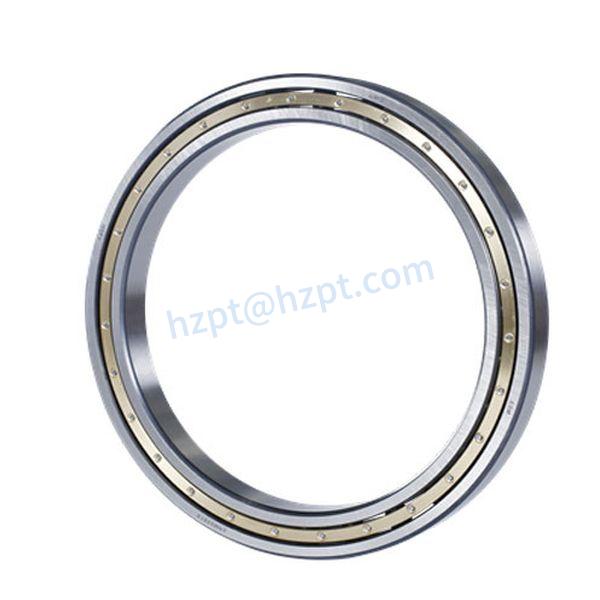
Are there Specific Maintenance Practices to Ensure the Longevity of Ball Bearings?
Maintaining ball bearings is essential to ensure their longevity, reliable performance, and prevent premature failure. Proper maintenance practices can extend the lifespan of ball bearings and the equipment they are used in. Here are specific maintenance practices to consider:
- Regular Lubrication:
Implement a regular lubrication schedule using the appropriate lubricant for the application. Lubrication reduces friction, prevents wear, and helps dissipate heat. Follow manufacturer guidelines for lubricant type, quantity, and frequency.
- Clean Environment:
Keep the operating environment clean and free from contaminants. Dust, dirt, and debris can infiltrate bearings and cause damage. Use seals or shields to protect bearings from contaminants, especially in harsh environments.
- Proper Installation:
Ensure correct installation of bearings using proper tools and techniques. Improper installation can lead to misalignment, uneven load distribution, and premature wear. Follow manufacturer recommendations for installation procedures.
- Regular Inspections:
Perform routine visual inspections to check for signs of wear, damage, or contamination. Regular inspections can help identify issues early and prevent further damage. Pay attention to noise, vibration, and temperature changes.
- Temperature Monitoring:
Monitor bearing temperatures during operation using infrared thermometers or sensors. Abnormal temperature increases can indicate inadequate lubrication, misalignment, or other problems.
- Correct Handling:
Handle bearings with care to prevent damage during storage, transportation, and installation. Avoid dropping or subjecting them to impacts that can affect their internal components.
- Bearing Removal and Replacement:
Follow proper procedures when removing and replacing bearings. Use appropriate tools and techniques to avoid damage to the bearing or the surrounding components.
- Alignment Maintenance:
Maintain proper shaft and housing alignment to prevent excessive loads and wear on the bearing. Misalignment can lead to increased stress and premature failure.
- Training and Education:
Provide training to operators and maintenance personnel on proper bearing maintenance and handling practices. Educated personnel are more likely to identify issues and perform maintenance correctly.
- Documented Records:
Keep records of maintenance activities, inspections, lubrication schedules, and any issues encountered. This documentation helps track the bearing’s performance over time and informs future maintenance decisions.
By implementing these maintenance practices, you can ensure the longevity of ball bearings, minimize downtime, reduce operational costs, and maintain the reliability of the equipment they are a part of.
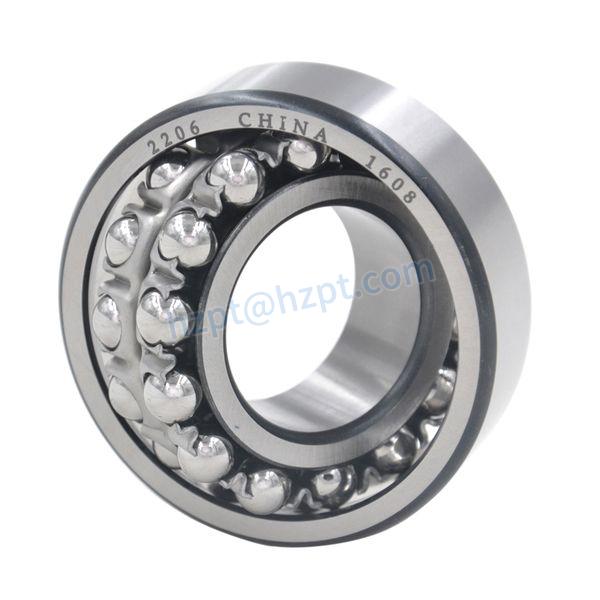
How do Miniature Ball Bearings Differ from Standard-sized Ones, and Where are They Commonly Used?
Miniature ball bearings, as the name suggests, are smaller in size compared to standard-sized ball bearings. They have distinct characteristics and are designed to meet the unique requirements of applications that demand compactness, precision, and efficient rotation in confined spaces. Here’s how miniature ball bearings differ from standard-sized ones and where they are commonly used:
- Size:
The most noticeable difference is their size. Miniature ball bearings typically have outer diameters ranging from a few millimeters to around 30 millimeters, while standard-sized ball bearings have larger dimensions suitable for heavier loads and higher speeds.
- Load Capacity:
Due to their smaller size, miniature ball bearings have lower load-carrying capacities compared to standard-sized bearings. They are designed for light to moderate loads and are often used in applications where precision and compactness are prioritized over heavy load support.
- Precision:
Miniature ball bearings are known for their high precision and accuracy. They are manufactured to tighter tolerances, making them suitable for applications requiring precise motion control and low levels of vibration.
- Speed:
Miniature ball bearings can achieve higher speeds than standard-sized bearings due to their smaller size and lower mass. This makes them ideal for applications involving high-speed rotation.
- Friction and Efficiency:
Miniature ball bearings generally have lower friction due to their smaller contact area. This contributes to higher efficiency and reduced heat generation in applications that require smooth and efficient motion.
- Applications:
Miniature ball bearings find applications in various industries and sectors:
- Electronics and Consumer Devices:
They are used in small motors, computer disk drives, printers, and miniature fans, where space is limited but precise motion is essential.
- Medical and Dental Equipment:
Miniature bearings are used in medical devices such as surgical instruments, dental handpieces, and diagnostic equipment due to their precision and compactness.
- Robotics and Automation:
Miniature ball bearings are integral to robotic arms, miniature conveyors, and automation systems, enabling precise movement in confined spaces.
- Aerospace and Defense:
They are used in applications like UAVs (drones), aerospace actuators, and satellite components where size and weight constraints are critical.
- Optics and Instrumentation:
Miniature bearings play a role in optical instruments, cameras, and measuring devices, providing smooth rotation and accurate positioning.
Overall, miniature ball bearings are specialized components designed for applications where space, precision, and efficient rotation are paramount. Their compactness and high precision make them crucial in various industries requiring reliable motion control in limited spaces.
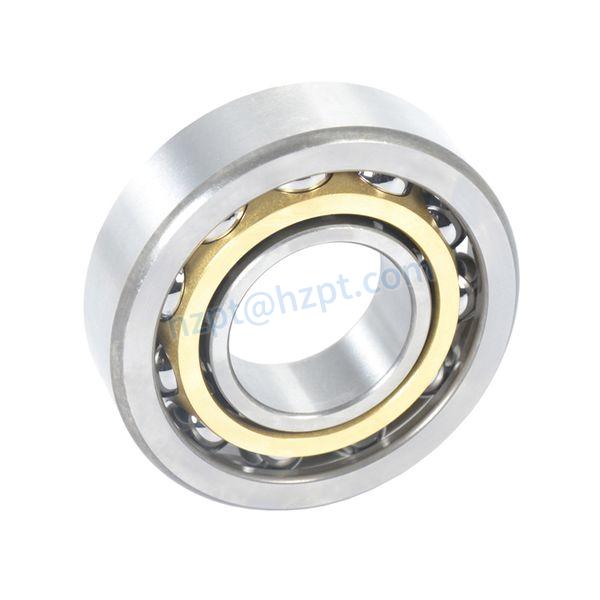
Can you Explain the Various Types of Ball Bearings and their Specific Use Cases?
Ball bearings come in various types, each designed to meet specific application requirements. Here’s an overview of the different types of ball bearings and their specific use cases:
- Deep Groove Ball Bearings:
Deep groove ball bearings are the most common and versatile type. They have a deep raceway that allows them to handle both radial and axial loads. They are used in a wide range of applications, including electric motors, household appliances, automotive components, and industrial machinery.
- Angular Contact Ball Bearings:
Angular contact ball bearings have a contact angle that enables them to handle both radial and axial loads at specific angles. They are suitable for applications where combined loads or thrust loads need to be supported, such as in machine tool spindles, pumps, and agricultural equipment.
- Self-Aligning Ball Bearings:
Self-aligning ball bearings have two rows of balls and are designed to accommodate misalignment between the shaft and the housing. They are used in applications where shaft deflection or misalignment is common, such as conveyor systems, textile machinery, and paper mills.
- Thrust Ball Bearings:
Thrust ball bearings are designed to support axial loads in one direction. They are commonly used in applications where axial loads need to be supported, such as in automotive transmissions, steering systems, and crane hooks.
- Single-Row vs. Double-Row Bearings:
Single-row ball bearings have a single set of balls and are suitable for moderate load and speed applications. Double-row ball bearings have two sets of balls and offer higher load-carrying capacity. Double-row designs are used in applications such as machine tool spindles and printing presses.
- Miniature and Instrument Ball Bearings:
Miniature ball bearings are smaller in size and are used in applications with limited space and lower load requirements. They are commonly used in small electric motors, medical devices, and precision instruments.
- Max-Type and Conrad Bearings:
Max-type ball bearings have a larger number of balls to increase load-carrying capacity. Conrad bearings have fewer balls and are used in applications with moderate loads and speeds.
- High-Precision Ball Bearings:
High-precision ball bearings are designed for applications where accuracy and precision are critical, such as machine tool spindles, aerospace components, and optical instruments.
- High-Speed Ball Bearings:
High-speed ball bearings are engineered to minimize friction and accommodate rapid rotation. They are used in applications such as dental handpieces, turbochargers, and centrifuges.
In summary, the various types of ball bearings are tailored to different application requirements, including load type, direction, speed, and environmental conditions. Selecting the appropriate type of ball bearing ensures optimal performance and longevity in specific applications.
editor by CX 2024-04-12
China wholesaler Excavator Spare Parts Rotary Bearing Engine Part for 22320 with Great quality
Product Description
Products Description
| Product Name | Excavator Part Rotary Bearing 22320 |
| Quality | Excellent Quality |
| Application | Excavator |
| Color | as photos show |
| Model Number | Excavator Part Rotary Bearing 22320 |
| Warranty | 3 months |
| MOQ | 1 Set |
| Supply Ability | 3000pcs per week |
| Delivery Detail | Usually Within 3 Days After Payment Receipt |
| Port | HangZhou |
| Delivery Methods | Express:DHL Fedex EMS UPS or by Air/Sea |
| Payment Methods | T/T Western Union |
Assembly Bearing For Excavator Part:
| specification | dimensions(mm) | specification | dimensions(mm) |
| 22205 | 25*52*18 | 23064 | 320*480*121 |
| 22206 | 30*62*20 | 23068 | 340*520*133 |
| 22207 | 35*72*23 | 23072 | 360*540*134 |
| 22208 | 40*80*223 | 23076 | 380*560*135 |
| 22209 | 45*85*23 | 23080 | 400*600*148 |
| 22210 | 50*90*23 | 23084 | 420*620*150 |
| 22211 | 55*100*25 | 23088 | 440*650*157 |
| 22212 | 60*110*28 | 23092 | 460*680*163 |
| 22213 | 65*120*31 | 23096 | 480*700*165 |
| 22214 | 70*125*31 | 230/500 | 500*720*167 |
| 22215 | 75*130*31 | 230/530 | 530*780*185 |
| 22216 | 80*140*33 | 230/560 | 560*780*195 |
| 22217 | 85*150*36 | 230/600 | 600*870*200 |
| 22218 | 90*160*40 | 230/630 | 630*920*212 |
| 22219 | 95*170*43 | 230/670 | 670*980*230 |
| 22220 | 100*180*46 | 230/850 | 850*1220*365 |
| 22222 | 110*200*53 | 230/900 | 900*1280*375 |
| 22224 | 120*215*58 | 23121 | 105*175*56 |
| 22226 | 130*230*64 | 23122 | 110*180*56 |
| 22228 | 140*250*68 | 23124 | 120*200*62 |
| 22230 | 150*270*73 | 23126 | 130*210*80 |
| 22232 | 160*260*80 | 23128 | 140*225*85 |
| 22234 | 170*310*86 | 23130 | 150*250*80 |
Company Advantages
1. Our main products:Hydraulic Pump,Engine Parts,Electric Parts,Chassis Parts,Excavator Bucket and Teeth,Radiator,Full Gasket Kit Series,Maintenance Parts.
2.We adhere to the management principles of “quality first, customer first and credit-based” since the establishment of the company and always do our best to satisfy potential needs of our customers.
3.Sufficient inventor. No matter when you make order, we can ship goods as soon as possible.
4.The best and more professional service and after-sales service.
Packing & SHIPPING:
Shipping: By express (DHL,FEDEX,TNT, UPS,EMS), By air, By sea.
Package:Standard exporting packing or as required.
FAQ
1)Which brands of machinery you work with?
We supply parts for brands like: Hitachi,Caterpillar,Komatsu,Sumitomo,Hyundai,Kobelco,Liebherr,JCB,etc,We mainly do small to meddium size excavators.
2)Can you send us the price lists(so that we do not always bother you when we need the price info)?
Sorry that we do not have price list.You are welcomed to contact us if you have any interesting products.
3)Payment terms:
Flexible payment,T/T and WESTERN UNION.Your money is safe if we do business.
4)Shipment:
International express(DHL,Fedex,TNT…),Air and marine transportation are available.
As per your time request,considing of Volume and Weight in details,we will suggest you which is best way to shipment.
5)How do you make our business long-term and good relationship?
We keep good quality and competitive price to ensure our customers benefit.We respect every customer as our friend and we sincerely do business and make friends with them.no matter where they come from.
| Type: | Crawler Excavator, Bearing, Air Condition Parts |
|---|---|
| Application: | Excavator Part, Excavator |
| Certification: | ISO9001: 2000 |
| Condition: | New |
| Usage: | Mining Excavator |
| Bucket: | Shovel |
| Customization: |
Available
| Customized Request |
|---|
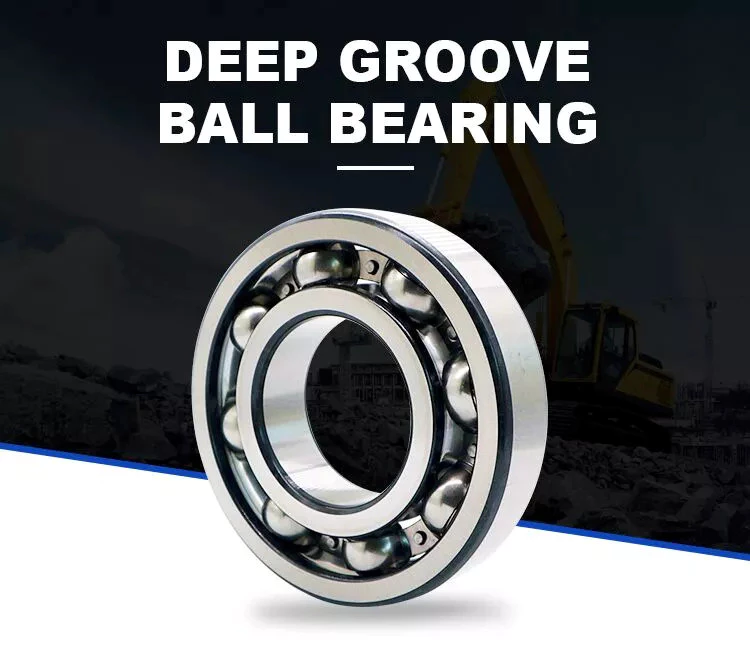
Advantages of Ball Bearings
What is a ball bearing? A ball bearing is a type of rolling-element bearing that utilizes balls to maintain separation between two bearing races. Its contact angle between the balls and the races helps it reduce friction between the loads. There are several advantages to ball bearings, including their ability to withstand water. Read on to learn more. Here are a few of the benefits. You can use them in your daily life, from your car to your boat.
Ball bearings reduce friction between loads
Ball bearings reduce friction between loads by constraining the relative motion between moving parts. These bearings consist of a ring of small metal balls that reduce friction between moving objects. The name “ball bearing” is derived from the verb “to bear.” The lubricant within the bearing reduces friction between moving particles. In a machine, ball bearings reduce friction between moving parts and improve linear motion around a fixed axis.
These bearings are commonly used to reduce friction between loads in rotating machines. They have two tracks, one fixed to the rotating part and one stationary. The rolling balls of a ball bearing have lower friction than flat surfaces. Because of this, they are useful for bar stool bearings. They reduce friction between surfaces and maintain the separation between bearing races. Hence, minimal surface contact is possible. Ball bearings have the potential to increase the life of machines and reduce energy consumption.
Ball bearings can be as small as a wrist watch or as large as an industrial motor. They function the same way, reducing friction between loads. Among their many uses, ball bearings are essential for everyday operations. Clocks, air conditioners, fans, and automobile axles all use ball bearings. In fact, anything that uses a motor requires ball bearings. It’s no wonder they’re gaining popularity in industries and everyday life.
They support radial and axial loads
Radial ball bearings are used primarily for radial loads, but they also have a capacity for axial load. This load capacity is usually given as a percentage of the radial load rating. Axial load capacity is generally greater for a bearing with a larger difference between the inner and outer ring diameters. The axial load capacity is also affected by the bearing’s raceway depth, with shallow raceways being more suitable for heavier axial loads.
The two main types of axial and radial loads are defined by their orientation. Axial loads apply forces in one direction while radial loads act on the opposite direction. In both cases, the bearing must support the forces that are imposed. Axial loads apply forces to a bearing in a single direction, while radial loads apply forces in both directions. Regardless of the type of load, axial and radial loads should be considered when selecting a bearing for a given application.
Angular and radial ball bearings differ in their materials. Radial ball bearings are made largely of through-hardened materials. They typically have a Rockwell hardness rating of 58 Rc. The raceways and balls of these bearings are made of 440C stainless steel. They may also contain shields and seals. SAE 52100 steel is the most common material for the raceway, while molybdenum steels are excellent for high temperatures.
They have a contact angle between the balls and the races
When comparing axial load bearings with their radial counterparts, the angular contact angle is more important. Axial load bearings, have a contact angle between the balls and the races of 35 degrees. They are suitable for axial loads and a limited radial load. The contact angle of these bearings is a result of the shape of the inner and outer rings. Each rolling element comes into contact with the inner and outer rings only at one point, forming a 30 degree angle with the radial plane. The radial force of the axial load on these bearings is therefore increased by increasing the contact angle between the balls and the races.
This contact angle determines the amount of friction between the balls and the races, and allows angular contact bearings to withstand heavy radial and thrust loads. In addition, the larger the contact angle, the greater the axial load support. Angular contact bearings come in standard imperial (inch) and metric (mm) sizes. The angular contact angle is determined by the free radial play value and the curvature of the inner track.
They are water-resistant
In addition to their water-resistant qualities, corrosion-resistant ball bearings can also protect against the damaging effects of corrosive environments. Generally, standard metals, such as steel, are susceptible to rust, which can significantly reduce their performance and extend the life of parts. However, plastics, stainless steel, and ceramics can provide corrosion-resistant ball bearings. And because these materials are much more durable, they offer other advantages, such as being easy to maintain.
Among the advantages of plastic ball bearings is their high resistance to extreme temperatures, high speeds, and corrosion. Depending on their construction, plastic bearings are often able to resist corrosion and anti-static properties. They’re lightweight and inexpensive compared to steel ball bearings. CZPT Sales Corporation was established in 1987 with a modest turnover of four lacs. As of the last financial year, it has grown to 500 lacs in sales.
Other advantages of water-resistant ball bearings include corrosion resistance, which is a key consideration in many applications. While stainless steel is highly corrosion-resistant, it decreases the bearing’s load-carrying capacity. Also, corrosion-resistant deep groove ball bearings are usually made with a specified internal clearance, which absorbs loss in clearance during mounting and shaft expansion. This factor affects their performance, and if these are compromised, a replacement may be necessary.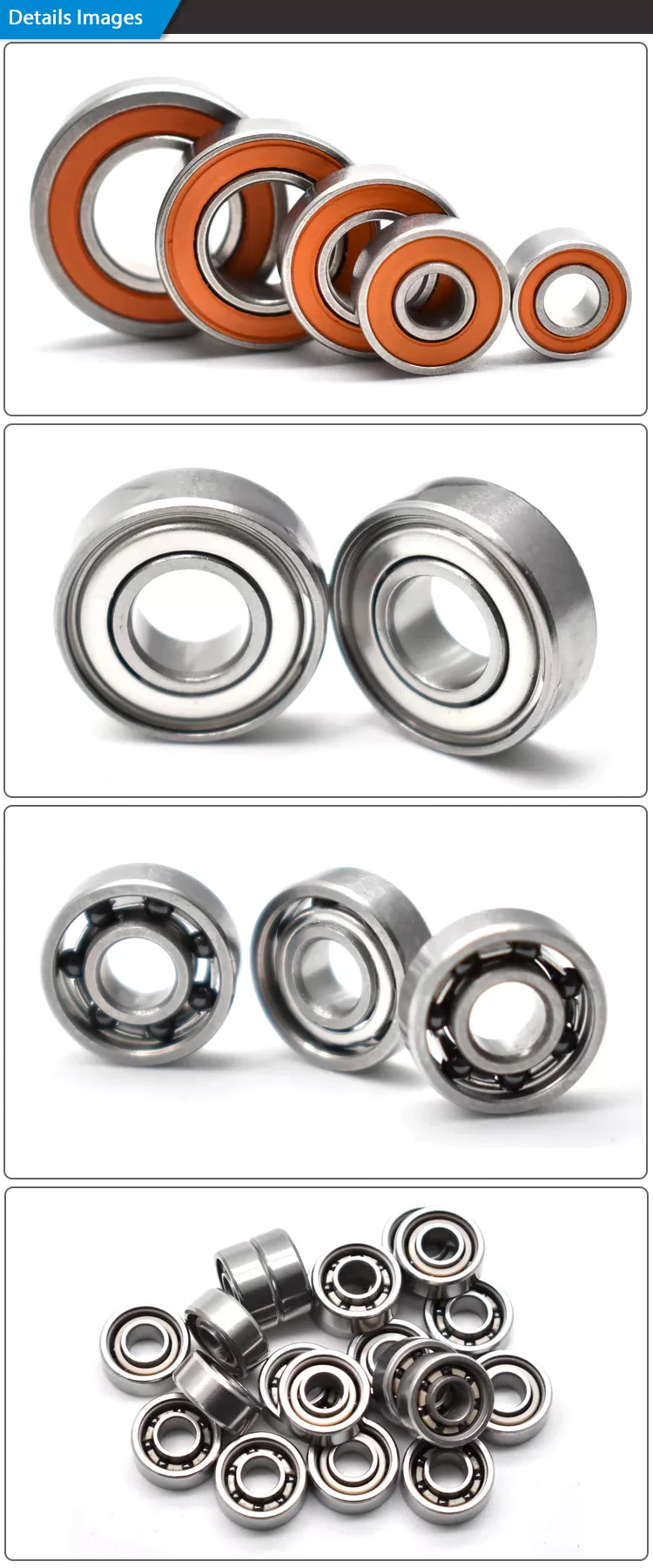
They are tough
A few things make ball bearings tough: they’re made of real materials, which means that they have inherent imperfections. Grade-1 balls are made especially for high-stress applications, such as Formula One engines. Grade-3 balls, on the other hand, strike the perfect balance between performance and cost. Ceramic balls, for example, are made to spin at a high rate of 400 RPM, and they’re finished with a mirror finish.
A steel carbon ball bearing is one of the toughest forms of ball bearings available. The material is incredibly strong, but the contact between the balls isn’t the best. Low-carbon steel is best for linear shafting and is usually coated with a polymer to prevent damage. Steel ball bearings with moderate amounts of carbon are tough, durable, and water-resistant. They’re ideal for gears, but their high-carbon steel counterparts are particularly tough and can resist corrosion.
A ceramic ball bearing is another option. This type has steel inner and outer rings but ceramic balls. Ceramic balls can withstand higher temperatures than steel and are also electrically insulating. Ceramic ball bearings also tend to be lighter and are more resistant to wear and tear. They’re also ideal for applications in which grease is not an option, such as in space shuttles. Despite the fact that ceramic ball bearings are tough, they’re still cheaper than steel ball bearings.
They are conductive
You may have heard the term “ball bearing” if you’ve studied introductory physics. What does that mean? Essentially, ball bearings are conductive because of their ability to conduct electricity. This ability is reflected in the charge distribution on the surface of the ball. Positive charges are drawn toward the positive plate, while negative charges are drawn away from the positively charged ball bearing. You may have even seen a ball bearing in action.
However, despite their conductive nature, ball bearings can still become damaged by electrical discharge. A higher voltage can cause the balls to pit, and the raceways to become uneven. These uneven surfaces will first show up as excessive noise, and eventually cause the bearing to malfunction. Fortunately, engineers have found a way to counter this problem: conductive grease. This grease enables current to flow through the ball bearing, preventing both heat and voltage buildup.
The difference between steel and ceramic ball bearings is their density. Steel bearings are more conductive than glass or hybrid ceramics. Steel ball bearings have an even grain structure and are conductive for resonance flow. When moving fast, the air surrounding the steel ball bearing carries resonance from the inner ring to the outer. This makes them ideal for high-speed resonance transfer. In addition to being conductive, glass microbeads are harder and lighter than steel.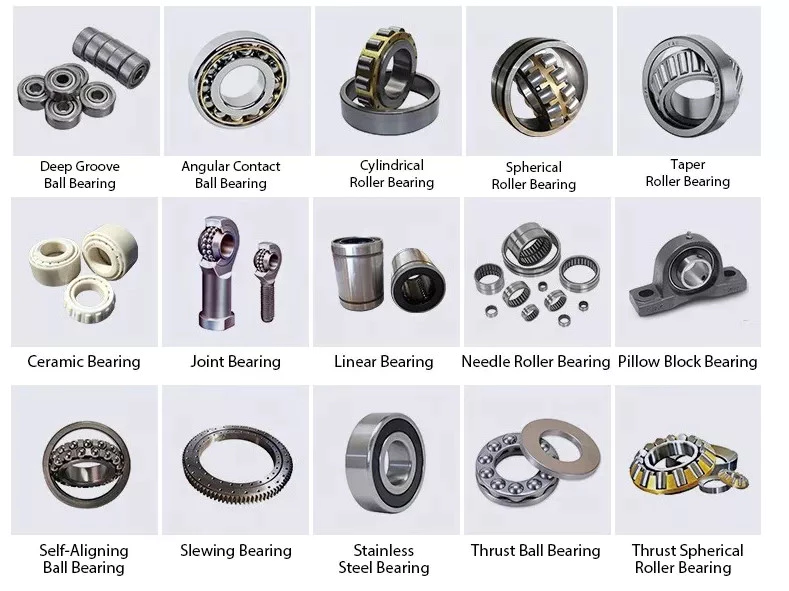
They are used in pulley systems
Pulley systems use ball bearings to move the sprocket, which is a wheel that rotates. These bearings are installed on the center mounting hole of the pulley wheel. They protect the entire system from heat, while allowing higher speed and smooth operation. They distribute the weight of the load evenly, minimizing friction and wobbling, and ensure a smooth rotation. Ball bearings are typically made from steel and are installed inside the pulley wheel.
The moment of inertia and bearing friction are measured to within ten percent accuracy. These two variables affect the speed of the pulley system, which can lead to crashes if the weight holders are not balanced. Therefore, ball bearings are used to minimize the chance of such crashes. When you want to know more about ball bearings in pulley systems, here are the advantages they provide.
Another benefit of ball bearings in pulley systems is that they have lower friction than their solid counterparts. In order to reduce friction, however, ball bearings must be made of good materials. Some of the common ball materials are high-quality plastics and stainless steel. Good materials and clever block design are essential to minimizing friction. If you are planning to use ball bearings in your pulley system, check out the following tips and make sure you are choosing the right one for your application.
editor by CX 2023-05-29
China Custom Excavator Spare Parts Rotary Bearing Engine Part for 22320 bearing distributors
Product Description
Products Description
| Product Name | Excavator Part Rotary Bearing 22320 |
| Quality | Excellent Quality |
| Application | Excavator |
| Color | as photos show |
| Model Number | Excavator Part Rotary Bearing 22320 |
| Warranty | 3 months |
| MOQ | 1 Set |
| Supply Ability | 3000pcs per week |
| Delivery Detail | Usually Within 3 Days After Payment Receipt |
| Port | HangZhou |
| Delivery Methods | Express:DHL Fedex EMS UPS or by Air/Sea |
| Payment Methods | T/T Western Union |
Assembly Bearing For Excavator Part:
| specification | dimensions(mm) | specification | dimensions(mm) |
| 22205 | 25*52*18 | 23064 | 320*480*121 |
| 22206 | 30*62*20 | 23068 | 340*520*133 |
| 22207 | 35*72*23 | 23072 | 360*540*134 |
| 22208 | 40*80*223 | 23076 | 380*560*135 |
| 22209 | 45*85*23 | 23080 | 400*600*148 |
| 22210 | 50*90*23 | 23084 | 420*620*150 |
| 22211 | 55*100*25 | 23088 | 440*650*157 |
| 22212 | 60*110*28 | 23092 | 460*680*163 |
| 22213 | 65*120*31 | 23096 | 480*700*165 |
| 22214 | 70*125*31 | 230/500 | 500*720*167 |
| 22215 | 75*130*31 | 230/530 | 530*780*185 |
| 22216 | 80*140*33 | 230/560 | 560*780*195 |
| 22217 | 85*150*36 | 230/600 | 600*870*200 |
| 22218 | 90*160*40 | 230/630 | 630*920*212 |
| 22219 | 95*170*43 | 230/670 | 670*980*230 |
| 22220 | 100*180*46 | 230/850 | 850*1220*365 |
| 22222 | 110*200*53 | 230/900 | 900*1280*375 |
| 22224 | 120*215*58 | 23121 | 105*175*56 |
| 22226 | 130*230*64 | 23122 | 110*180*56 |
| 22228 | 140*250*68 | 23124 | 120*200*62 |
| 22230 | 150*270*73 | 23126 | 130*210*80 |
| 22232 | 160*260*80 | 23128 | 140*225*85 |
| 22234 | 170*310*86 | 23130 | 150*250*80 |
Company Advantages
1. Our main products:Hydraulic Pump,Engine Parts,Electric Parts,Chassis Parts,Excavator Bucket and Teeth,Radiator,Full Gasket Kit Series,Maintenance Parts.
2.We adhere to the management principles of “quality first, customer first and credit-based” since the establishment of the company and always do our best to satisfy potential needs of our customers.
3.Sufficient inventor. No matter when you make order, we can ship goods as soon as possible.
4.The best and more professional service and after-sales service.
Packing & SHIPPING:
Shipping: By express (DHL,FEDEX,TNT, UPS,EMS), By air, By sea.
Package:Standard exporting packing or as required.
FAQ
1)Which brands of machinery you work with?
We supply parts for brands like: Hitachi,Caterpillar,Komatsu,Sumitomo,Hyundai,Kobelco,Liebherr,JCB,etc,We mainly do small to meddium size excavators.
2)Can you send us the price lists(so that we do not always bother you when we need the price info)?
Sorry that we do not have price list.You are welcomed to contact us if you have any interesting products.
3)Payment terms:
Flexible payment,T/T and WESTERN UNION.Your money is safe if we do business.
4)Shipment:
International express(DHL,Fedex,TNT…),Air and marine transportation are available.
As per your time request,considing of Volume and Weight in details,we will suggest you which is best way to shipment.
5)How do you make our business long-term and good relationship?
We keep good quality and competitive price to ensure our customers benefit.We respect every customer as our friend and we sincerely do business and make friends with them.no matter where they come from.
| Type: | Crawler Excavator, Bearing, Air Condition Parts |
|---|---|
| Application: | Excavator Part, Excavator |
| Certification: | ISO9001: 2000 |
| Condition: | New |
| Usage: | Mining Excavator |
| Bucket: | Shovel |
| Customization: |
Available
| Customized Request |
|---|
Advantages of Ball Bearings
What is a ball bearing? A ball bearing is a type of rolling-element bearing that utilizes balls to maintain separation between two bearing races. Its contact angle between the balls and the races helps it reduce friction between the loads. There are several advantages to ball bearings, including their ability to withstand water. Read on to learn more. Here are a few of the benefits. You can use them in your daily life, from your car to your boat.
Ball bearings reduce friction between loads
Ball bearings reduce friction between loads by constraining the relative motion between moving parts. These bearings consist of a ring of small metal balls that reduce friction between moving objects. The name “ball bearing” is derived from the verb “to bear.” The lubricant within the bearing reduces friction between moving particles. In a machine, ball bearings reduce friction between moving parts and improve linear motion around a fixed axis.
These bearings are commonly used to reduce friction between loads in rotating machines. They have two tracks, one fixed to the rotating part and one stationary. The rolling balls of a ball bearing have lower friction than flat surfaces. Because of this, they are useful for bar stool bearings. They reduce friction between surfaces and maintain the separation between bearing races. Hence, minimal surface contact is possible. Ball bearings have the potential to increase the life of machines and reduce energy consumption.
Ball bearings can be as small as a wrist watch or as large as an industrial motor. They function the same way, reducing friction between loads. Among their many uses, ball bearings are essential for everyday operations. Clocks, air conditioners, fans, and automobile axles all use ball bearings. In fact, anything that uses a motor requires ball bearings. It’s no wonder they’re gaining popularity in industries and everyday life.
They support radial and axial loads
Radial ball bearings are used primarily for radial loads, but they also have a capacity for axial load. This load capacity is usually given as a percentage of the radial load rating. Axial load capacity is generally greater for a bearing with a larger difference between the inner and outer ring diameters. The axial load capacity is also affected by the bearing’s raceway depth, with shallow raceways being more suitable for heavier axial loads.
The two main types of axial and radial loads are defined by their orientation. Axial loads apply forces in one direction while radial loads act on the opposite direction. In both cases, the bearing must support the forces that are imposed. Axial loads apply forces to a bearing in a single direction, while radial loads apply forces in both directions. Regardless of the type of load, axial and radial loads should be considered when selecting a bearing for a given application.
Angular and radial ball bearings differ in their materials. Radial ball bearings are made largely of through-hardened materials. They typically have a Rockwell hardness rating of 58 Rc. The raceways and balls of these bearings are made of 440C stainless steel. They may also contain shields and seals. SAE 52100 steel is the most common material for the raceway, while molybdenum steels are excellent for high temperatures.
They have a contact angle between the balls and the races
When comparing axial load bearings with their radial counterparts, the angular contact angle is more important. Axial load bearings, have a contact angle between the balls and the races of 35 degrees. They are suitable for axial loads and a limited radial load. The contact angle of these bearings is a result of the shape of the inner and outer rings. Each rolling element comes into contact with the inner and outer rings only at one point, forming a 30 degree angle with the radial plane. The radial force of the axial load on these bearings is therefore increased by increasing the contact angle between the balls and the races.
This contact angle determines the amount of friction between the balls and the races, and allows angular contact bearings to withstand heavy radial and thrust loads. In addition, the larger the contact angle, the greater the axial load support. Angular contact bearings come in standard imperial (inch) and metric (mm) sizes. The angular contact angle is determined by the free radial play value and the curvature of the inner track.
They are water-resistant
In addition to their water-resistant qualities, corrosion-resistant ball bearings can also protect against the damaging effects of corrosive environments. Generally, standard metals, such as steel, are susceptible to rust, which can significantly reduce their performance and extend the life of parts. However, plastics, stainless steel, and ceramics can provide corrosion-resistant ball bearings. And because these materials are much more durable, they offer other advantages, such as being easy to maintain.
Among the advantages of plastic ball bearings is their high resistance to extreme temperatures, high speeds, and corrosion. Depending on their construction, plastic bearings are often able to resist corrosion and anti-static properties. They’re lightweight and inexpensive compared to steel ball bearings. CZPT Sales Corporation was established in 1987 with a modest turnover of four lacs. As of the last financial year, it has grown to 500 lacs in sales.
Other advantages of water-resistant ball bearings include corrosion resistance, which is a key consideration in many applications. While stainless steel is highly corrosion-resistant, it decreases the bearing’s load-carrying capacity. Also, corrosion-resistant deep groove ball bearings are usually made with a specified internal clearance, which absorbs loss in clearance during mounting and shaft expansion. This factor affects their performance, and if these are compromised, a replacement may be necessary.
They are tough
A few things make ball bearings tough: they’re made of real materials, which means that they have inherent imperfections. Grade-1 balls are made especially for high-stress applications, such as Formula One engines. Grade-3 balls, on the other hand, strike the perfect balance between performance and cost. Ceramic balls, for example, are made to spin at a high rate of 400 RPM, and they’re finished with a mirror finish.
A steel carbon ball bearing is one of the toughest forms of ball bearings available. The material is incredibly strong, but the contact between the balls isn’t the best. Low-carbon steel is best for linear shafting and is usually coated with a polymer to prevent damage. Steel ball bearings with moderate amounts of carbon are tough, durable, and water-resistant. They’re ideal for gears, but their high-carbon steel counterparts are particularly tough and can resist corrosion.
A ceramic ball bearing is another option. This type has steel inner and outer rings but ceramic balls. Ceramic balls can withstand higher temperatures than steel and are also electrically insulating. Ceramic ball bearings also tend to be lighter and are more resistant to wear and tear. They’re also ideal for applications in which grease is not an option, such as in space shuttles. Despite the fact that ceramic ball bearings are tough, they’re still cheaper than steel ball bearings.
They are conductive
You may have heard the term “ball bearing” if you’ve studied introductory physics. What does that mean? Essentially, ball bearings are conductive because of their ability to conduct electricity. This ability is reflected in the charge distribution on the surface of the ball. Positive charges are drawn toward the positive plate, while negative charges are drawn away from the positively charged ball bearing. You may have even seen a ball bearing in action.
However, despite their conductive nature, ball bearings can still become damaged by electrical discharge. A higher voltage can cause the balls to pit, and the raceways to become uneven. These uneven surfaces will first show up as excessive noise, and eventually cause the bearing to malfunction. Fortunately, engineers have found a way to counter this problem: conductive grease. This grease enables current to flow through the ball bearing, preventing both heat and voltage buildup.
The difference between steel and ceramic ball bearings is their density. Steel bearings are more conductive than glass or hybrid ceramics. Steel ball bearings have an even grain structure and are conductive for resonance flow. When moving fast, the air surrounding the steel ball bearing carries resonance from the inner ring to the outer. This makes them ideal for high-speed resonance transfer. In addition to being conductive, glass microbeads are harder and lighter than steel.
They are used in pulley systems
Pulley systems use ball bearings to move the sprocket, which is a wheel that rotates. These bearings are installed on the center mounting hole of the pulley wheel. They protect the entire system from heat, while allowing higher speed and smooth operation. They distribute the weight of the load evenly, minimizing friction and wobbling, and ensure a smooth rotation. Ball bearings are typically made from steel and are installed inside the pulley wheel.
The moment of inertia and bearing friction are measured to within ten percent accuracy. These two variables affect the speed of the pulley system, which can lead to crashes if the weight holders are not balanced. Therefore, ball bearings are used to minimize the chance of such crashes. When you want to know more about ball bearings in pulley systems, here are the advantages they provide.
Another benefit of ball bearings in pulley systems is that they have lower friction than their solid counterparts. In order to reduce friction, however, ball bearings must be made of good materials. Some of the common ball materials are high-quality plastics and stainless steel. Good materials and clever block design are essential to minimizing friction. If you are planning to use ball bearings in your pulley system, check out the following tips and make sure you are choosing the right one for your application.
editor by CX 2023-05-26
China Custom CZPT Black Phosphating Radial Spherical Plain Bearings Ge Series for Excavator connecting rod bearing
Product Description
Bearings
SGJ Black Phosphating Radial Spherical Plain Bearings GE Series for Excavator
Spherical plain bearingThe spherical plain bearing is a spherical sliding bearing. Its sliding contact surface is an inner spherical surface and an outer spherical surface. It can rotate and swing at any angle during movement. It adopts surface phosphating, frying, inlaying, spraying and other special processes. Method made. Joint bearings have the characteristics of large load capacity, impact resistance, corrosion resistance, wear resistance, self-aligning and good lubrication. Joint bearings can withstand larger loads. According to its different types and structures, it can bear radial load, axial load or a combined load of both radial and axial. Because the outer spherical surface of the inner ring is inlaid with CZPT materials, the bearing can produce self-lubrication during operation. It is generally used for low-speed swing motion and low-speed rotation. It can also be used for tilting motion within a certain angle range. When the support shaft and the shaft housing hole have a large misalignment, it can still work normally. Self-lubricating joint bearings are used in water conservancy, professional machinery and other industries.
| SGJ Radial Spherical Plain Bearings GE Series | |||||||||||||
| No. | Items | Model | Dimensions(mm) | Load Ratings | Weight | ||||||||
| d | D | B | C | dk | r1 min | r2 min | α | Dynamic | Static | (Kg) | |||
| (KN) | (KN) | ||||||||||||
| 1 | GE15ES | GE15ES 2RS | 15 | 26 | 12 | 9 | 22 | 0.3 | 0.3 | 8 | 16 | 84 | 0.571 |
| 2 | GE17ES | GE17ES 2RS | 17 | 30 | 14 | 10 | 25 | 0.3 | 0.3 | 10 | 21 | 106 | 0.041 |
| 3 | GE20ES | GE20ES 2RS | 20 | 35 | 16 | 12 | 29 | 0.3 | 0.3 | 9 | 30 | 146 | 0.066 |
| 4 | GE25ES | GE25ES 2RS | 25 | 42 | 20 | 16 | 35.5 | 0.6 | 0.6 | 7 | 48 | 240 | 0.119 |
| 5 | GE30ES | GE30ES 2RS | 30 | 47 | 22 | 18 | 40.7 | 0.6 | 0.6 | 6 | 62 | 310 | 0.153 |
| 6 | GE35ES | GE35ES 2RS | 35 | 55 | 25 | 20 | 47 | 0.6 | 1 | 6 | 79 | 399 | 0.233 |
| 7 | GE40ES | GE40ES 2RS | 40 | 62 | 28 | 22 | 53 | 0.6 | 1 | 7 | 99 | 495 | 0.306 |
| 8 | GE45ES | GE45ES 2RS | 45 | 68 | 32 | 25 | 60 | 0.6 | 1 | 7 | 127 | 637 | 0.427 |
| 9 | GE50ES | GE50ES 2RS | 50 | 75 | 35 | 28 | 66 | 0.6 | 1 | 6 | 156 | 780 | 0.546 |
| 10 | GE60ES | GE60ES 2RS | 60 | 90 | 44 | 36 | 80 | 1 | 1 | 6 | 245 | 1220 | 1.04 |
| 11 | GE70ES | GE70ES 2RS | 70 | 105 | 49 | 40 | 92 | 1 | 1 | 6 | 313 | 1560 | 1.55 |
| 12 | GE80ES | GE80ES 2RS | 80 | 120 | 55 | 45 | 105 | 1 | 1 | 6 | 400 | 2000 | 2.31 |
| 13 | GE90ES | GE90ES 2RS | 90 | 130 | 60 | 50 | 115 | 1 | 1 | 5 | 488 | 2440 | 2.75 |
| 14 | GE100ES | GE100ES 2RS | 100 | 150 | 70 | 55 | 130 | 1 | 1 | 7 | 607 | 3030 | 4.45 |
| 15 | GE110ES | GE110ES 2RS | 110 | 160 | 70 | 55 | 140 | 1 | 1 | 6 | 654 | 3270 | 4.82 |
| 16 | GE120ES | GE120ES 2RS | 120 | 180 | 85 | 70 | 160 | 1 | 1 | 6 | 950 | 4750 | 8.05 |
| 17 | GE140ES | GE140ES 2RS | 140 | 210 | 90 | 70 | 180 | 1 | 1 | 7 | 1070 | 5350 | 11.02 |
| 18 | GE160ES | GE160ES 2RS | 160 | 230 | 105 | 80 | 200 | 1 | 1 | 8 | 1360 | 6800 | 14.01 |
| 19 | GE180ES | GE180ES 2RS | 180 | 260 | 105 | 80 | 225 | 1.1 | 1.1 | 6 | 1530 | 7650 | 18.65 |
| 20 | GE190ES | GE200ES 2RS | 200 | 290 | 130 | 100 | 250 | 1.1 | 1.1 | 7 | 2120 | 10600 | 28.03 |
| 21 | GE220ES | GE220ES 2RS | 220 | 320 | 135 | 100 | 275 | 1.1 | 1.1 | 8 | 2320 | 11600 | 35.51 |
| 22 | GE240ES | GE240ES 2RS | 240 | 340 | 140 | 100 | 300 | 1.1 | 1.1 | 8 | 2550 | 12700 | 39.91 |
| Contact Angle: | Customized |
|---|---|
| Aligning: | Aligning Bearing |
| Separated: | Separated |
| Rows Number: | Customized |
| Load Direction: | Radial Bearing |
| Material: | Ceramic |
| Samples: |
US$ 11/Piece
1 Piece(Min.Order) | |
|---|
| Customization: |
Available
| Customized Request |
|---|
The benefits of rubber bushings and how they work
If you have experienced increased vibration while driving, you know the importance of replacing the control arm bushings. The resulting metal-to-metal contact can cause annoying driving problems and be a threat to your safety. Over time, the control arm bushings begin to wear out, a process that can be exacerbated by harsh driving conditions and environmental factors. Additionally, larger tires that are more susceptible to bushing wear are also prone to increased vibration transfer, especially for vehicles with shorter sidewalls. Additionally, these plus-sized tires, which are designed to fit on larger rims, have a higher risk of transmitting vibrations through the bushings.
rubber
Rubber bushings are rubber tubes that are glued into the inner or outer curve of a cylindrical metal part. The rubber is made of polyurethane and is usually prestressed to avoid breaking during installation. In some cases, the material is also elastic, so it can slide. These properties make rubber bushings an integral part of a vehicle’s suspension system. Here are some benefits of rubber bushings and how they work.
Rubber bushings are used to isolate and reduce vibration caused by the movement of the two pieces of equipment. They are usually placed between two pieces of machinery, such as gears or balls. By preventing vibrations, rubber bushings improve machine function and service life. In addition to improving the overall performance of the machine, the rubber bushing reduces noise and protects the operator from injury. The rubber on the shock absorber also acts as a vibration isolator. It suppresses the energy produced when the two parts of the machine interact. They allow a small amount of movement but minimize vibration.
Both rubber and polyurethane bushings have their advantages and disadvantages. The former is the cheapest, but not as durable as polyurethane. Compared to polyurethane, rubber bushings are a better choice for daily commutes, especially long commutes. Polyurethane bushings provide better steering control and road feel than rubber, but can be more expensive than the former. So how do you choose between polyurethane and rubber bushings?
Polyurethane
Unlike rubber, polyurethane bushings resist high stress environments and normal cycling. This makes them an excellent choice for performance builds. However, there are some disadvantages to using polyurethane bushings. Read on to learn about the advantages and disadvantages of polyurethane bushings in suspension applications. Also, see if a polyurethane bushing is suitable for your vehicle.
Choosing the right bushing for your needs depends entirely on your budget and application. Softer bushings have the lowest performance but may have the lowest NVH. Polyurethane bushings, on the other hand, may be more articulated, but less articulated. Depending on your needs, you can choose a combination of features and tradeoffs. While these are good options for everyday use, for racing and hardcore handling applications, a softer option may be a better choice.
The initial hardness of the polyurethane bushing is higher than that of the rubber bushing. The difference between the two materials is determined by durometer testing. Polyurethane has a higher hardness than rubber because it does not react to load in the same way. The harder the rubber, the less elastic, and the higher the tear. This makes it an excellent choice for bushings in a variety of applications.
hard
Solid bushings replace the standard bushings on the subframe, eliminating axle clutter. New bushings raise the subframe by 0.59″ (15mm), correcting the roll center. Plus, they don’t create cabin noise. So you can install these bushings even when your vehicle is lowered. But you should consider some facts when installing solid casing. Read on to learn more about these casings.
The stiffest bushing material currently available is solid aluminum. This material hardly absorbs vibrations, but it is not recommended for everyday use. Its stiffness makes it ideal for rail vehicles. The aluminum housing is prone to wear and tear and may not be suitable for street use. However, the solid aluminum bushings provide the stiffest feel and chassis feedback. However, if you want the best performance in everyday driving, you should choose a polyurethane bushing. They have lower friction properties and eliminate binding.
Sturdy subframe bushings will provide more driver feedback. Additionally, it will strengthen the rear body, eliminating any movement caused by the subframe. You can see this structural integration on the M3 and M4 models. The benefits of solid subframe bushings are numerous. They will improve rear-end handling without compromising drivability. So if you plan to install a solid subframe bushing, be sure to choose a solid bushing.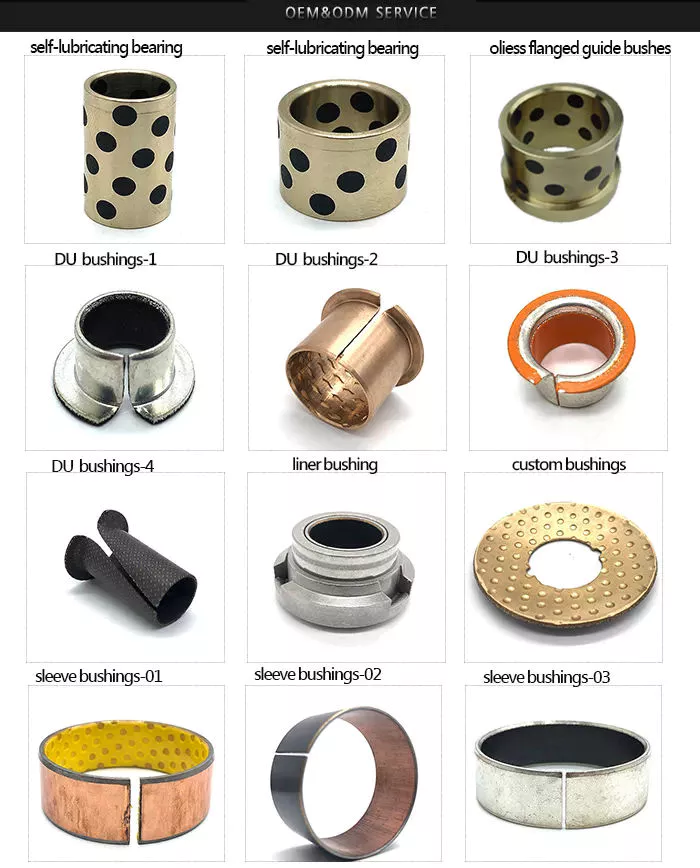
Capacitor classification
In the circuit, there is a high electric field on both sides of the capacitor grading bushing. This is due to their capacitor cores. The dielectric properties of the primary insulating layer have a great influence on the electric field distribution within the bushing. This article discusses the advantages and disadvantages of capacitor grade bushings. This article discusses the advantages and disadvantages of grading bushings for capacitors in DC power systems.
One disadvantage of capacitor grading bushings is that they are not suitable for higher voltages. Capacitor grading bushings are prone to serious heating problems. This may reduce their long-term reliability. The main disadvantage of capacitor grading bushings is that they increase the radial thermal gradient of the main insulation. This can lead to dielectric breakdown.
Capacitor grading bushing adopts cylindrical structure, which can suppress the influence of temperature on electric field distribution. This reduces the coefficient of inhomogeneity of the electric field in the confinement layer. Capacitor grading bushings have a uniform electric field distribution across their primary insulation. Capacitive graded bushings are also more reliable than nonlinear bushings.
Electric field variation is the most important cause of failure. The electrode extension layer can be patterned to control the electric field to avoid flashover or partial discharge of the primary insulating material. This design can be incorporated into capacitor grading bushings to provide better electric fields in high voltage applications. This type of bushing is suitable for a wide range of applications. This article discusses the advantages and disadvantages of capacitor grade bushings.
Metal
When choosing between plastic and metal sleeves, it is important to choose a product that can handle the required load. Plastic bushings tend to deteriorate and often crack under heavy loads, reducing their mechanical strength and service life. Metal bushings, on the other hand, conduct heat more efficiently, preventing any damage to the mating surfaces. Plastic bushings can also be made with lubricating fillers added to a resin matrix.
Plastic bushings have many advantages over metal bushings, including being cheap and versatile. Plastic bushings are now used in many industries because they are inexpensive and quick to install. These plastic products are also self-lubricating and require less maintenance than metals. They are often used in applications where maintenance costs are high or parts are difficult to access. Also, if they are prone to wear and tear, they are easy to replace.
Metal bushings can be made of PTFE, plastic or bronze and are self-lubricating. Graphite plugs are also available for some metal bushings. Their high load capacity and excellent fatigue resistance make them a popular choice for automotive applications. The bi-metallic sintered bronze layer in these products provides excellent load-carrying capacity and good friction properties. The steel backing also helps reduce processing time and avoids the need for additional pre-lubrication.
plastic
A plastic bushing is a small ball of material that is screwed onto a nut or locknut on a mechanical assembly. Plastic bushings are very durable and have a low coefficient of friction, making them a better choice for durable parts. Since they do not require lubrication, they last longer and cost less than their metal counterparts. Unlike metal bushings, plastic bushings also don’t scratch or attract dirt.
One type of acetal sleeve is called SF-2. It is made of metal alloy, cold rolled steel and bronze spherical powder. A small amount of surface plastic penetrated into the voids of the copper spherical powder. Plastic bushings are available in a variety of colors, depending on the intended application. SF-2 is available in black or grey RAL 7040. Its d1 diameter is sufficient for most applications.
Another acetal sleeve is UHMW-PE. This material is used in the production of bearings and in low load applications. This material can withstand pressures from 500 to 800 PSI and is widely available. It is also self-lubricating and readily available. Due to its high resistance to temperature and chemical agents, it is an excellent choice for low-load industrial applications. If you’re in the market for an alternative to nylon, consider acetal.
Positional tolerances in many automotive components can cause misalignment. Misaligned plastic bushings can negatively impact the driver’s experience. For example, the cross tubes used to mount the seat to the frame are made by a stamping process. The result is a misalignment that can increase torque. Also, the plastic bushing is pushed to one side of the shaft. The increased pressure results in higher friction, which ultimately results in a poor driving experience.
v
editor by CX 2023-04-21
China Export Factory bearings supplier Excavator Bearing 2LV45-1AG 2L V85-1AG Eccentric Bearing with Great quality
Sort: Roller
Framework: cylindrical
Applicable Industries: Lodges, Developing Material Stores, Producing Plant, Meals & Beverage Manufacturing facility, Cafe, Property Use, Retail, Foodstuff Store, Printing Stores, Marketing Firm
Model Amount: Excavator Bearing 2LV45-1AG
Precision Rating: P0 P2 P4 P5 P6
Seals Kind: Open 2RS ZZ
Amount of Row: Double row
sort: Excavator Bearing
materials: Bearing Steel(GCr15),Chrome steel,Carburized
certification: ISO nine
clearance: C0 , C2 , C3 , C1 , C4 , C5 , C6
major industry: Jap Europe, Variable speed motor with velocity controller,ninety-1400rpm, 200W AC Micro motor special for little equipment Southeast Asia, South The united states
Hardness:: Chrome metal HRC60-HRC65
Spec:: ABEC-1,ABEC-3,ABEC-5,C3 V3,W33
Feature: Long Daily life .resilient.lower Sounds
Sample: Availble
Packaging Information: solitary coloration package or custom-made as your ask for
what we can supply ? Deep groove ball bearing Spherical roller bearings wheel hub bearing Forklift bearings Tapered roller bearing INSOCOAT bearings Believe in ball bearing Pillow block bearing Believe in roller bearing Specification Features and positive aspects * Low friction, noise, and vibration * Prolonged support lifestyle * Increased operational trustworthiness even beneath tough situations * Operating-in period with lowered temperature peaks * Separable and interchangeable factors help to facilitate mounting, dismounting and routine maintenance Advocate same series merchandise and related catalogue
| Related catalogue | ||
| 37UZSF25T2S19UZS208T219UZS208T2(seventeen)20UZS8571UZS80 (forty three)20UZS80T222UZ21106T2 PX122UZ2111122UZ21111T2 PX122UZ21117T2 PX122UZ21121T2 PX122UZ21129T2 PX122UZ21159T2 PX122UZ21159T222UZ31122UZ31722UZ32922UZ335 | 22UZ4112529T222UZ6120608GRX22UZ830611 PX122UZ830611T2 PX122UZ830611T222UZ8343LA22UZ831122UZ83172922UZ831729T222UZ832922UZ833522UZ834322UZ8343T222UZ33522UZ34322UZ35922UZ387 | |
What you should know about bushings
If you are in the market for a casing, there are a few things you should know before buying. First, a bushing is a mechanical part with a rotating or sliding shaft part. You can find them in almost all industrial applications due to their excellent load-carrying capacity and anti-friction properties. They are especially important in construction, mining, agriculture, hydropower, material handling, and more.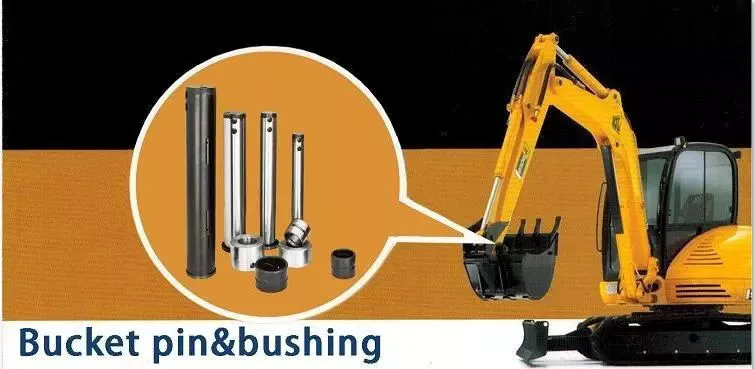
Casing application
The casing market is mainly driven by the growth of the power generation industry. The increasing electrification of Asia Pacific and the deployment of renewable energy in countries such as Saudi Arabia and the UAE are driving the demand for distribution transformer bushings. In addition, the demand for bushings in Western Europe is also likely to increase with the spread of renewable energy and the installation of electric vehicle charging infrastructure. However, the market in Asia Pacific is expected to remain small compared to the rest of the world.
Although bushings are relatively expensive, they are very durable and cost-effective. Furthermore, bushings have a variety of applications, making them an important component in power transformers. For example, power transformers often use bushings to achieve relative movement by sliding or rolling. The vehicle suspension system also uses rubber bushings for a smooth ride and rotating bushings for machine-related operations. They require precision machined parts and are especially useful in applications where high loads and friction must be controlled. Also, plastic bushings are used for wheels in dry kilns, where lubrication is often troublesome.
Transformers require constant monitoring, which is one of the reasons bushings are so important in power transformers. Any failure of these components could result in the total loss of the transformer and all surrounding equipment. To maintain high system reliability, utilities must monitor insulation in and around bushings, especially if transformers have been in use for decades. Some utilities have made monitoring the condition of their transformers an important part of their smart grid plans.
Material
The core of the dry casing has many material interfaces. The discharge most likely originates near the edges of the foils and can cause electrical tree growth or breakdown between adjacent foils. Several studies have investigated interfacial effects in composite insulating materials and concluded that the conditions under which the interface occurs is a key factor in determining the growth of electrical trees. This study found that material type and interface conditions are the two most important factors for the growth of electrical trees.
Bushings can be made of many different materials, depending on their purpose. The main purpose of the bushing is to support the assembly while protecting it. They must be stiff enough to support the load placed on them, and flexible enough to protect the shaft. Since the shaft is usually not centered on the bushing during rotation, the bushing must be durable enough to carry the load while still protecting the shaft. Here are several materials used for bushings:
A stabilizer bar assembly is a good example of pre-assembly. This pre-assembly enables the vehicle assembly plant to receive components ready for vehicle assembly. The prior art requires the vehicle assembly plant to separate the bushing from the stabilizer bar. However, the present invention eliminates this step and provides a mechanically rigid stabilizer bar assembly. It is designed to prevent audible squeals and improve vehicle performance and handling.
Hardened steel bushings are ideal for pivot and low speed applications. They are made of high carbon steel and fully hardened to 56-62 HRC. Bronze bushings require daily or weekly lubrication but are more expensive than plastic bushings. Plastic bushings are low cost, low maintenance, self lubricating and do not require regular lubrication. These are also suitable for applications with hard to reach parts.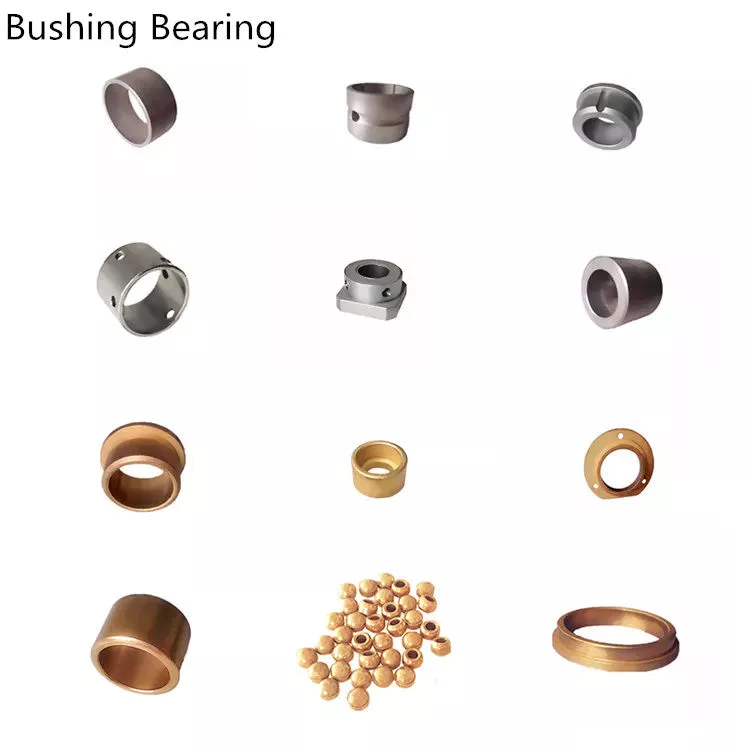
application
Bushings have many applications in various industries. Most of the time, it is used for drilling. Its excellent chemical and mechanical properties can be used to protect various equipment. These components are versatile and available in a variety of materials. All sleeves are packaged according to national and international standards. They are used in many industrial processes from construction to drilling. Some application examples are listed below.The component 10 may contain a tank for a liquid such as fuel, and the object 12 may be made of fiber reinforced composite material. Sleeve assembly 16 is configured to ground component 10 and object 12 . It may be a bulkhead isolator 40 used to isolate electrical charges in aircraft hydraulic lines. Bushing assembly 16 is one of many possible uses for the bushing assembly. The following examples illustrate various applications of bushing assemblies.
Bearings are devices used to reduce friction between moving surfaces. They are a good choice for many applications as they are maintenance free and extend the life of machine components. They can be used in a variety of applications and are often used with plastic and metal materials. For example, Daikin offers bronze and brass bushings. Bushings have many other uses, but they are most commonly used in machines, especially when used in low-load environments.
The most common application for bushings is drilling. Swivel bushings can be used in almost any drilling application. For more complex applications, CZPT’s engineering department can create special designs to your specifications. The applications of bushings in machining centers are endless. By providing a smooth, reliable interface, bushings are an excellent choice for precision machining. They can also provide current paths.
Cost
When you have a vehicle that needs a bushing replacement, you may be wondering about the cost of a bushing replacement. The fact is, the cost of a bushing replacement will vary widely, depending on the specific car model. Some cars cost as little as $5, while other vehicles can cost up to $300. The replacement of a control arm bushing may not cost that much, but it’s important to know that it’s a relatively expensive part to replace.
Most mechanics charge around $375 for a job that involves replacing the bushing in a control arm. However, this price range can vary significantly, depending on whether the mechanic uses OE or aftermarket parts. In any case, the cost of labor is typically included in the price. Some mechanics may even include a labor charge, which is an additional cost. In general, however, the cost of a control arm bushing replacement is comparable to the cost of replacing a single bushing.
Control arm bushings are made of two metal cylinders secured together by a thick layer of rubber. Over time, these parts can deteriorate due to accidents, potholes, and off-roading. For this reason, it is important to replace them as soon as possible. Bushing replacement can save you money in the long run, and it’s important to have your vehicle repaired as soon as possible. If your control arm bushing is showing signs of wear, you should have it replaced before it becomes completely useless.
If you have decided to replace your suspension bushing yourself, the cost will be considerably lower than you would spend on the replacement of other components. If you have a mechanically-inclined mechanic, you can do it yourself. The parts and labour are reasonably cheap, but the most expensive part is the labor. Because it requires disassembling the wheel and suspension and installing a new bushing, it is important to have a mechanic who has a good understanding of vehicle mechanicry. The cost for control arm bushing replacement is between $20 and $80 per bushing, and a set of four costs approximately $300.
Disambiguation
If you’ve come across a page containing information about Bushing, you may have been looking for more information. This disambiguation page lists publications about the person, but these have not been assigned to him. We encourage you to contact us if you know who the true author of these publications is. Nevertheless, if you’re searching for specific information about Bushing, we recommend you start with CZPT.
editor by czh 2023-02-18

China combined load cross roller bearing YRT 100 excavator turntable bearing YRT100 bearing driver
Kind: Roller, turntable bearing
Composition: cylindrical
Relevant Industries: Producing Plant, Equipment Fix Outlets, Retail
Product Variety: YRT100
Precision Ranking: quality p4 p5 p6 p0
Seals Type: open bearing
Quantity of Row: Double row
OEM amount: YRT100
Bore dimensions: 100mm
OD.: 185mm
Thickness: 38mm
Software: excavator bearing
Bearing Substance: Gcr15 metal bearing
Precision: grade p4 p5 p6 p0 bearing
Sealed sort: open up bearing
Quantity of row: double row
Packaging Specifics: 1. First Manufacturer packing2. Single box packing3. Economic industrial packing4. OEM manufacturer packing
Port: ZheJiang , HangZhou
blended load cross roller bearing YRT 100 excavator turntable bearing YRT100
MT Seies mini slew bearing is 4 point contact ball slewing ring with mounting holes, typically used to manipulator, robotic arm, jib cranes, and many others.
MT Series mini slewing ring bearings have a rectangular cross-section and selection in size from 4 – CZPT CE lower velocity 1571 wire encoder 6.5inch 24V 250W 4N.m 100kg load BLDC AGV DC wheel hub servo motor for inspection robotic 47 inches OD (100 – 1200 mm). They give optimal economic climate and capability for a offered envelope dimension.
Slewing bearing applicationLifting the transport equipment, mining devices, design machinery, port machinery, wind energy, medical equipment, radar and CZPT launchers and other huge rotary device.
| Requirements: YRT100 yrt rotary table bearing, cross roller bearing | |
| Within diameter | 100mm |
| Outside the house diameter | 185mm |
| Overall width | 38mm |
| Bearing type | blend load cross roller bearing |
| Gear type | No equipment |
| Seal sort | open up bearing |
4 point make contact with slewing ring bearing catalogue:
| P/N | Outline Proportions and Excess weight | Moment Score Crm | ||||
| di | Do | H | Hello/Ho | G APPROX. | ||
| (mm) | (mm) | (mm) | (mm) | (kg) | (ft-lbs) | |
| MTO-050 | fifty | a hundred and ten | 20 | eighteen | .9 | 830 |
| MTO-050T | fifty | 110 | twenty | eighteen | .nine | 830 |
| MTO-065 | sixty five | a hundred thirty five | 22 | 20 | one.8 | one, Fanuc A06B-5719-B100 new authentic AC servo motor 330 |
| MTO-065T | sixty five | one hundred thirty five | 22 | twenty | one.eight | one,330 |
| MTO-122 | 122 | 226 | 34 | 29 | six | 5,571 |
| MTO-122T | 122 | 226 | 34 | 29 | 6 | 5,571 |
| MTO-143 | 143 | 249 | 34 | 29 | six.eight | 8,950 |
| MTO-143T | 143 | 249 | 34 | 29 | 6.eight | eight,950 |
| MTO-a hundred forty five | one hundred forty five | 300 | fifty | 44 | sixteen.eight | 26,000 |
| MTO-145T | one hundred forty five | 300 | fifty | 44 | sixteen.8 | 26,000 |
| MTO-145X | 145 | 312 | 50 | forty four | eighteen.6 | 30,600 |
| MTO-a hundred and seventy | one hundred seventy | 310 | forty six | forty one | 15 | 16, 26Mm 2610 Minimal Noise Extended Lifetime Substantial Torque Coreless Brush Motor For Tattoo Equipment Pen 520 |
| MTO-170T | 170 | 310 | forty six | forty one | fifteen | sixteen,520 |
| MTO-210 | 210 | 365 | 40 | 38 | seventeen.two | forty four,500 |
| MTO-210T | 210 | 365 | forty | 38 | 17.2 | 44,500 |
| MTO-210X | 210 | 373 | 50 | 44 | 21.eight | 52,100 |
| MTO-265 | 265 | 420 | fifty | forty four | 24.5 | 62,000 |
| MTO-265T | 265 | 420 | 50 | forty four | 24.5 | sixty two,000 |
| MTO-265X | 265 | 434 | fifty | forty four | 27.seven | seventy one,900 |
Application And Kind
Firm Profile
Factory Present
Goal Market place
Payment & Supply
Bushing Application, Type and Compression Capability
Bushings are cylindrical bushings used in machinery. It prevents wear of moving parts and is often used as an enclosure. Bushings are also known as plain bearings or sleeve bearings. You may be wondering what these parts do and how they work, but this article aims to answer all your questions. We’ll cover bushing applications, types and compression capabilities so you can choose the right one for your needs.
application
A bushing is a mechanical component that plays an important role in many different fields. In addition to being very practical, it helps reduce noise, vibration, wear and provides anti-corrosion properties. These properties help mechanical equipment in various ways, including making it easier to maintain and reducing its overall structure. The functionality of an enclosure depends on its purpose and environment. This article will discuss some of the most common applications of casing.
For example, in an aircraft, the bushing assembly 16 may be used for the bulkhead isolator 40 . The bushing assembly 16 provides the interfaces and paths required for current flow. In this manner, the sleeve assembly provides a secure, reliable connection between two objects with different electrical charges. They also prevent sparking by increasing the electrical conductivity of the component and reducing its resistivity, thereby minimizing the chance of spark formation.
Another common application for bushings is as a support shaft. Unlike bearings, bushings operate by sliding between two moving surfaces. As a result, they reduce friction and handling stress, reducing overall maintenance costs. Typically, the bushing is made of brass or bronze. The benefits of bushings are similar to those of bearings. They help extend the life of rotating machines by reducing frictional energy loss and wear.
In addition to identifying growth opportunities and minimizing risks, the Bushing Anti-Vibration Mounts Market report provides insights into the dynamics of the industry and its key players. The report covers global market size, applications, growth prospects, challenges and regional forecasts. The detailed section on Bushing Anti-Vibration Mounts industry provides insights on demand and supply along with competitive analysis at regional and country level.
type
There are several types of bushings. Among them, the SF6 insulating sleeve has the simplest structure and is based on composite hollow insulators. It also has several metal shielding cylinders for regulating the electric field within the enclosure and another for grounding the metal shield. In addition to being lightweight, this sleeve is also very durable, but the diameter of its shield electrode is very large, which means special installation and handling procedures are required.
Linear bushings are usually pressed into the bore of the shaft and provide support as the shaft moves in/out. Non-press-fit bushings are held in place by snap rings or pins. For certain applications, engineers often choose bushings over bearings and vice versa. That’s why. Below are some common bushing types. If you need to buy, make sure you know how to tell them apart.
OIP bushings are used for oil-filled cable boxes, and oil-to-oil bushings are used for EHV power transformers. The main components of the OIP enclosure are shown in Figure 7a. If you are considering this type of bushing for your specific application, you need to make sure you understand your specific requirements. You can also consult your local engineering department for more information.
All types of bushings should be tested for IR and capacitance. The test tap should be securely attached to the bushing flange. If damaged bushings are found, replace them immediately. Be sure to keep complete records of the enclosure for routine maintenance and any IR testing. Also, be sure to pay attention to tan d and thermal vision measurements.
Compressive ability
There are several things to consider when choosing an enclosure. First, the material. There are two main types of bushings: those made of filled Teflon and those made of polyester resin. The former has the highest compressive strength, while the latter has a lower compressive capacity. If you need small amounts, glass-filled nylon bushings are the most common and best option. Glass-filled nylon is an economical material with a compressive strength of 36,000 lbs.
Second, the material used for the enclosure must be able to withstand the load. For example, bronze bushings can cause metal shavings to fall into the papermaking process. CG materials can withstand very high levels of moisture, which can damage bushings that require lubrication. Additionally, these materials can operate for extended periods of time without lubrication. This is particularly advantageous in the paper industry, since the casing operates in a humid environment.
In addition to the material and its composition, other characteristics of the enclosure must also be considered, including its operating temperature. Although frictional heat from moving loads and the temperature of the bushing itself can affect the performance of the bushing, these factors determine its service life. For high temperature applications, the PV of the enclosure should be kept low. On the other hand, plastic bushings are generally less heat resistant than metal bushings. In addition, plastic sleeves have a high rate of thermal expansion. To avoid this, size control is also important.
Low pressure bushings have different requirements. An 800 MVA installation requires a low voltage bushing rated at 14 000 A. The palm assembly of the transformer also features a large central copper cylinder for electrical current. The bushing must withstand this amount of current and must maintain an even distribution of current in the transformer tank. If there is a leak, the bushing must be able to resist the leak so as not to damage the transformer.
cost
The cost of new control arm bushings varies widely. Some parts are cheaper than others, and a new part is only $200. However, if you replace the four control bushings in your car, the cost can exceed $1,200. The cost breakdown for each section is listed below. If you plan to replace all four, the cost of each bushing may range from $200 to $500.
The control arm bushing bears the brunt of the forces generated by the tire and is parallel to the direction of the force. However, over time, these components wear out and need to be replaced. Replacing one control arm bushing costs between $300 and $1,200. However, the cost of replacing each arm bushing depends on your car model and driving habits. The control arm bushings should last about 100,000 miles before needing replacement.
The repair process for control arm bushings is time consuming and expensive. Also, they may need to remove the heat shield or bracket. In either case, the procedure is simple. Stabilizer bar brackets are usually attached with one or two mounting bolts. They can also be secured with nuts or threaded holes. All you need is a wrench to remove them.
The control arm bushings are made of two metal cylinders and a thick rubber bushing. These parts can deteriorate from potholes, off-roading or accidents. Because they are made of rubber, the parts are more expensive than new. Buying used ones can save you money because you don’t need to install them yourself. However, if you do plan on fixing a luxury car yourself, be sure to find one that has a warranty and warranty.
maintain
To prevent your vehicle from overheating and leaking oil, a properly functioning bushing must be used. If the oil level is too low, you will need to check the mounting bolts to make sure they are properly tightened. Check gasket to ensure proper compression is applied, replace bushing if necessary. You should notify your vehicle manufacturer if your vehicle is immersed in oil. Whenever an oil leak occurs, it is very important to replace the oil-filled bushing.
Another important aspect of bushing maintenance is the detection and correction of partial discharges. Partial discharge is caused by current entering the bushing. Partial discharge can cause tree-like structures, cracks and carbonization in the discharge channel, which can eventually damage the casing. Early detection of these processes is critical to ensuring that your vehicle’s bushings are properly maintained. Identifying and repairing partial discharges is critical to ensuring optimal operation, regardless of the type of pump or motor.
To diagnose casing condition, perform several tests. You can use tan d measurement, which is a powerful tool for detecting the ingress of water and moisture. You can also use power factor measurements to detect localized defects and aging effects. You can also check the oil level by performing an infrared check. After completing these tests, you will be able to determine if there is enough oil in the casing.
If the oil level in the transformer is too low, water and air may leak into the transformer. To avoid this problem, be sure to check the MOG and transformer oil levels. If the silicone is pink, replace it. You should also check the function of the oil pump, fan and control circuits annually. Check the physical condition of the pump and fan and whether they need to be replaced. Clean the transformer bushing with a soft cotton cloth and inspect for cracks.
editor by czh 2023-02-17