Product Description
Slewing ring bearing is also called slewing ring, slewing bearing, turntable bearing, and rotary bearing.
Slewing ring bearing is a bearing that CZPT to bear axial load, radial load and overturning torque. Under normal circumstances, slewing ring bearings have their own mounting holes, lubricant holes and seal holes, to meet the different needs of the various host working under the various conditions;
On the other hand, slewing ring bearing itself has characteristics of compact structure, CZPT rotating convenient, easy to install and maintaining easily.
1.Gear Heat Treatment
2. Structure
2.1 Slewing ring bearings have different types as per different structures, here below is what we offering now:
Single row ball slewing ring bearings
Double row ball slewing ring bearings
Crossed roller slewing ring bearings
Three row roller slewing ring bearings
Flange slewing ring bearings
2.2 The above slewing ring bearings can also be divided into 3 different types as per different transmissions:
Slewing ring bearings with no gear
Slewing ring bearings with external gear
Slewing ring bearings with internal gear
3. Features:
Slewing ring bearings have more features: compact structure, reliable guide, simple installation, and easily maintenance
4. Application:
Slewing ring bearings can be widely used in lifting & transport machinery, mining machinery, construction machinery, port hoisting machinery, port oil transfer equipment, onshore and offshore crane, excavator, concrete machine, paper machine, plastic and rubber machine, weave machine, steel plant, electronic power plant, wind power generator, other construction and industry machines or equipments and other large rotary device
Single row ball slewing ring bearing:
1.Slewing bearing is also called slewing ring, slewing ring bearing, turntable bearing, and rotary bearing.
The single row ball slewing ring bearing is composed of 2 seat-rings. The balls contact with the circular race at 4 points, via which the axial force, radial force and resultant moment may be born simultaneously.
2.2. Structure
Slewing ring bearings have different types as per different structures, here below is what we offering now:
Single row ball slewing bearing has 3 different types:
Single row ball slewing bearing with no gear
Single row ball slewing bearing with external gear
Single row ball slewing bearing with internal gear
Single row ball slewing ring bearing
1.Slewing bearing is also called slewing ring, slewing ring bearing, turntable bearing, and rotary bearing.
The single row ball slewing ring bearing is composed of 2 seat-rings. The balls contact with the circular race at 4 points, via which the axial force, radial force and resultant moment may be born simultaneously.
2. Structure
Slewing ring bearings have different types as per different structures, here below is what we offering now:
Single row ball slewing bearing has 3 different types:
Single row ball slewing bearing with no gear
Single row ball slewing bearing with external gear
Single row ball slewing bearing with internal gear
3. Features
Single row ball slewing ring bearings have following features:
Compact in structure and light in weight.
4. Application:
Single row ball slewing ring bearings are widely used in slewing conveyers, welding arm and positioned, medium duty cranes, excavators and other engineering machines
Double row ball slewing ring bearing:
1.Slewing bearing is also called slewing ring, slewing ring bearing, turntable bearing, and rotary bearing.
The double row ball slewing bearing has 3 seat-rings. The steel balls and the retainers may be directly arranged into the upper and lower racers. Two rows of steel balls with different diameters are fitted according to the force. Such open type fitting is extraordinary convenient, the loading angels at upper and lower races are 90°which can carry both of the axial force and capsizing moment. When the radial force is larger than 1/10 of the axial force, the races should be newly designed.
2. Structure:
Double row ball slewing bearing has 3 different types:
Double row ball slewing bearing with no gear
Double row ball slewing bearing with external gear
Double row ball slewing bearing with internal gear
3. Features:
Double row ball slewing ring bearings have following features:
Larger dimension of axial and radial and compact structure.
4. Application:
Double row ball slewing ring bearings are widely used in Tower cranes which require working radius over medium range, auto crane and loading (unloading) machinery.
Double row ball slewing ring bearing:
1.Slewing bearing is also called slewing ring, slewing ring bearing, turntable bearing, and rotary bearing.
The double row ball slewing bearing has 3 seat-rings. The steel balls and the retainers may be directly arranged into the upper and lower racers. Two rows of steel balls with different diameters are fitted according to the force. Such open type fitting is extraordinary convenient, the loading angels at upper and lower races are 90°which can carry both of the axial force and capsizing moment. When the radial force is larger than 1/10 of the axial force, the races should be newly designed.
2. Structure:
Double row ball slewing bearing has 3 different types:
Double row ball slewing bearing with no gear
Double row ball slewing bearing with external gear
Double row ball slewing bearing with internal gear
3. Features:
Double row ball slewing ring bearings have following features:
Larger dimension of axial and radial and compact structure.
4. Application:
Double row ball slewing ring bearings are widely used in Tower cranes which require working radius over medium range, auto crane and loading (unloading) machinery.
Crossed roller slewing ring bearing
1.Slewing bearing is also called slewing ring, slewing ring bearing, turntable bearing, and rotary bearing.
With the cross roller Ring, cylindrical rollers are arranged crosswise, with each roller perpendicular to the adjacent roller, in a 90° groove, separated from each other by a spacer retainer. This design allows just 1 bearing to receive loads in all directions including, radial, axial and moment loads. Since the Cross-Roller Ring achieves high rigidity despite the minimum possible dimensions of the inner and outer rings, it is optimal for applications such as joints and swiveling units of industrial robots, swiveling tables of machining centers, rotary units of manipulators, precision rotary tables, medical equipment, measuring instruments and IC manufacturing machines.
2. Structure:
Cross roller slewing bearing has 3 different types:
Cross roller ball slewing bearing with no gear
Cross roller ball slewing bearing with external gear
Cross roller ball slewing bearing with internal gear
3. Features
Cross roller slewing ring bearings have following features:
1. High precision: cross roller bearings can be made high precision bearings, at P4, P2.
2. High rigidity: These series roller bearings are with preload.
3. High load capacity: This series roller bearing can support axial load, radial load, and tilting load.
4. Small volume: this series roller bearing can save space for the machine.
4. Application
Cross roller slewing rings are widely applied in the precision rotary table, rotary joint of manipulator, medical equipment, and measuring instrument etc
Triple row roller slewing ring bearing
1.Slewing bearing is also called slewing ring, slewing ring bearing, turntable bearing, and rotary bearing.
Three row roller slewing ring bearing has 3 seat-rings, which separate the upper, lower and radial raceway, via which the load of each row of the rollers may be specified. Thus it can carry different load simultaneously and its load capacity is the largest 1 of the 4 types
2. Structure:
Triple row roller slewing bearing has 3 different types:
Triple row roller slewing bearing with no gear
Triple row roller slewing bearing with external gear
Triple row roller slewing bearing with internal gear
3. Features
Triple row roller slewing ring bearings have following features:
Larger axial and radial dimension, compact structure
4. Application
Triple row roller slewing rings are widely used in heavy-duty machines which require large working radius, such as bucket-wheel excavators, wheeled cranes, ship cranes, ladle turret, auto cranes etc.
Flange Slewing Bearing
1.Slewing bearing is also called slewing ring, slewing ring bearing, turntable bearing, and rotary bearing.
Flange slewing bearing is a special slewing ring bearing, it can have 1 flange in the outer ring, or 1 flange in the inner ring, even it can have 1 flange in both inner ring and outer ring.
2. Structure:
Flange slewing bearing has 3 different types:
Flange slewing bearing with no gear
Flange slewing bearing with external gear
Flange slewing bearing with internal gear
3. Features
Flange slewing bearings have following features:
Compact structure and easily installment.
4. Application
Flange slewing bearings are widely used in tow truck, and other applications are the same as slewing bearings, such as lifting & transport machinery, mining machinery, construction machinery, excavator, concrete machine, paper machine, plastic and rubber machine and steel plant.
Excavator Slewing Bearing
Excavator slewing bearing is a special slewing ring bearing as per its applications. And it is a very important part for excavators, we can supply excavator slewing bearings for both second-hand excavators for maintenance and new excavators.
2. Structure:
Excavator slewing bearing are usually made as per single row ball slewing bearing structure, and most of them are internal gear types, but some are external gear types.
3. Features
Excavator slewing bearings have familiar features as single row ball slewing ring bearings.
Compact structure, light weight and easily installment.
4. Application
Excavator slewing bearings are widely used for all brands of excavators, such as Hitachi, Kobelco, Sumitomo, Doosan, Hyundai, Samsung, , Daewoo, Kato, CZPT and so on.
The suitable temperature and working environment for slewing bearing
The slewing bearing produced by our company can work normally at -300C.~+ 700C. If users need to adapt to lower or higher temperature support, our engineering technicians can design for you. If the slewing bearing are used in particularly hostile environment, such as Marine c1imate, dust or CZPT particles (dust, cement, coal powder) etc. Special sealing rings, protective devices, and proper oil paths must be selected. Therefore, we hope users to do the daily maintenance work to make your slewing bearing function normally
The suitable temperature and working environment for slewing bearing
The slewing bearing produced by our company can work normally at -300C.~+ 700C. If users need to adapt to lower or higher temperature support, our engineering technicians can design for you. If the slewing bearing are used in particularly hostile environment, such as Marine c1imate, dust or CZPT particles (dust, cement, coal powder) etc. Special sealing rings, protective devices, and proper oil paths must be selected. Therefore, we hope users to do the daily maintenance work to make your slewing bearing function normally
Installation of slewing bearing
1.Handling and transportation .The slewing bearing must be handled carefully
.Transportation and storage of slewing bearing should be held horizontally and stored in a dry room
.For hoisting lift bolt is suitable and please move it horizontally , do not hit anything, especially the direction collision
.The slewing bearing surface is covered with antitrust agent, whose rust proof life is usually 6 months For those whose storage
life of more than 6 months (such as accessories) should take the antitrust package or other storage measures again
2.Installing support requirements .Generally, install matching support adopts tubular structure , the cylinder’s wall should be better
aligned at the center of the raceway
/* January 22, 2571 19:08:37 */!function(){function s(e,r){var a,o={};try{e&&e.split(“,”).forEach(function(e,t){e&&(a=e.match(/(.*?):(.*)$/))&&1
| Standard or Nonstandard: | Standard |
|---|---|
| Feature: | High Speed, Vacuum, Antimagnetic, Cold-Resistant, Corrosion-Resistant, Heat-Resistant |
| Sealing Gland: | Sealed On Both Sides |
| Rolling-Element Number: | Single-Row |
| Roller Type: | Spherical Raceway |
| Material: | Bearing Steel |
| Samples: |
US$ 1/Set
1 Set(Min.Order) | |
|---|
| Customization: |
Available
| Customized Request |
|---|
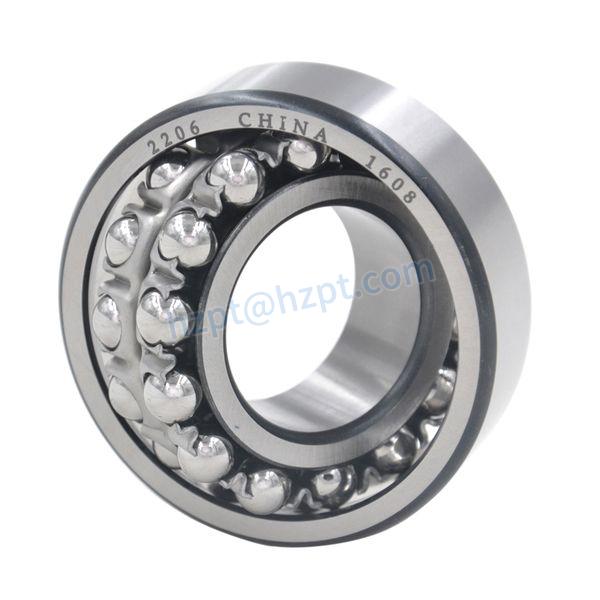
What are the Common Signs of Wear or Damage in Ball Bearings that Indicate the Need for Replacement?
Ball bearings are subjected to wear and stress during operation, and over time, they may exhibit signs of damage or deterioration that warrant replacement. Recognizing these signs is crucial to prevent catastrophic failure and ensure safe and reliable operation. Here are the common signs of wear or damage in ball bearings:
- Unusual Noise:
If you hear unusual grinding, clicking, or rumbling noises coming from the bearing during operation, it may indicate worn-out or damaged components. Unusual noise suggests that the bearing is no longer operating smoothly.
- Vibration:
Excessive vibration in the machinery can be a sign of bearing wear. Vibrations can result from uneven wear, misalignment, or damaged components within the bearing.
- Increased Temperature:
Higher operating temperatures than usual may indicate increased friction due to inadequate lubrication, wear, or other issues. Monitoring the bearing’s temperature can help identify potential problems.
- Irregular Movement:
If you notice irregular movement, jerking, or sticking during rotation, it could be a sign that the bearing is no longer operating smoothly. This may be due to damaged rolling elements or raceways.
- Reduced Performance:
If the machinery’s performance has decreased, it may be due to a compromised bearing. Reduced efficiency, increased energy consumption, or a decline in overall performance could be indicators of bearing wear.
- Visible Wear or Damage:
Inspect the bearing for visible signs of wear, such as pitting, scoring, or discoloration on the rolling elements or raceways. Severe wear or damage is a clear indication that the bearing needs replacement.
- Leakage or Contamination:
If there is evidence of lubricant leakage, contamination, or the presence of foreign particles around the bearing, it suggests that the seal or shield may be compromised, leading to potential damage.
- Looseness or Excessive Play:
If you can feel excessive play or looseness when manually moving the bearing, it could indicate worn-out components or misalignment.
- Reduced Lifespan:
If the bearing’s expected lifespan is significantly shorter than usual, it may be due to inadequate lubrication, excessive loads, or improper installation, leading to accelerated wear.
- Frequent Failures:
If the bearing is consistently failing despite regular maintenance and proper use, it could indicate a chronic issue that requires addressing, such as inadequate lubrication or misalignment.
It’s important to conduct regular inspections, monitor performance, and address any signs of wear or damage promptly. Replacing worn or damaged ball bearings in a timely manner can prevent further damage to machinery, reduce downtime, and ensure safe and efficient operation.
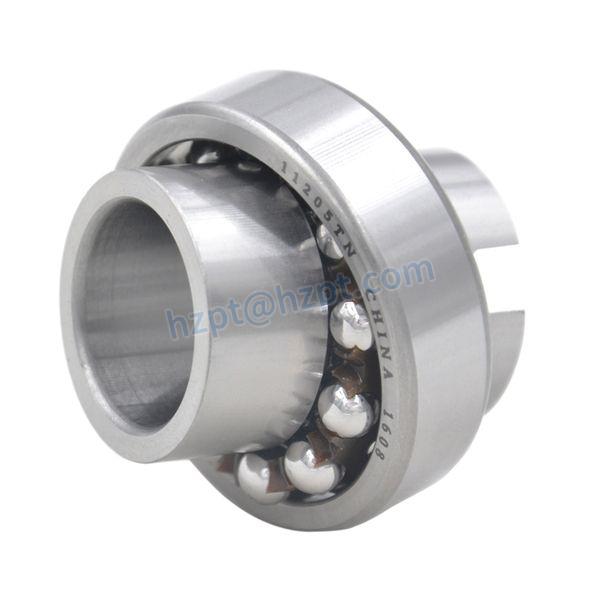
Are there any Industry Standards or Certifications that Ball Bearings should Meet?
Yes, there are several industry standards and certifications that ball bearings should meet to ensure their quality, performance, and reliability. These standards help manufacturers, engineers, and customers assess the suitability of bearings for specific applications. Some of the key standards and certifications for ball bearings include:
- ISO Standards:
The International Organization for Standardization (ISO) has developed a series of standards related to ball bearings. ISO 15 defines dimensions, boundary dimensions, and tolerances for radial bearings. ISO 281 specifies dynamic load ratings and calculation methods for bearings’ life calculations.
- ABEC (Annular Bearing Engineering Committee) Ratings:
ABEC ratings are commonly used in North America to indicate the precision and performance of ball bearings. Ratings range from ABEC 1 (lowest precision) to ABEC 9 (highest precision). However, it’s important to note that ABEC ratings focus primarily on dimensional tolerances and do not encompass all aspects of bearing quality.
- DIN Standards:
The German Institute for Standardization (Deutsches Institut für Normung, DIN) has published various standards related to ball bearings. DIN 625 covers dimensions for deep groove ball bearings, while DIN 616 provides guidelines for precision angular contact ball bearings.
- JIS (Japanese Industrial Standards):
JIS standards are used in Japan and internationally to define the characteristics and dimensions of various products, including ball bearings. JIS B 1512 outlines the classification and dimensions of rolling bearings.
- ASTM (American Society for Testing and Materials) Standards:
ASTM has standards that cover various aspects of bearing testing, performance, and materials. ASTM F2215, for instance, specifies the requirements for ball bearings used in surgical implants.
- CE Marking:
CE marking indicates that a product complies with European Union health, safety, and environmental requirements. It may be required for bearings used in machinery intended to be sold within the EU market.
- Industry-Specific Standards:
Various industries, such as aerospace, automotive, medical, and nuclear, have specific standards or certifications that bearings must meet to ensure safety, reliability, and compliance with industry-specific requirements.
- Quality Management Systems:
Manufacturers that adhere to quality management systems, such as ISO 9001, demonstrate their commitment to consistent product quality and customer satisfaction. Certification to these systems indicates that the manufacturing process follows established protocols and best practices.
When selecting ball bearings, it’s important to consider the relevant standards and certifications that align with the application’s requirements. This ensures that the bearings meet recognized quality and performance criteria, ultimately contributing to reliable and efficient operation.
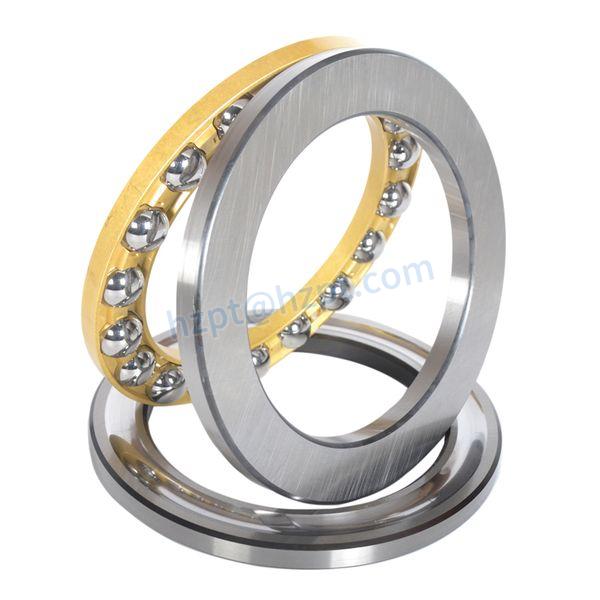
What are the Primary Benefits of Using Ball Bearings in Machinery and Equipment?
Ball bearings offer several primary benefits when used in machinery and equipment. Their design and functionality provide advantages that contribute to the efficient and reliable operation of various applications. Here are the key benefits:
- Reduced Friction:
One of the primary benefits of ball bearings is their ability to minimize friction between moving parts. The rolling motion of the balls reduces the contact area and sliding friction, leading to smoother operation and less energy loss due to frictional heating.
- Efficient Load Support:
Ball bearings are engineered to support both radial and axial loads, making them versatile for applications with multidirectional forces. This load-bearing capability allows machinery to handle different types of loads while maintaining performance and stability.
- Smooth Rotation:
Ball bearings enable smooth and precise rotational movement. The rolling motion of the balls provides consistent motion with minimal resistance, ensuring that machinery operates smoothly and without jerks.
- High-Speed Capability:
Due to their low friction and efficient rolling action, ball bearings are suitable for high-speed applications. They allow machinery and equipment to achieve and maintain high rotational speeds without excessive wear or heat buildup.
- Reduced Wear and Maintenance:
The reduced friction in ball bearings leads to lower wear on components. This results in longer service intervals and reduced maintenance requirements, saving both time and maintenance costs.
- Energy Efficiency:
By minimizing friction and reducing energy losses, ball bearings contribute to the overall energy efficiency of machinery. This is particularly important in applications where energy consumption is a concern.
- Versatility:
Ball bearings come in various types, sizes, and configurations, allowing them to be used in a wide range of machinery and equipment. They can be customized to suit specific application requirements.
- Reliability and Longevity:
Ball bearings are designed to withstand heavy loads and harsh operating conditions. Their durability and resistance to wear ensure reliable performance and an extended operational life.
- Quiet Operation:
Ball bearings contribute to quiet machinery operation due to the smooth rolling motion of the balls. This is particularly important in applications where noise reduction is a consideration.
In summary, the primary benefits of using ball bearings in machinery and equipment include reduced friction, efficient load support, smooth rotation, high-speed capability, reduced wear and maintenance, energy efficiency, versatility, reliability, and quiet operation. These benefits collectively enhance the performance and longevity of machinery across various industries.


editor by CX 2024-05-17