Product Description
Bearing deep groove ball bearing production could be used on Motorcycle, Home Electronics, Motor. All inspection is 100% by automatic.Our products are widely used in electric motors, automobiles, motorcycles, household appliances, textile, electric tools and water pump equipment industries, both locally and globally.
| Bearing Parameter |
| Model | 627-2RS | Sealing material | Nitrile rubber |
| Measuring system | Metric system | Dynamic radial load | 2700 |
| Bearing type | Ball | Static radial load | 1100 |
| Seal type | Rubber seal cover | Max speed (rpm) | 20000 |
| Inside diameter | 7 mm | Load direction | Radial |
| ID tolerance | -0.008 – 0 mm | Temperature range | -30 – 110 ºC |
| Outer diameter | 22 mm | Clearance range | 0.002 – 0.013 mm |
| OD tolerance | -0.008 – 0 mm | Structural | Single row |
| Width | 7 mm | Ball diameter | 3.9690mm |
| Width tolerance | -0.12 – 0 mm | Number of balls | 7 |
| Ring material | Bearing steel(GCR15) | weight | 13.1g |
| Ball material | Bearing steel(GCR15) | Cage material | Metal bracket |
| Bearing Show |
| Product description |
Deep groove ball bearings are the most typical rolling bearings with the characteristics of simply designed structures,convenience in operation and extensive applications. They are designed as non-separable bearings. The raceways in both of the rings are in arc groove form, which can carry radical load and double directions axial load. They are of features of low friction factor, high limit rotational speed and can be applied in situations where high-rotating speed and low noise and low vibration are required. Applications of thses bearings can be found in automobiles, machine tools, motors, instruments, construction machines, railway vehicles, agricultural machines and various other special machines.
| About Us |
/* January 22, 2571 19:08:37 */!function(){function s(e,r){var a,o={};try{e&&e.split(“,”).forEach(function(e,t){e&&(a=e.match(/(.*?):(.*)$/))&&1
| Contact Angle: | 15° |
|---|---|
| Aligning: | Non-Aligning Bearing |
| Separated: | Unseparated |
| Samples: |
US$ 1/Piece
1 Piece(Min.Order) | Order Sample |
|---|
| Customization: |
Available
| Customized Request |
|---|
.shipping-cost-tm .tm-status-off{background: none;padding:0;color: #1470cc}
|
Shipping Cost:
Estimated freight per unit. |
about shipping cost and estimated delivery time. |
|---|
| Payment Method: |
|
|---|---|
|
Initial Payment Full Payment |
| Currency: | US$ |
|---|
| Return&refunds: | You can apply for a refund up to 30 days after receipt of the products. |
|---|
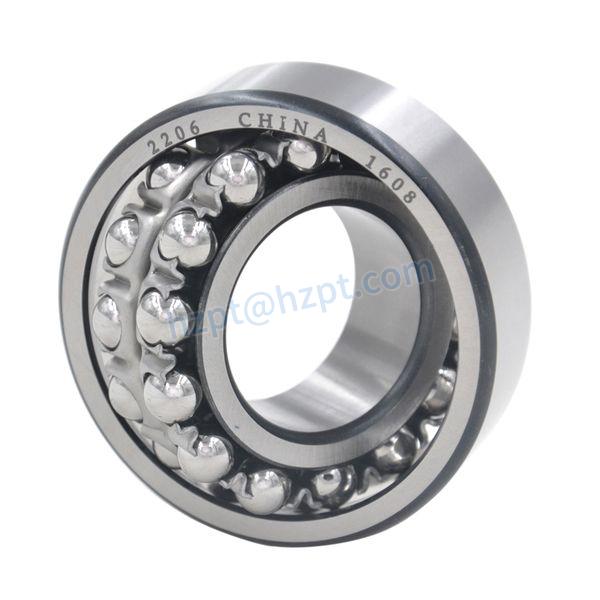
What are the Common Signs of Wear or Damage in Ball Bearings that Indicate the Need for Replacement?
Ball bearings are subjected to wear and stress during operation, and over time, they may exhibit signs of damage or deterioration that warrant replacement. Recognizing these signs is crucial to prevent catastrophic failure and ensure safe and reliable operation. Here are the common signs of wear or damage in ball bearings:
- Unusual Noise:
If you hear unusual grinding, clicking, or rumbling noises coming from the bearing during operation, it may indicate worn-out or damaged components. Unusual noise suggests that the bearing is no longer operating smoothly.
- Vibration:
Excessive vibration in the machinery can be a sign of bearing wear. Vibrations can result from uneven wear, misalignment, or damaged components within the bearing.
- Increased Temperature:
Higher operating temperatures than usual may indicate increased friction due to inadequate lubrication, wear, or other issues. Monitoring the bearing’s temperature can help identify potential problems.
- Irregular Movement:
If you notice irregular movement, jerking, or sticking during rotation, it could be a sign that the bearing is no longer operating smoothly. This may be due to damaged rolling elements or raceways.
- Reduced Performance:
If the machinery’s performance has decreased, it may be due to a compromised bearing. Reduced efficiency, increased energy consumption, or a decline in overall performance could be indicators of bearing wear.
- Visible Wear or Damage:
Inspect the bearing for visible signs of wear, such as pitting, scoring, or discoloration on the rolling elements or raceways. Severe wear or damage is a clear indication that the bearing needs replacement.
- Leakage or Contamination:
If there is evidence of lubricant leakage, contamination, or the presence of foreign particles around the bearing, it suggests that the seal or shield may be compromised, leading to potential damage.
- Looseness or Excessive Play:
If you can feel excessive play or looseness when manually moving the bearing, it could indicate worn-out components or misalignment.
- Reduced Lifespan:
If the bearing’s expected lifespan is significantly shorter than usual, it may be due to inadequate lubrication, excessive loads, or improper installation, leading to accelerated wear.
- Frequent Failures:
If the bearing is consistently failing despite regular maintenance and proper use, it could indicate a chronic issue that requires addressing, such as inadequate lubrication or misalignment.
It’s important to conduct regular inspections, monitor performance, and address any signs of wear or damage promptly. Replacing worn or damaged ball bearings in a timely manner can prevent further damage to machinery, reduce downtime, and ensure safe and efficient operation.
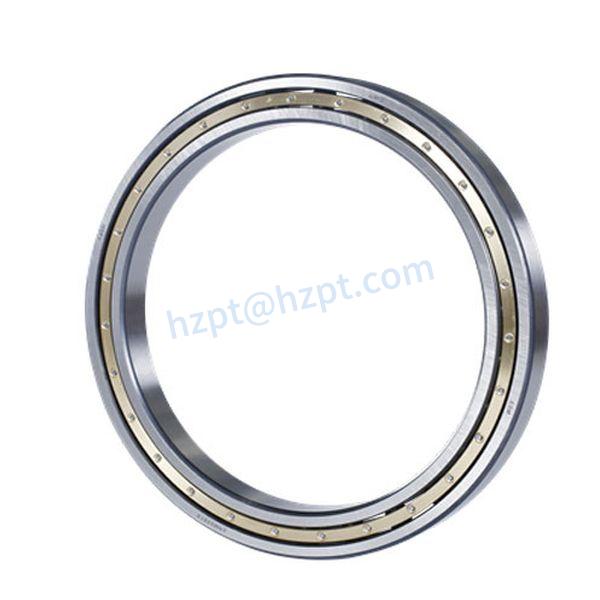
What are the Differences between Deep Groove Ball Bearings and Angular Contact Ball Bearings?
Deep groove ball bearings and angular contact ball bearings are two common types of ball bearings, each designed for specific applications and load conditions. Here are the key differences between these two types of bearings:
- Design and Geometry:
Deep Groove Ball Bearings:
Deep groove ball bearings have a simple design with a single row of balls that run along deep raceways in both the inner and outer rings. The rings are usually symmetrical and non-separable, resulting in a balanced load distribution.
Angular Contact Ball Bearings:
Angular contact ball bearings have a more complex design with two rows of balls, oriented at an angle to the bearing’s axis. This arrangement allows for the transmission of both radial and axial loads, making them suitable for combined loads and applications requiring high precision.
- Load Carrying Capacity:
Deep Groove Ball Bearings:
Deep groove ball bearings are primarily designed to carry radial loads. They can handle axial loads in both directions, but their axial load-carrying capacity is generally lower compared to angular contact ball bearings.
Angular Contact Ball Bearings:
Angular contact ball bearings are specifically designed to handle both radial and axial loads. The contact angle between the rows of balls determines the bearings’ axial load-carrying capacity. They can handle higher axial loads and are commonly used in applications with thrust loads.
- Contact Angle:
Deep Groove Ball Bearings:
Deep groove ball bearings have no defined contact angle, as the balls move in a deep groove along the raceways. They are primarily designed for radial loads.
Angular Contact Ball Bearings:
Angular contact ball bearings have a specified contact angle between the rows of balls. This contact angle allows them to carry both radial and axial loads and is crucial for their ability to handle combined loads.
- Applications:
Deep Groove Ball Bearings:
Deep groove ball bearings are commonly used in applications that primarily require radial loads, such as electric motors, pumps, and conveyor systems. They are also suitable for high-speed operation.
Angular Contact Ball Bearings:
Angular contact ball bearings are used in applications where both radial and axial loads are present, such as in machine tools, automotive wheel hubs, and aerospace components. They are especially useful for applications that require precise axial positioning and handling of thrust loads.
- Limitations:
Deep Groove Ball Bearings:
Deep groove ball bearings are not as suitable for handling significant axial loads and may experience skidding under certain conditions due to their deep raceways.
Angular Contact Ball Bearings:
Angular contact ball bearings can experience increased heat generation and wear at higher speeds due to the contact angle of the balls.
In summary, the design, load-carrying capacity, contact angle, and applications differ between deep groove ball bearings and angular contact ball bearings. Choosing the appropriate type depends on the specific load conditions and requirements of the application.
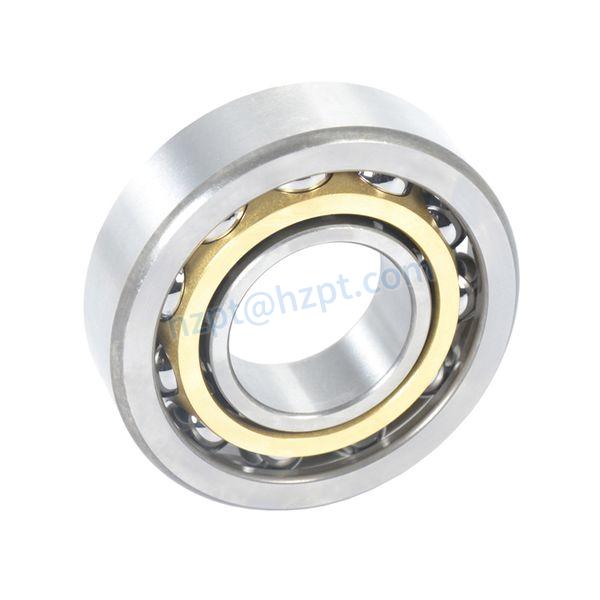
Can you Explain the Various Types of Ball Bearings and their Specific Use Cases?
Ball bearings come in various types, each designed to meet specific application requirements. Here’s an overview of the different types of ball bearings and their specific use cases:
- Deep Groove Ball Bearings:
Deep groove ball bearings are the most common and versatile type. They have a deep raceway that allows them to handle both radial and axial loads. They are used in a wide range of applications, including electric motors, household appliances, automotive components, and industrial machinery.
- Angular Contact Ball Bearings:
Angular contact ball bearings have a contact angle that enables them to handle both radial and axial loads at specific angles. They are suitable for applications where combined loads or thrust loads need to be supported, such as in machine tool spindles, pumps, and agricultural equipment.
- Self-Aligning Ball Bearings:
Self-aligning ball bearings have two rows of balls and are designed to accommodate misalignment between the shaft and the housing. They are used in applications where shaft deflection or misalignment is common, such as conveyor systems, textile machinery, and paper mills.
- Thrust Ball Bearings:
Thrust ball bearings are designed to support axial loads in one direction. They are commonly used in applications where axial loads need to be supported, such as in automotive transmissions, steering systems, and crane hooks.
- Single-Row vs. Double-Row Bearings:
Single-row ball bearings have a single set of balls and are suitable for moderate load and speed applications. Double-row ball bearings have two sets of balls and offer higher load-carrying capacity. Double-row designs are used in applications such as machine tool spindles and printing presses.
- Miniature and Instrument Ball Bearings:
Miniature ball bearings are smaller in size and are used in applications with limited space and lower load requirements. They are commonly used in small electric motors, medical devices, and precision instruments.
- Max-Type and Conrad Bearings:
Max-type ball bearings have a larger number of balls to increase load-carrying capacity. Conrad bearings have fewer balls and are used in applications with moderate loads and speeds.
- High-Precision Ball Bearings:
High-precision ball bearings are designed for applications where accuracy and precision are critical, such as machine tool spindles, aerospace components, and optical instruments.
- High-Speed Ball Bearings:
High-speed ball bearings are engineered to minimize friction and accommodate rapid rotation. They are used in applications such as dental handpieces, turbochargers, and centrifuges.
In summary, the various types of ball bearings are tailored to different application requirements, including load type, direction, speed, and environmental conditions. Selecting the appropriate type of ball bearing ensures optimal performance and longevity in specific applications.


editor by CX 2024-04-17
China factory Chrome Steel Ceramic Deep Groove Ball Bearing 623 624 625 626 627 CZPT CZPT CZPT CZPT CZPT C&U Bearing bearing driver
Product Description
Product Description
| Bearing No. | Shape Dimension | Basic load Rating KN |
Max Speed rpm |
Mass | |||||
| Bore d |
Outer Diameter D |
Width B |
Radius r min | Dynamic | Static | Grease | Oil | ||
| mm | mm | mm | mm | Cr | Cor | Kg | |||
| 6000 Series | |||||||||
| 606 | 6 | 17 | 6 | 0.3 | 1.95 | 0.72 | 30000 | 38000 | 0.0057 |
| 607 | 7 | 19 | 6 | 0.3 | 2.88 | 1.08 | 28000 | 36000 | 0.0071 |
| 608 | 8 | 22 | 7 | 0.3 | 3.32 | 1.38 | 26000 | 34000 | 0.011 |
| 609 | 9 | 24 | 7 | 0.3 | 3.35 | 1.4 | 22000 | 30000 | 0.014 |
| 6000 | 10 | 26 | 8 | 0.3 | 4.58 | 1.98 | 20000 | 28000 | 0.018 |
| 6001 | 12 | 28 | 8 | 0.3 | 5.1 | 2.38 | 19000 | 26000 | 0.02 |
| 6002 | 15 | 32 | 9 | 0.3 | 5.58 | 2.85 | 18000 | 24000 | 0.026 |
| 6003 | 17 | 35 | 10 | 0.3 | 6 | 3.25 | 17000 | 22000 | 0.036 |
| 6004 | 20 | 42 | 12 | 0.6 | 9.38 | 5.02 | 15000 | 19000 | 0.069 |
| 6005 | 25 | 47 | 12 | 0.6 | 10.1 | 5.85 | 13000 | 17000 | 0.075 |
| 6006 | 30 | 55 | 13 | 1 | 10.18 | 6.91 | 10000 | 14000 | 0.116 |
| 6007 | 35 | 62 | 14 | 1 | 12.47 | 8.66 | 9000 | 12000 | 0.155 |
| 6008 | 40 | 68 | 15 | 1 | 13.1 | 9.45 | 8500 | 11000 | 0.185 |
| 6009 | 45 | 75 | 16 | 1 | 16.22 | 11.96 | 8000 | 10000 | 0.231 |
| 6571 | 50 | 80 | 16 | 1 | 16.94 | 12.95 | 7000 | 9000 | 0.25 |
| 6011 | 55 | 90 | 18 | 1.1 | 23.28 | 17.86 | 7000 | 8500 | 0.362 |
| 6012 | 60 | 95 | 18 | 1.1 | 24.35 | 19.35 | 6300 | 7500 | 0.385 |
| 6013 | 65 | 100 | 18 | 1.1 | 24.66 | 19.74 | 6000 | 7000 | 0.41 |
| 6014 | 70 | 110 | 20 | 1.1 | 29.68 | 24.2 | 5600 | 6700 | 0.575 |
| 6015 | 75 | 115 | 20 | 1.1 | 30.91 | 26.06 | 5300 | 6300 | 0.603 |
| 6016 | 80 | 125 | 22 | 1.1 | 36.57 | 31.36 | 5000 | 6000 | 0.821 |
| 6017 | 85 | 130 | 22 | 1.1 | 39.04 | 33.75 | 4500 | 5600 | 0.848 |
| 6018 | 90 | 140 | 24 | 1.5 | 44.63 | 39.16 | 4300 | 5300 | 1.1 |
Detailed Photos
Ball Bearings
1.0 Introduction
Ball bearings are used widely in instruments and machines in order to minimize friction and power loss. While the concept of the ball bearing dates back at least Leonardo da Vinci, their design and manufacture has become remarkably sophisticated. In the following we shall review their basic characteristics.
2.0 Types of Ball Bearings
Commercially available ball bearings, which are usually made from hardened steel, involve many forms of construction. These have been summarized by A.O. DeHart (“Which Bearings and Why”, ASME Paper 59-MD-12, 1959), from which source the following material (including Figures 1 & 2) is hereby reprinted*
“A typical deep-groove ball bearing designed for high-speed operation is shown in Figure 1. In this bearing, the separator serves to keep the balls from rubbing against 1 another as is piloted on the inner race OD. Alternatively, the separator may be piloted by the rolling elements or by the outer race ID. Where rotative speeds are low, the separator often is omitted. The rolling elements may take many forms – cylinders, balls, tapered rollers, barrels, or very slim rollers known as needles – and the whole bearing name is generally taken from this form.
Packaging & Shipping
FAQ
SAMPLES
1.Samples quantity: 1-10 pcs are available.
2.Free samples: It depends on the model NO., material and quantity. Some of the bearings samples need client to pay
samples charge and shipping cost.
3.It’s better to start your order with Trade Assurance to get full protection for your samples order.
CUSTOMIZED
The customized LOGO or drawing is acceptable for us.
MOQ
1.MOQ: 10 pcs mix different standard bearings.
2.MOQ: 3000 pcs customized your brand bearings.
OEM POLICY
1.We can printing your brand (logo,artwork)on the shield or laser engraving your brand on the shield.
2.We can custom your packaging according to your design
3.All copyright own by clients and we promised don’t disclose any info.
SUPORT
Please visit our bearings website, we strongly encourge that you can communicate with us through email,thanks!
We have all kinds of bearings, just tell me your item number and quantity,best price will be offered to you soon
The material of the bearings, precision rating, seals type,OEM service,etc, all of them we can make according to your requirement.
/* March 10, 2571 17:59:20 */!function(){function s(e,r){var a,o={};try{e&&e.split(“,”).forEach(function(e,t){e&&(a=e.match(/(.*?):(.*)$/))&&1
| Bearing Direction: | Radial |
|---|---|
| Lubricating Film Thickness: | Thin Film Lubrication |
| Presicion: | P0, P6, P5, P4, P2 |
| Bore Size: | 3 – 2390 mm |
| Bushing Material: | Self-Lubrication |
| Lubricating Way: | Maintenance-Free Bearing |
| Samples: |
US$ 1/Piece
1 Piece(Min.Order) | |
|---|
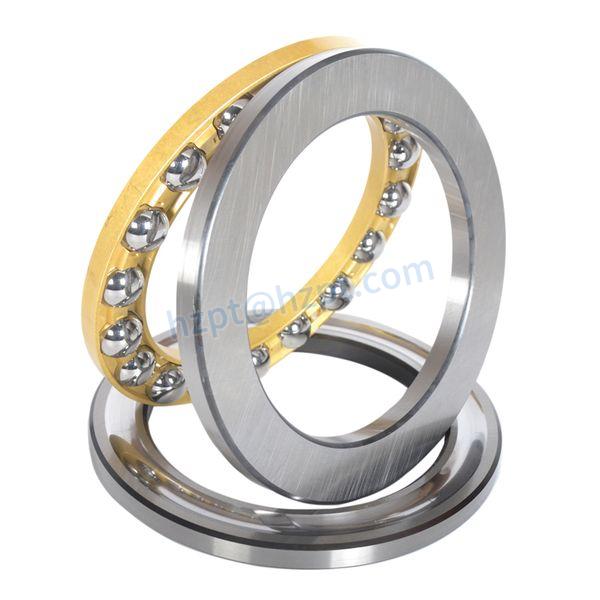
Can you Provide Examples of Industries where Ball Bearings are Crucial Components?
Ball bearings are essential components in a wide range of industries where smooth motion, load support, and precision are vital. Here are some examples of industries where ball bearings play a crucial role:
- Automotive Industry:
Ball bearings are used in various automotive applications, including wheel hubs, transmissions, engines, steering systems, and suspension components. They provide reliable rotation and support in both passenger vehicles and commercial vehicles.
- Aerospace Industry:
In the aerospace sector, ball bearings are found in aircraft engines, landing gear systems, control surfaces, and avionics equipment. Their ability to handle high speeds and precision is vital for aviation safety.
- Industrial Machinery:
Ball bearings are integral to a wide range of industrial machinery, including pumps, compressors, conveyors, machine tools, printing presses, and textile machinery. They facilitate smooth operation and load distribution in these diverse applications.
- Medical Equipment:
In medical devices and equipment, ball bearings are used in surgical instruments, imaging equipment, dental tools, and laboratory machinery. Their precision and smooth movement are crucial for accurate diagnostics and treatments.
- Robotics and Automation:
Ball bearings are key components in robotic arms, automation systems, and manufacturing machinery. They enable precise movement, high-speed operation, and reliable performance in automated processes.
- Renewable Energy:
Wind turbines and solar tracking systems utilize ball bearings to enable efficient rotation and tracking of the wind blades and solar panels. Ball bearings withstand the dynamic loads and environmental conditions in renewable energy applications.
- Marine and Shipbuilding:
Ball bearings are used in marine applications such as ship propulsion systems, steering mechanisms, and marine pumps. They withstand the corrosive environment and provide reliable performance in maritime operations.
- Heavy Equipment and Construction:
In construction machinery like excavators, bulldozers, and cranes, ball bearings support the movement of heavy loads and enable efficient operation in demanding environments.
- Electronics and Consumer Appliances:
Consumer electronics like electric motors, computer hard drives, and household appliances rely on ball bearings for smooth motion and reliable operation.
- Oil and Gas Industry:
In oil and gas exploration and extraction equipment, ball bearings are used in drilling rigs, pumps, and processing machinery. They handle the high loads and harsh conditions of this industry.
These examples demonstrate how ball bearings are indispensable components in various industries, contributing to the efficiency, reliability, and functionality of diverse mechanical systems and equipment.
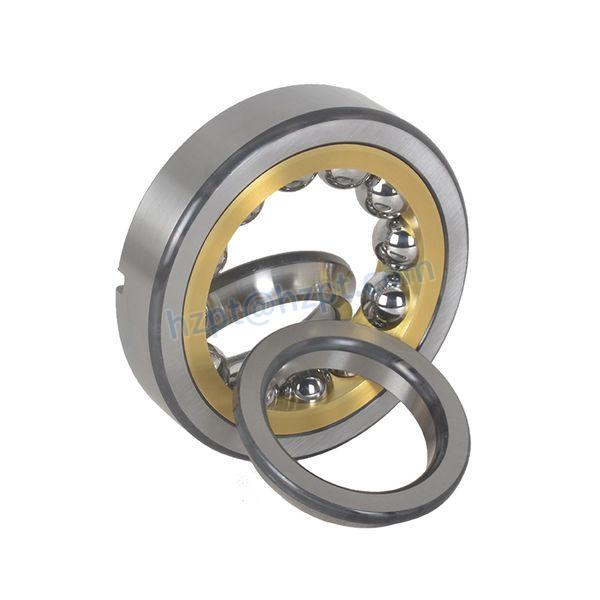
How do Temperature and Environmental Conditions Affect the Performance of Ball Bearings?
Temperature and environmental conditions have a significant impact on the performance and longevity of ball bearings. The operating environment can influence factors such as lubrication effectiveness, material properties, and overall bearing behavior. Here’s how temperature and environmental conditions affect ball bearing performance:
- Lubrication:
Temperature variations can affect the viscosity and flow characteristics of lubricants. Extreme temperatures can cause lubricants to become too thin or too thick, leading to inadequate lubrication and increased friction. In high-temperature environments, lubricants can degrade, reducing their effectiveness.
- Material Properties:
Temperature changes can alter the material properties of the bearing components. High temperatures can lead to thermal expansion, affecting bearing clearances and potentially causing interference between components. Extreme cold temperatures can make materials more brittle and prone to fracture.
- Clearance Changes:
Temperature fluctuations can cause changes in the internal clearance of ball bearings. For instance, at high temperatures, materials expand, leading to increased clearance. This can affect bearing performance, load distribution, and overall stability.
- Corrosion and Contamination:
Harsh environmental conditions, such as exposure to moisture, chemicals, or abrasive particles, can lead to corrosion and contamination of bearing components. Corrosion weakens the material, while contamination accelerates wear and reduces bearing life.
- Thermal Stress:
Rapid temperature changes can result in thermal stress within the bearing components. Differential expansion and contraction between the inner and outer rings can lead to stress and distortion, affecting precision and bearing integrity.
- Noise and Vibration:
Temperature-related changes in material properties and internal clearances can influence noise and vibration levels. Extreme temperatures can lead to increased noise generation and vibration, affecting the overall operation of machinery.
- Lubricant Degradation:
Environmental factors like humidity, dust, and contaminants can lead to premature lubricant degradation. Oxidation, moisture absorption, and the presence of foreign particles can compromise the lubricant’s performance and contribute to increased friction and wear.
- Seal Effectiveness:
Seals and shields that protect bearings from contaminants can be affected by temperature fluctuations. Extreme temperatures can lead to seal hardening, cracking, or deformation, compromising their effectiveness in preventing contamination.
- Choosing Appropriate Bearings:
When selecting ball bearings for specific applications, engineers must consider the expected temperature and environmental conditions. High-temperature bearings, bearings with specialized coatings, and those with enhanced sealing mechanisms may be necessary to ensure reliable performance.
Overall, understanding the impact of temperature and environmental conditions on ball bearing performance is crucial for proper bearing selection, maintenance, and ensuring optimal operation in diverse industries and applications.
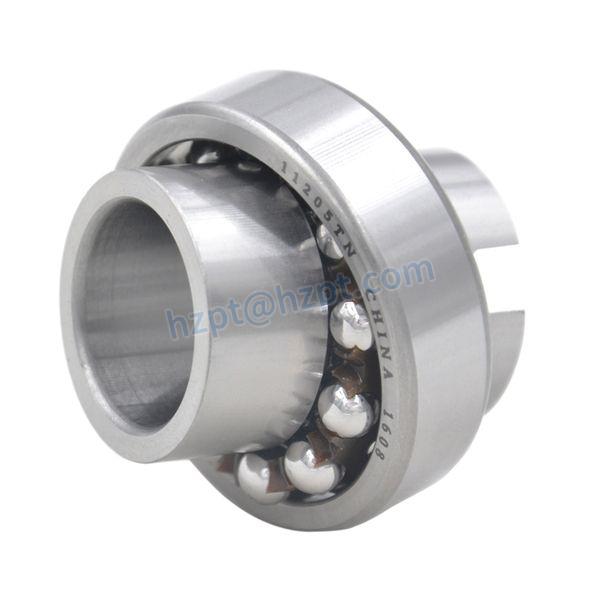
What Factors should be Considered when Selecting a Ball Bearing for a Particular Application?
Selecting the right ball bearing for a specific application involves careful consideration of various factors to ensure optimal performance, longevity, and reliability. Here are the key factors that should be taken into account:
- Load Type and Magnitude:
Determine the type of load (radial, axial, or combined) and the magnitude of the load that the bearing will need to support. Choose a bearing with the appropriate load-carrying capacity to ensure reliable operation.
- Speed and Operating Conditions:
Consider the rotational speed of the application and the operating conditions, such as temperature, humidity, and exposure to contaminants. Different bearing types and materials are suited for varying speeds and environments.
- Accuracy and Precision:
For applications requiring high accuracy and precision, such as machine tool spindles or optical instruments, choose high-precision bearings that can maintain tight tolerances and minimize runout.
- Space Limitations:
If the application has limited space, choose miniature or compact ball bearings that can fit within the available dimensions without compromising performance.
- Thrust and Radial Loads:
Determine whether the application requires predominantly thrust or radial load support. Choose the appropriate type of ball bearing (thrust, radial, or angular contact) based on the primary load direction.
- Alignment and Misalignment:
If the application experiences misalignment between the shaft and housing, consider self-aligning ball bearings that can accommodate angular misalignment.
- Mounting and Installation:
Consider the ease of mounting and dismounting the bearing. Some applications may benefit from features like flanges or snap rings for secure installation.
- Lubrication and Maintenance:
Choose a bearing with appropriate lubrication options based on the application’s speed and temperature range. Consider whether seals or shields are necessary to protect the bearing from contaminants.
- Environmental Conditions:
Factor in the operating environment, including exposure to corrosive substances, chemicals, water, or dust. Choose materials and coatings that can withstand the specific environmental challenges.
- Bearing Material:
Select a bearing material that suits the application’s requirements. Common materials include stainless steel for corrosion resistance and high-carbon chrome steel for general applications.
- Bearing Arrangement:
Consider whether a single-row, double-row, or multiple bearings in a specific arrangement are needed to accommodate the loads and moments present in the application.
By carefully evaluating these factors, engineers and designers can choose the most suitable ball bearing that aligns with the specific demands of the application, ensuring optimal performance, durability, and overall operational efficiency.
editor by CX 2024-02-21