Product Description
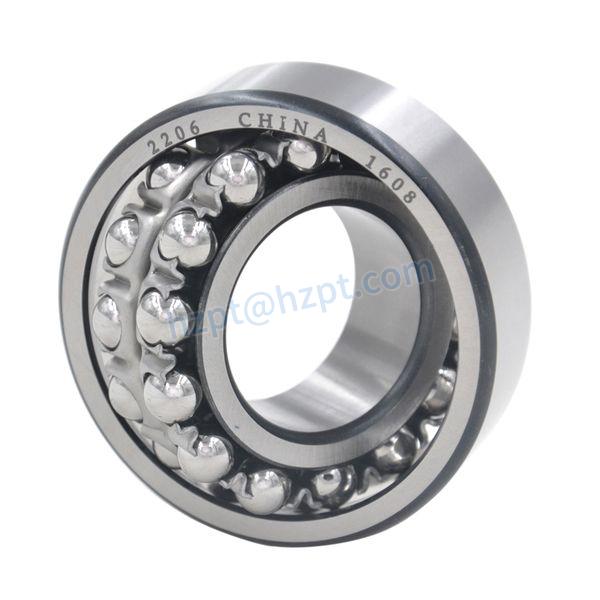
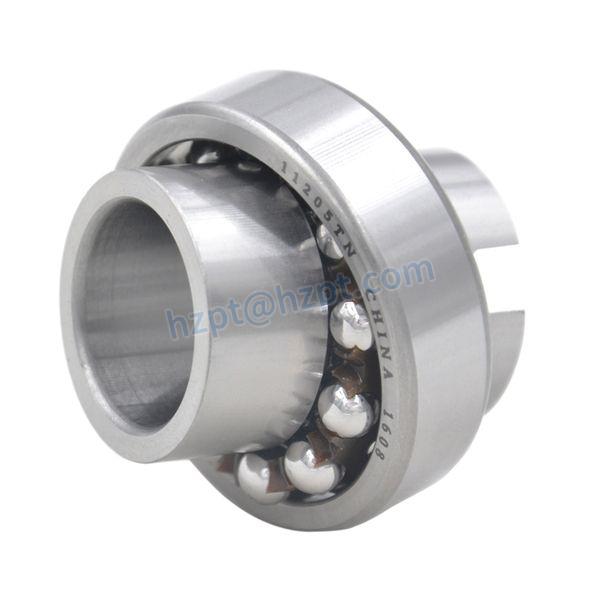
Self aligning ball bearings mainly bear radial loads and can also withstand small axial loads. The axial displacement of the
shaft (shell) is limited within the clearance limit, with automatic centering performance, allowing normal operation under
conditions of relatively small internal and external inclination. It is suitable for components where the support seat hole cannot
strictly guarantee coaxiality. Self aligning ball bearings are suitable for bearing heavy and impact loads, precision instruments,
low noise motors, automobiles, motorcycles, metallurgy, rolling mills, mines, petroleum, papermaking, cement, sugar squeezing
and other industries, as well as general machinery.
|
Type |
BALL |
|
Structure |
Self-Aligning |
|
Applicable Industries |
Food Shop, Energy & Mining, Food & Beverage Shops, Advertising Company |
|
Precision Rating |
P0 P6 P5 P4 P2 |
|
Seals Type |
OPEN OR SEAL |
|
Number of Row |
Double row |
|
Product name |
Self-aligning Roller Bearing |
Company Profile
In order to meet the needs of the masses of customers and improve the market competitiveness of our company,
we can provide OEM service according to our customers′ Needs. We have gained ISO9001 certificate, CE certificate,
GOST certificate and SGS certificate. Our target is to carry out the strategic investment along with the development
of market and need of new products. With our strategic, excellent products, top technology and outstanding service,
we sincerely expect cooperation with more customers and friends for a better future. Our main products include
spherical roller bearing, deep groove ball bearings, cylindrical roller bearings, spherical roller bearings, needle roller
bearings, ball bearing units, water pump bearings, automobile bearing, linear motion bearing, oil-less bearings,
bush and self-lubricating bearings, and non-standard bearings. Also, we supply bearings to our domestic peeling
machine factory and the machine exported to India, Malaysia and Russia, no any complaint from customer until now.
“zero defect, zero complaints” as the quality objective.
FAQ
Q: Are you trading company or manufacturer ?
A: We are a trading company specializing in exporting bearings.
Q: How long is your delivery time?
A: Generally it is 5-10 days if the goods are in stock. or it is 15-20 days if the
goods are not in stock, it is according to quantity.
Q: Do you provide samples ? is it free or extra ?
A: Yes, we could offer the sample for free charge
Q.You provide free consultation service?
Yes, before, during and after order, anytime.
/* January 22, 2571 19:08:37 */!function(){function s(e,r){var a,o={};try{e&&e.split(“,”).forEach(function(e,t){e&&(a=e.match(/(.*?):(.*)$/))&&1
| Product Name: | Self Aligning Ball Bearing |
|---|---|
| Characteristic: | High Precision |
| Advantage: | Large Bearing Capacity |
| Holder: | Copper and Iron Retainers |
| Quality: | High Quality |
| Rolling Body: | Roller Bearings |
| Samples: |
US$ 5/Piece
1 Piece(Min.Order) | |
|---|
| Customization: |
Available
| Customized Request |
|---|
Are there Specific Maintenance Practices to Ensure the Longevity of Ball Bearings?
Maintaining ball bearings is essential to ensure their longevity, reliable performance, and prevent premature failure. Proper maintenance practices can extend the lifespan of ball bearings and the equipment they are used in. Here are specific maintenance practices to consider:
- Regular Lubrication:
Implement a regular lubrication schedule using the appropriate lubricant for the application. Lubrication reduces friction, prevents wear, and helps dissipate heat. Follow manufacturer guidelines for lubricant type, quantity, and frequency.
- Clean Environment:
Keep the operating environment clean and free from contaminants. Dust, dirt, and debris can infiltrate bearings and cause damage. Use seals or shields to protect bearings from contaminants, especially in harsh environments.
- Proper Installation:
Ensure correct installation of bearings using proper tools and techniques. Improper installation can lead to misalignment, uneven load distribution, and premature wear. Follow manufacturer recommendations for installation procedures.
- Regular Inspections:
Perform routine visual inspections to check for signs of wear, damage, or contamination. Regular inspections can help identify issues early and prevent further damage. Pay attention to noise, vibration, and temperature changes.
- Temperature Monitoring:
Monitor bearing temperatures during operation using infrared thermometers or sensors. Abnormal temperature increases can indicate inadequate lubrication, misalignment, or other problems.
- Correct Handling:
Handle bearings with care to prevent damage during storage, transportation, and installation. Avoid dropping or subjecting them to impacts that can affect their internal components.
- Bearing Removal and Replacement:
Follow proper procedures when removing and replacing bearings. Use appropriate tools and techniques to avoid damage to the bearing or the surrounding components.
- Alignment Maintenance:
Maintain proper shaft and housing alignment to prevent excessive loads and wear on the bearing. Misalignment can lead to increased stress and premature failure.
- Training and Education:
Provide training to operators and maintenance personnel on proper bearing maintenance and handling practices. Educated personnel are more likely to identify issues and perform maintenance correctly.
- Documented Records:
Keep records of maintenance activities, inspections, lubrication schedules, and any issues encountered. This documentation helps track the bearing’s performance over time and informs future maintenance decisions.
By implementing these maintenance practices, you can ensure the longevity of ball bearings, minimize downtime, reduce operational costs, and maintain the reliability of the equipment they are a part of.
How do Ceramic Ball Bearings Compare to Traditional Steel Ball Bearings in Terms of Performance?
Ceramic ball bearings and traditional steel ball bearings have distinct characteristics that can impact their performance in various applications. Here’s a comparison of how these two types of bearings differ in terms of performance:
- Material Composition:
Ceramic Ball Bearings:
Ceramic ball bearings use ceramic rolling elements, typically made from materials like silicon nitride (Si3N4) or zirconium dioxide (ZrO2). These ceramics are known for their high hardness, low density, and resistance to corrosion and wear.
Traditional Steel Ball Bearings:
Traditional steel ball bearings use steel rolling elements. The type of steel used can vary, but common materials include chrome steel (52100) and stainless steel (440C). Steel bearings are known for their durability and strength.
- Friction and Heat:
Ceramic Ball Bearings:
Ceramic bearings have lower friction coefficients compared to steel bearings. This results in reduced heat generation during operation, contributing to higher efficiency and potential energy savings.
Traditional Steel Ball Bearings:
Steel bearings can generate more heat due to higher friction coefficients. This can lead to increased energy consumption in applications where efficiency is crucial.
- Weight:
Ceramic Ball Bearings:
Ceramic bearings are lighter than steel bearings due to the lower density of ceramics. This weight reduction can be advantageous in applications where minimizing weight is important.
Traditional Steel Ball Bearings:
Steel bearings are heavier than ceramic bearings due to the higher density of steel. This weight may not be as critical in all applications but could impact overall equipment weight and portability.
- Corrosion Resistance:
Ceramic Ball Bearings:
Ceramic bearings have excellent corrosion resistance, making them suitable for applications in corrosive environments, such as marine or chemical industries.
Traditional Steel Ball Bearings:
Steel bearings are susceptible to corrosion, especially in harsh environments. Stainless steel variants offer improved corrosion resistance but may still corrode over time.
- Speed and Precision:
Ceramic Ball Bearings:
Ceramic bearings can operate at higher speeds due to their lower friction and ability to withstand higher temperatures. They are also known for their high precision and low levels of thermal expansion.
Traditional Steel Ball Bearings:
Steel bearings can operate at high speeds as well, but their heat generation may limit performance in certain applications. Precision steel bearings are also available but may have slightly different characteristics compared to ceramics.
- Cost:
Ceramic Ball Bearings:
Ceramic bearings are generally more expensive to manufacture than steel bearings due to the cost of ceramic materials and the challenges in producing precision ceramic components.
Traditional Steel Ball Bearings:
Steel bearings are often more cost-effective to manufacture, making them a more economical choice for many applications.
In conclusion, ceramic ball bearings and traditional steel ball bearings offer different performance characteristics. Ceramic bearings excel in terms of low friction, heat generation, corrosion resistance, and weight reduction. Steel bearings are durable, cost-effective, and widely used in various applications. The choice between the two depends on the specific requirements of the application, such as speed, precision, corrosion resistance, and budget considerations.
What are the Primary Benefits of Using Ball Bearings in Machinery and Equipment?
Ball bearings offer several primary benefits when used in machinery and equipment. Their design and functionality provide advantages that contribute to the efficient and reliable operation of various applications. Here are the key benefits:
- Reduced Friction:
One of the primary benefits of ball bearings is their ability to minimize friction between moving parts. The rolling motion of the balls reduces the contact area and sliding friction, leading to smoother operation and less energy loss due to frictional heating.
- Efficient Load Support:
Ball bearings are engineered to support both radial and axial loads, making them versatile for applications with multidirectional forces. This load-bearing capability allows machinery to handle different types of loads while maintaining performance and stability.
- Smooth Rotation:
Ball bearings enable smooth and precise rotational movement. The rolling motion of the balls provides consistent motion with minimal resistance, ensuring that machinery operates smoothly and without jerks.
- High-Speed Capability:
Due to their low friction and efficient rolling action, ball bearings are suitable for high-speed applications. They allow machinery and equipment to achieve and maintain high rotational speeds without excessive wear or heat buildup.
- Reduced Wear and Maintenance:
The reduced friction in ball bearings leads to lower wear on components. This results in longer service intervals and reduced maintenance requirements, saving both time and maintenance costs.
- Energy Efficiency:
By minimizing friction and reducing energy losses, ball bearings contribute to the overall energy efficiency of machinery. This is particularly important in applications where energy consumption is a concern.
- Versatility:
Ball bearings come in various types, sizes, and configurations, allowing them to be used in a wide range of machinery and equipment. They can be customized to suit specific application requirements.
- Reliability and Longevity:
Ball bearings are designed to withstand heavy loads and harsh operating conditions. Their durability and resistance to wear ensure reliable performance and an extended operational life.
- Quiet Operation:
Ball bearings contribute to quiet machinery operation due to the smooth rolling motion of the balls. This is particularly important in applications where noise reduction is a consideration.
In summary, the primary benefits of using ball bearings in machinery and equipment include reduced friction, efficient load support, smooth rotation, high-speed capability, reduced wear and maintenance, energy efficiency, versatility, reliability, and quiet operation. These benefits collectively enhance the performance and longevity of machinery across various industries.


editor by CX 2024-05-14
China wholesaler High Quality Price List Deep Groove Ball Bearing 6201 6202 6203 6204 6205 Deep Groove Ball Bearing supplier
Product Description
Angular contact ball bearings, Magneto bearing E series
Product description:
1. Bearing No.: E4Y/TN — E20 Y/TN
2. Bearing type: Magneto bearing
3. Bearing material: Chrome steel (AISI521
17. Payment: T/T, L/C, D/P, D/A, OA…all terms in acceptable
Our factory:
Other products:
Our certifications:
FAQ:
Q: Are you trading company or manufacturer ?
A: Our company is called HangZhou stw-industrial co,ltd,and there is a factory which called Huari, so we are both trading company and manufacturers
Q: How long is your delivery time?
A: Generally it is 7 days,it is 20-30 days if the goods are not in stock, it is according to quantity.
Q: Do you provide samples ? is it free or extra ?
A: Yes, we could offer the sample for free charge but do not pay the cost of freight.
Welcome to send your inquiry to us.
/* January 22, 2571 19:08:37 */!function(){function s(e,r){var a,o={};try{e&&e.split(“,”).forEach(function(e,t){e&&(a=e.match(/(.*?):(.*)$/))&&1
| Contact Angle: | 45° |
|---|---|
| Aligning: | Aligning Bearing |
| Separated: | Separated |
| Rows Number: | Double |
| Load Direction: | Radial Bearing |
| Material: | Chrome Steel |
| Samples: |
US$ 0/Piece
1 Piece(Min.Order) | |
|---|
| Customization: |
Available
| Customized Request |
|---|
What are the Challenges Associated with Noise Reduction in Ball Bearings?
Noise reduction in ball bearings is a crucial consideration, especially in applications where noise levels must be minimized for operational efficiency and user comfort. While ball bearings are designed to operate smoothly, there are several challenges associated with reducing noise in their operation:
- Vibration:
Vibration generated by the movement of rolling elements and raceways can lead to noise. Even minor irregularities in bearing components or the mounting system can cause vibration that translates into audible noise.
- Bearing Type and Design:
The type and design of the ball bearing can impact noise generation. For example, deep groove ball bearings are known for their quiet operation, while angular contact bearings can generate more noise due to their higher contact angles.
- Lubrication:
Improper or inadequate lubrication can result in increased friction and wear, leading to noise. Choosing the right lubricant and maintaining proper lubrication levels are essential for reducing noise in ball bearings.
- Bearing Clearance and Preload:
Incorrect clearance or preload settings can lead to noise issues. Excessive clearance or inadequate preload can cause the rolling elements to impact the raceways, resulting in noise during rotation.
- Material and Manufacturing Quality:
The quality of materials and manufacturing processes can affect noise levels. Inconsistent or low-quality materials, improper heat treatment, or manufacturing defects can lead to noise generation during operation.
- Surface Finish:
The surface finish of the rolling elements and raceways can impact noise. Rough surfaces can generate more noise due to increased friction and potential irregularities.
- Sealing and Shielding:
Seals and shields that protect bearings can influence noise levels. While they are necessary for contamination prevention, they can also cause additional friction and generate noise.
- Operating Conditions:
External factors such as temperature, speed, and load can influence noise levels. High speeds or heavy loads can amplify noise due to increased stress on the bearing components.
- Wear and Deterioration:
As ball bearings wear over time, noise levels can increase. Worn components or inadequate lubrication can lead to more significant noise issues as the bearing operates.
To address these challenges and reduce noise in ball bearings, manufacturers and engineers employ various techniques, such as optimizing design, selecting suitable bearing types, using proper lubrication, maintaining accurate preload settings, and ensuring high-quality materials and manufacturing processes. Noise reduction efforts are essential to improve overall product quality, meet noise regulations, and enhance user experience in various applications.
How do Miniature Ball Bearings Differ from Standard-sized Ones, and Where are They Commonly Used?
Miniature ball bearings, as the name suggests, are smaller in size compared to standard-sized ball bearings. They have distinct characteristics and are designed to meet the unique requirements of applications that demand compactness, precision, and efficient rotation in confined spaces. Here’s how miniature ball bearings differ from standard-sized ones and where they are commonly used:
- Size:
The most noticeable difference is their size. Miniature ball bearings typically have outer diameters ranging from a few millimeters to around 30 millimeters, while standard-sized ball bearings have larger dimensions suitable for heavier loads and higher speeds.
- Load Capacity:
Due to their smaller size, miniature ball bearings have lower load-carrying capacities compared to standard-sized bearings. They are designed for light to moderate loads and are often used in applications where precision and compactness are prioritized over heavy load support.
- Precision:
Miniature ball bearings are known for their high precision and accuracy. They are manufactured to tighter tolerances, making them suitable for applications requiring precise motion control and low levels of vibration.
- Speed:
Miniature ball bearings can achieve higher speeds than standard-sized bearings due to their smaller size and lower mass. This makes them ideal for applications involving high-speed rotation.
- Friction and Efficiency:
Miniature ball bearings generally have lower friction due to their smaller contact area. This contributes to higher efficiency and reduced heat generation in applications that require smooth and efficient motion.
- Applications:
Miniature ball bearings find applications in various industries and sectors:
- Electronics and Consumer Devices:
They are used in small motors, computer disk drives, printers, and miniature fans, where space is limited but precise motion is essential.
- Medical and Dental Equipment:
Miniature bearings are used in medical devices such as surgical instruments, dental handpieces, and diagnostic equipment due to their precision and compactness.
- Robotics and Automation:
Miniature ball bearings are integral to robotic arms, miniature conveyors, and automation systems, enabling precise movement in confined spaces.
- Aerospace and Defense:
They are used in applications like UAVs (drones), aerospace actuators, and satellite components where size and weight constraints are critical.
- Optics and Instrumentation:
Miniature bearings play a role in optical instruments, cameras, and measuring devices, providing smooth rotation and accurate positioning.
Overall, miniature ball bearings are specialized components designed for applications where space, precision, and efficient rotation are paramount. Their compactness and high precision make them crucial in various industries requiring reliable motion control in limited spaces.
What Factors should be Considered when Selecting a Ball Bearing for a Particular Application?
Selecting the right ball bearing for a specific application involves careful consideration of various factors to ensure optimal performance, longevity, and reliability. Here are the key factors that should be taken into account:
- Load Type and Magnitude:
Determine the type of load (radial, axial, or combined) and the magnitude of the load that the bearing will need to support. Choose a bearing with the appropriate load-carrying capacity to ensure reliable operation.
- Speed and Operating Conditions:
Consider the rotational speed of the application and the operating conditions, such as temperature, humidity, and exposure to contaminants. Different bearing types and materials are suited for varying speeds and environments.
- Accuracy and Precision:
For applications requiring high accuracy and precision, such as machine tool spindles or optical instruments, choose high-precision bearings that can maintain tight tolerances and minimize runout.
- Space Limitations:
If the application has limited space, choose miniature or compact ball bearings that can fit within the available dimensions without compromising performance.
- Thrust and Radial Loads:
Determine whether the application requires predominantly thrust or radial load support. Choose the appropriate type of ball bearing (thrust, radial, or angular contact) based on the primary load direction.
- Alignment and Misalignment:
If the application experiences misalignment between the shaft and housing, consider self-aligning ball bearings that can accommodate angular misalignment.
- Mounting and Installation:
Consider the ease of mounting and dismounting the bearing. Some applications may benefit from features like flanges or snap rings for secure installation.
- Lubrication and Maintenance:
Choose a bearing with appropriate lubrication options based on the application’s speed and temperature range. Consider whether seals or shields are necessary to protect the bearing from contaminants.
- Environmental Conditions:
Factor in the operating environment, including exposure to corrosive substances, chemicals, water, or dust. Choose materials and coatings that can withstand the specific environmental challenges.
- Bearing Material:
Select a bearing material that suits the application’s requirements. Common materials include stainless steel for corrosion resistance and high-carbon chrome steel for general applications.
- Bearing Arrangement:
Consider whether a single-row, double-row, or multiple bearings in a specific arrangement are needed to accommodate the loads and moments present in the application.
By carefully evaluating these factors, engineers and designers can choose the most suitable ball bearing that aligns with the specific demands of the application, ensuring optimal performance, durability, and overall operational efficiency.
editor by CX 2024-04-04
China manufacturer Original Ball Bearings Price List 6205 2RS1 6205 Bearing Supplier bearing block
Product Description
| Rows Number | Single | Load Direction | Radial Bearing |
| Material | Bearing Steel | Precision Rating | PO P6 P5 P4 P2 |
| Clearance | CO C1 C2 C3 C4 | Lubrication | Oil Lubrication |
| OEM | Available | Hardness | 59-63HRC |
| Feature | High Speed,Long Life | Transport Package | Single Box |
| Specification | standard | Trademark | Packing |
| Production Capacity | 1500,000 Pieces/Year |
The outer spherical ball bearing is actually a variant of the deep groove ball bearing. Its characteristic is that its outer ring outer diameter surface is a spherical surface, which can be fitted into the corresponding concave spherical surface of the bearing seat to play the role of centering. The outer spherical bearing is mainly used to bear the combined radial and axial load based on the radial load, and it is generally not suitable to bear the axial load alone.
| UC200 series | ||||||||||||
| Bearing type | Dimensions(mm) | Weight(KG) | basic load capacity(KN) | Limt speed(r/min) | ||||||||
| d | D | B | C | S | G | H | ds | dynamic | static | |||
| UC201 | 12 | 40 | 27.4 | 14 | 11.5 | 4.5 | 4 | M*0.75 | 0.12 | 7.36 | 4.48 | 4000 |
| UC202 | 15 | 40 | 27.4 | 14 | 11.5 | 4.5 | 4 | M*0.75 | 0.11 | 7.36 | 4.48 | 4000 |
| UC203 | 17 | 40 | 27.4 | 14 | 11.5 | 4.5 | 4 | M*0.75 | 0.1 | 7.36 | 4.48 | 4000 |
| UC204 | 20 | 47 | 31 | 17 | 12.7 | 4.7 | 4.5 | M6*1.0 | 0.16 | 9.88 | 6.2 | 4000 |
| UC205 | 25 | 52 | 34.1 | 17 | 14.3 | 5.5 | 4.7 | M6*1.0 | 0.19 | 10.78 | 6.98 | 3400 |
| UC206 | 30 | 62 | 38.1 | 19 | 15.9 | 6 | 4.5 | M6*1.0 | 0.31 | 14.97 | 10.04 | 2800 |
| UC207 | 35 | 72 | 42.9 | 20 | 17.5 | 6.5 | 5.1 | M8*1.0 | 0.48 | 19.75 | 13.67 | 2400 |
| UC208 | 40 | 80 | 49.2 | 21 | 19 | 8 | 5.8 | M8*1.0 | 0.62 | 22.71 | 15.94 | 2200 |
| UC209 | 45 | 85 | 49.2 | 22 | 19 | 8 | 6.2 | M8*1.0 | 0.67 | 24.36 | 17.71 | 1900 |
| UC210 | 50 | 90 | 51.6 | 23 | 19 | 9 | 6.5 | M10*1.0 | 0.78 | 26.98 | 19.84 | 1800 |
| UC211 | 55 | 100 | 55.6 | 25 | 22.2 | 9 | 7.3 | M10*1.0 | 1.03 | 33.37 | 25.11 | 1600 |
| UC212 | 60 | 110 | 65.1 | 27 | 25.4 | 11 | 7.7 | M10*1.0 | 1.45 | 36.74 | 27.97 | 1500 |
| UC213 | 65 | 120 | 65.1 | 28 | 25.4 | 12 | 8.3 | M10*1.0 | 1.71 | 44.01 | 34.18 | 1400 |
| UC214 | 70 | 125 | 74.6 | 30 | 30.2 | 12 | 8.7 | M12*1.25 | 2.06 | 46.79 | 37.59 | 1300 |
| UC215 | 75 | 130 | 77.8 | 30 | 33.3 | 12 | 9.2 | M12*1.25 | 2.22 | 50.85 | 41.26 | 1200 |
| UC216 | 80 | 140 | 82.6 | 33 | 33.3 | 14 | 9.6 | M12*1.25 | 2.8 | 55.04 | 45.09 | 1100 |
| UC217 | 85 | 150 | 85.7 | 36 | 34.1 | 14 | 10.5 | M12*1.25 | 3.48 | 64.01 | 53.28 | 1000 |
| UC218 | 90 | 160 | 96 | 37 | 39.7 | 14 | 11.1 | M12*1.25 | 4.3 | 73.83 | 60.76 | 950 |
| UC 300series | ||||||||||||
| Bearing type | Dimensions(mm) | Weight(KG) | basic load capacity(KN) | Limt speed(r/min) | ||||||||
| d | D | B | C | S | G | H | ds | dynamic | static | |||
| UC305 | 25 | 62 | 38 | 21 | 15 | 6 | 6.1 | M6*1 | 0.35 | 17.22 | 11.39 | 2800 |
| UC306 | 30 | 72 | 43 | 23 | 17 | 6 | 6.7 | M8*1 | 0.56 | 20.77 | 14.17 | 2600 |
| UC307 | 35 | 80 | 48 | 25 | 19 | 8 | 7.4 | M8*1 | 0.71 | 25.66 | 17.92 | 2200 |
| UC308 | 40 | 90 | 52 | 27 | 22 | 10 | 8.2 | M10*1 | 0.96 | 31.35 | 22.38 | 2000 |
| UC309 | 45 | 100 | 57 | 30 | 22 | 10 | 9 | M10*1 | 1.28 | 40.66 | 30 | 1800 |
| UC310 | 50 | 110 | 61 | 32 | 25 | 12 | 10 | M12*1.25 | 1.65 | 47.58 | 35.71 | 1700 |
| UC311 | 55 | 120 | 66 | 34 | 26 | 12 | 10.7 | M12*1.25 | 1.9 | 55.05 | 41.91 | 1400 |
| UC312 | 60 | 130 | 71 | 36 | 30 | 12 | 11.5 | M12*1.25 | 2.6 | 62.88 | 48.6 | 1300 |
| UC313 | 65 | 140 | 75 | 38 | 33 | 12 | 12.2 | M12*1.25 | 3.15 | 72.21 | 56.68 | 1200 |
| UC314 | 70 | 150 | 78 | 40 | 33 | 14 | 13 | M12*1.25 | 3.83 | 80.1 | 63.48 | 1100 |
| UC315 | 75 | 160 | 82 | 42 | 33 | 14 | 13.8 | M14*1.5 | 4.59 | 87.25 | 71.68 | 1000 |
| UC316 | 80 | 170 | 86 | 44 | 34 | 14 | 14.5 | M16*1.5 | 5.3 | 94.57 | 80.35 | 1000 |
| UC317 | 85 | 180 | 96 | 46 | 40 | 16 | 15 | M16*1.5 | 6.58 | 102.25 | 89.52 | 9050 |
| UC318 | 90 | 190 | 96 | 48 | 40 | 16 | 15.9 | M16*1.5 | 7.5 | 110.81 | 100.76 | 900 |
| UC319 | 95 | 200 | 103 | 50 | 41 | 16 | 16.7 | M16*1.5 | 8.7 | 120.51 | 113.75 | 850 |
| UC320 | 100 | 215 | 108 | 54 | 42 | 18 | 18 | M16*1.5 | 10.8 | 133.06 | 131.18 | 800 |
| Deep groove ball bearing | ||||
| Bearing type | Dimensions(mm) | Weight(kg) | ||
| Inner diameter | Outer diameter | breadth | ||
| 16001 | 12 | 28 | 7 | 0.019 |
| 16002 | 15 | 32 | 8 | 0.571 |
| 16003 | 17 | 35 | 8 | 0.033 |
| 16004 | 20 | 42 | 8 | 0.048 |
| 16005 | 25 | 47 | 8 | 0.059 |
| 16006 | 30 | 55 | 9 | 0.087 |
| 16007 | 35 | 62 | 99 | 0.107 |
| 16008 | 40 | 68 | 10 | 0.13 |
| 16009 | 45 | 75 | 10 | 0.167 |
| 16571 | 50 | 80 | 11 | 0.175 |
| 16011 | 55 | 90 | 11 | 0.257 |
| 16012 | 60 | 95 | 11 | 0.281 |
| 16013 | 65 | 100 | 13 | 0.3 |
| 16014 | 70 | 110 | 13 | 0.437 |
| 16015 | 75 | 115 | 14 | 0.463 |
| 16016 | 80 | 125 | 14 | 0.621 |
| 16017 | 85 | 130 | 16 | 0.652 |
| 16018 | 90 | 140 | 16 | 0.87 |
| 16019 | 95 | 145 | 16 | 0.904 |
| Bearing type | Dimensions(mm) | Weight(kg) | ||
| Inner diameter | Outer diameter | breadth | ||
| 16571 | 100 | 150 | 8 | 0.945 |
| 6000 | 10 | 26 | 8 | 0.018 |
| 6001 | 12 | 28 | 9 | 0.571 |
| 6002 | 15 | 32 | 10 | 0.031 |
| 6003 | 17 | 35 | 12 | 0.041 |
| 6004 | 20 | 42 | 12 | 0.068 |
| 6005 | 25 | 47 | 13 | 0.079 |
| 6006 | 30 | 55 | 14 | 0.116 |
| 6007 | 35 | 62 | 15 | 0.151 |
| 6008 | 40 | 68 | 16 | 0.19 |
| 6009 | 45 | 75 | 16 | 0.241 |
| 6571 | 50 | 80 | 18 | 0.261 |
| 6011 | 55 | 90 | 18 | 0.381 |
| 6012 | 60 | 95 | 18 | 0.412 |
| 6013 | 65 | 100 | 20 | 0.439 |
| 6014 | 70 | 110 | 20 | 0.608 |
| 6015 | 75 | 115 | 22 | 0.649 |
| 6016 | 80 | 125 | 22 | 0.872 |
| 6017 | 85 | 130 | 24 | 0.918 |
| 6018 | 90 | 140 | 24 | 1.19 |
More series of deep groove ball bearing
6300 series deep groove ball bearing
6220 series deep groove ball bearing
Production Line
HangZhou Siruibo Bearing Technology Co., Ltd. is a company mainly engaged in manufacturing and selling outer spherical bearings. The registered capital is Five million.
Since its establishment 20 years ago, the company is committed to Mounted Bearing Unit (maintenance-free bearings, engraving machine bearings, holding machine shaft Bearing, no-tillage machine bearing, fan bearing, high temperature bearing, zinc alloy bearing, food grade bearing unit) research and development. With the most complete varieties and best advanced manufacturing technology in production of Mounted Bearing Unit, to be a reliable enterprises, we welcome your cooperation. Currently, our company produce 10 series of more than 260 varieties of outer spherical bearings and 13 different structural categories of outer spherical bearing special seats, all adopted International standard design and manufacturing. Registered trademark “FOS” .
Through the efforts and unremitting pursuit of all employees of the company, all products accepted by international standards. Over the years of Expansion and technical transformation, we developed into a Mounted Bearing Unit with large scale of professional manufacturers, for the bearing industry in China, has made a contribution to the development of Bearing.
HangZhou Siruibo Bearing Technology Co., Ltd. has a production capacity of 1 million sets/year, with an annual output value of 30 million yuan. We produce 30 varieties monthly , with 45-60 days lead time.
The company has a perfect material and product quality inspection equipment, according to the strict scientific Quality assurance system, to prove satisfactory to our customers. Our products widely used in agricultural Industry machinery, textile machinery and light industry, chemical industry, metallurgy, printing, food, transportation, coal, packaging and other industries and the introduction of machinery .Our products have exported to Europe, America and many countries and regions in South east Asia.
Exhibitions
About us:
We are 1 manufactuer of bearing for more than 20 years.
Give us a chance, we will cooperate with our passion.
Our professional, reliable, experienced products and service can meet your request.
Why choose us?
SAMPLES
1. Samples quantity: 1-10 PCS are available.
2. Free samples: It depends on the Model No., material and quantity. Some of the bearings samples need client to pay samples charge and shipping cost.
3. It’s better to start your order with Trade Assurance to get full protection for your samples order.
CUSTOMIZED
The customized LOGO or drawing is acceptable for us.
MOQ
1. MOQ: 10 PCS mix different standard bearings.
2. MOQ: 3000 PCS customized your brand bearings.
OEM POLICY
1. We can printing your brand (logo, artwork)on the shield or laser engraving your brand on the shield.
2. We can custom your packaging according to your design
3. All copyright own by clients and we promised don’t disclose any info.
SUPORT
Please visit our bearings website, we strongly encourge that you can communicate with us through email, thanks!
We have all kinds of bearings, just tell me your item number and quantity, best price will be offered to you soon
The material of the bearings, precision rating, seals type, OEM service, etc, all of them we can make according to your requirement.
/* January 22, 2571 19:08:37 */!function(){function s(e,r){var a,o={};try{e&&e.split(“,”).forEach(function(e,t){e&&(a=e.match(/(.*?):(.*)$/))&&1
| Rolling Body: | Ball Bearings |
|---|---|
| The Number of Rows: | Single |
| Outer Dimension: | Small (28-55mm) |
| Material: | Bearing Steel |
| Spherical: | Non-Aligning Bearings |
| Load Direction: | Radial Bearing |
| Samples: |
US$ 1/Piece
1 Piece(Min.Order) | |
|---|
| Customization: |
Available
| Customized Request |
|---|
Can you Provide Examples of Industries where Ball Bearings are Crucial Components?
Ball bearings are essential components in a wide range of industries where smooth motion, load support, and precision are vital. Here are some examples of industries where ball bearings play a crucial role:
- Automotive Industry:
Ball bearings are used in various automotive applications, including wheel hubs, transmissions, engines, steering systems, and suspension components. They provide reliable rotation and support in both passenger vehicles and commercial vehicles.
- Aerospace Industry:
In the aerospace sector, ball bearings are found in aircraft engines, landing gear systems, control surfaces, and avionics equipment. Their ability to handle high speeds and precision is vital for aviation safety.
- Industrial Machinery:
Ball bearings are integral to a wide range of industrial machinery, including pumps, compressors, conveyors, machine tools, printing presses, and textile machinery. They facilitate smooth operation and load distribution in these diverse applications.
- Medical Equipment:
In medical devices and equipment, ball bearings are used in surgical instruments, imaging equipment, dental tools, and laboratory machinery. Their precision and smooth movement are crucial for accurate diagnostics and treatments.
- Robotics and Automation:
Ball bearings are key components in robotic arms, automation systems, and manufacturing machinery. They enable precise movement, high-speed operation, and reliable performance in automated processes.
- Renewable Energy:
Wind turbines and solar tracking systems utilize ball bearings to enable efficient rotation and tracking of the wind blades and solar panels. Ball bearings withstand the dynamic loads and environmental conditions in renewable energy applications.
- Marine and Shipbuilding:
Ball bearings are used in marine applications such as ship propulsion systems, steering mechanisms, and marine pumps. They withstand the corrosive environment and provide reliable performance in maritime operations.
- Heavy Equipment and Construction:
In construction machinery like excavators, bulldozers, and cranes, ball bearings support the movement of heavy loads and enable efficient operation in demanding environments.
- Electronics and Consumer Appliances:
Consumer electronics like electric motors, computer hard drives, and household appliances rely on ball bearings for smooth motion and reliable operation.
- Oil and Gas Industry:
In oil and gas exploration and extraction equipment, ball bearings are used in drilling rigs, pumps, and processing machinery. They handle the high loads and harsh conditions of this industry.
These examples demonstrate how ball bearings are indispensable components in various industries, contributing to the efficiency, reliability, and functionality of diverse mechanical systems and equipment.
What Role do Seals and Shields Play in Protecting Ball Bearings from Dirt and Debris?
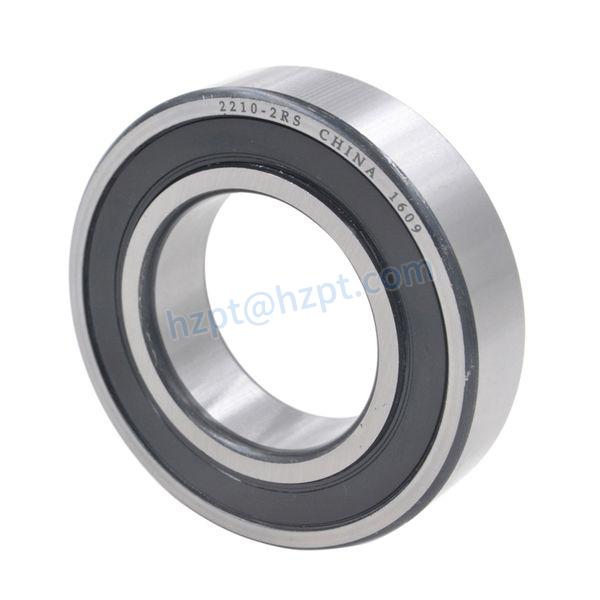
Seals and shields are critical components of ball bearings that play a crucial role in protecting them from dirt, debris, moisture, and contaminants in various applications. These protective features help maintain the integrity of the bearing’s internal components and ensure reliable operation. Here’s how seals and shields contribute to bearing protection:
- Contaminant Exclusion:
Seals and shields create a physical barrier between the external environment and the bearing’s interior. They prevent dust, dirt, water, and other contaminants from entering the bearing and coming into contact with the rolling elements and raceways.
- Lubrication Retention:
Seals and shields help retain lubrication within the bearing. They prevent the lubricant from escaping and contaminants from entering, ensuring that the bearing remains properly lubricated for smooth operation and reduced friction.
- Corrosion Prevention:
Seals and shields protect bearing components from exposure to moisture and corrosive substances. By preventing moisture ingress, they help extend the bearing’s lifespan by minimizing the risk of corrosion-related damage.
- Extended Bearing Life:
Seals and shields contribute to the overall longevity of the bearing by reducing wear and damage caused by contaminants. They help maintain a clean internal environment, which promotes proper rolling contact and minimizes the risk of premature failure.
- Enhanced Performance in Harsh Environments:
In applications exposed to harsh conditions, such as outdoor machinery or industrial settings, seals and shields are vital. They protect bearings from abrasive particles, chemicals, and extreme temperatures, ensuring reliable performance despite challenging conditions.
- Noise and Vibration Reduction:
Seals and shields can help reduce noise and vibration generated by the bearing. They provide additional damping and stability, contributing to smoother operation and enhanced user comfort in noise-sensitive applications.
- Customized Protection:
Manufacturers offer a variety of seal and shield designs to suit different application requirements. Some seals provide higher levels of protection against contamination, while others are designed for high-speed or high-temperature environments.
- Trade-Offs:
While seals and shields offer significant benefits, they can also introduce some friction due to contact with the bearing’s inner or outer ring. Engineers must balance the level of protection with the desired operating characteristics, considering factors like friction, speed, and environmental conditions.
Overall, seals and shields play a vital role in maintaining the integrity and performance of ball bearings. By effectively preventing contaminants from entering and preserving lubrication, they ensure the smooth and reliable operation of machinery and equipment in a wide range of applications.
What are the Primary Benefits of Using Ball Bearings in Machinery and Equipment?
Ball bearings offer several primary benefits when used in machinery and equipment. Their design and functionality provide advantages that contribute to the efficient and reliable operation of various applications. Here are the key benefits:
- Reduced Friction:
One of the primary benefits of ball bearings is their ability to minimize friction between moving parts. The rolling motion of the balls reduces the contact area and sliding friction, leading to smoother operation and less energy loss due to frictional heating.
- Efficient Load Support:
Ball bearings are engineered to support both radial and axial loads, making them versatile for applications with multidirectional forces. This load-bearing capability allows machinery to handle different types of loads while maintaining performance and stability.
- Smooth Rotation:
Ball bearings enable smooth and precise rotational movement. The rolling motion of the balls provides consistent motion with minimal resistance, ensuring that machinery operates smoothly and without jerks.
- High-Speed Capability:
Due to their low friction and efficient rolling action, ball bearings are suitable for high-speed applications. They allow machinery and equipment to achieve and maintain high rotational speeds without excessive wear or heat buildup.
- Reduced Wear and Maintenance:
The reduced friction in ball bearings leads to lower wear on components. This results in longer service intervals and reduced maintenance requirements, saving both time and maintenance costs.
- Energy Efficiency:
By minimizing friction and reducing energy losses, ball bearings contribute to the overall energy efficiency of machinery. This is particularly important in applications where energy consumption is a concern.
- Versatility:
Ball bearings come in various types, sizes, and configurations, allowing them to be used in a wide range of machinery and equipment. They can be customized to suit specific application requirements.
- Reliability and Longevity:
Ball bearings are designed to withstand heavy loads and harsh operating conditions. Their durability and resistance to wear ensure reliable performance and an extended operational life.
- Quiet Operation:
Ball bearings contribute to quiet machinery operation due to the smooth rolling motion of the balls. This is particularly important in applications where noise reduction is a consideration.
In summary, the primary benefits of using ball bearings in machinery and equipment include reduced friction, efficient load support, smooth rotation, high-speed capability, reduced wear and maintenance, energy efficiency, versatility, reliability, and quiet operation. These benefits collectively enhance the performance and longevity of machinery across various industries.
editor by CX 2024-03-27
China Original SKF FAG INA NSK NTN IKO TIMKEN sealed spherical bearings BS2-2208-2CSVT143 skf roller bearing price list with Great quality
Variety: Roller, Spherical Roller Bearings
Composition: Spherical
Applicable Industries: Accommodations, Garment Retailers, Developing Substance Stores, Producing Plant, Machinery Repair Stores, Foodstuff & Beverage Factory, Farms, Cafe, Property Use, Retail, Food Store, Printing Outlets, Construction works , Vitality & Mining, Meals & Beverage Shops, Advertising and marketing Organization
Model Variety: BS2-2208-2CS/VT143
Precision Ranking: p0 p2 p4 p5 p6
Seals Kind: Open up
Number of Row: Double row
Sample: accessible
Cage: Steel,Brass,Nylon
Top quality Normal: ISO9001:2000 technique passed
Packing: Manufacturer packing
Delivery: typical inside of 3 times
Guarantee time: 2 several years
Clearance: C0,C1,C2,C3,C4
Content: Chrome steel,Stainless steel
Primary Markets: Europe,Asia and Africa, 1pcs Aluminum Flange Round Housing One Bearings with Housings Bearing seat assembly Direct Mount Unbuckled ring The us
Packaging Information: CZPT spherical roller bearing: standard export packing
Port: ZheJiang / ZheJiang
Merchandise Data Item Data Original CZPT FAG CZPT CZPT CZPT CZPT sealed spherical roller bearings BS2-2208-2CS/VT143 CZPT bearing cost listing
Sealed Spherical roller bearings catalogue
Spherical roller bearings parts no.
|
Spherical roller bearings |
23571 collection | 23571 23571 23026 23571 23030 23032 23034 23036 23038 23040 23044 23048 23052 23056 23060 23064 23068 23072 23076 23080 23084 23088 23092 23096 |
|
24571 sequence | 24571 24026 24571 24030 24032 24034 24036 24038 24040 24044 24048 24052 24056 24060 24064 24068 24072 | |
|
23218 series | 23218 23220 23222 23224 23226 23228 23230 23232 23234 23236 23238 23240 23244 23248 23252 23256 23260 23264 23280 23284 23296 | |
|
22208 series | 22208 22209 22210 22211 22212 22213 22214 22215 22216 22217 22218 22219 22220 22222 22224 22226 22228 22230 22232 22234 22236 22238 22240 22244 22248 22252 22256 22260 | |
|
22308 collection | 22308 22309 22310 22311 22312 22313 22314 22315 22316 22317 22318 22319 22320 22322 22324 22326 22328 22330 22332 22334 22336 22338 22340 22344 22348 22352 22356 22372 22380 | |
|
23121 sequence | 23121 23122 23124 23126 23128 23130 23132 23134 23136 23138 23140 23144 23148 23152 23156 23160 23164 23168 23172 23176 23180 23184 23188 23192 23196 23936 23940 23948 23960 23972 23976 23996 | |
| 24122 sequence | 24122 24124 24126 24128 24130 24132 24134 24136 24138 24140 24144 24148 24152 24156 24160 24172 |
| Applicable Industries | Lodges,Garment Outlets,Building Content Stores,Manufacturing Plant,Equipment Repair Outlets,Foodstuff & Beverage Manufacturing facility,Farms,Restaurant,Property Use,Retail,Meals Shop,Printing Outlets,Building works ,Power & Mining,Foodstuff & Beverage Shops,Promoting Firm |
| Brand name Identify | all |
| Product Quantity | BS2-2208-2CS/VT143 |
| Precision Ranking | p0 p2 p4 p5 p6 |
| Seals Sort | Open |
| Amount of Row | Double Row |
| Area of Origin | Sweden |
| Type | Spherical Roller Bearings |
| Sample | offered |
| Cage | Metal,Brass,Nylon |
| Quality Standard | ISO9001:2000 system passed |
| Packing | Brand name packing |
| Delivery | regular within 3 times |
| Guarantee time | 2 years |
| Clearance | C0,C1,C2,C3,C4 |
| Substance | Chrome metal, high grade linear motion ball bearing LM3UU LM4UU LM5UU LM6UU LM8UU LM10UU LM12UU LM16UU Stainless steel |
| Principal Markets | Europe,Asia and Africa,The us |
Second, we can provide various types of bearings which contain deep groove ball bearings , cylindrical roller bearings, tapered roller bearings, self-aligning ball bearings, angular contact ball bearings, thrust ball bearings, thrust roller bearings, pillow block bearings, needle roller bearings, joint bearings,
radial spherical simple bearings,spherical ball joint bearing, rod end bearing. high-temperature resistant bearings, Stainless bearings, plastic bearings, ceramic bearings, OREDY Automated sliding door motor Computerized doorway DC 24V motor adapter sleeve and linear bearings.
Product Procedure Generation Approach
Certifications Certifications
Item Packaging Merchandise Packaging
Cargo & Payment Our Benefits
Advantages of Ball Bearings
What is a ball bearing? A ball bearing is a type of rolling-element bearing that utilizes balls to maintain separation between two bearing races. Its contact angle between the balls and the races helps it reduce friction between the loads. There are several advantages to ball bearings, including their ability to withstand water. Read on to learn more. Here are a few of the benefits. You can use them in your daily life, from your car to your boat.
Ball bearings reduce friction between loads
Ball bearings reduce friction between loads by constraining the relative motion between moving parts. These bearings consist of a ring of small metal balls that reduce friction between moving objects. The name “ball bearing” is derived from the verb “to bear.” The lubricant within the bearing reduces friction between moving particles. In a machine, ball bearings reduce friction between moving parts and improve linear motion around a fixed axis.
These bearings are commonly used to reduce friction between loads in rotating machines. They have two tracks, one fixed to the rotating part and one stationary. The rolling balls of a ball bearing have lower friction than flat surfaces. Because of this, they are useful for bar stool bearings. They reduce friction between surfaces and maintain the separation between bearing races. Hence, minimal surface contact is possible. Ball bearings have the potential to increase the life of machines and reduce energy consumption.
Ball bearings can be as small as a wrist watch or as large as an industrial motor. They function the same way, reducing friction between loads. Among their many uses, ball bearings are essential for everyday operations. Clocks, air conditioners, fans, and automobile axles all use ball bearings. In fact, anything that uses a motor requires ball bearings. It’s no wonder they’re gaining popularity in industries and everyday life.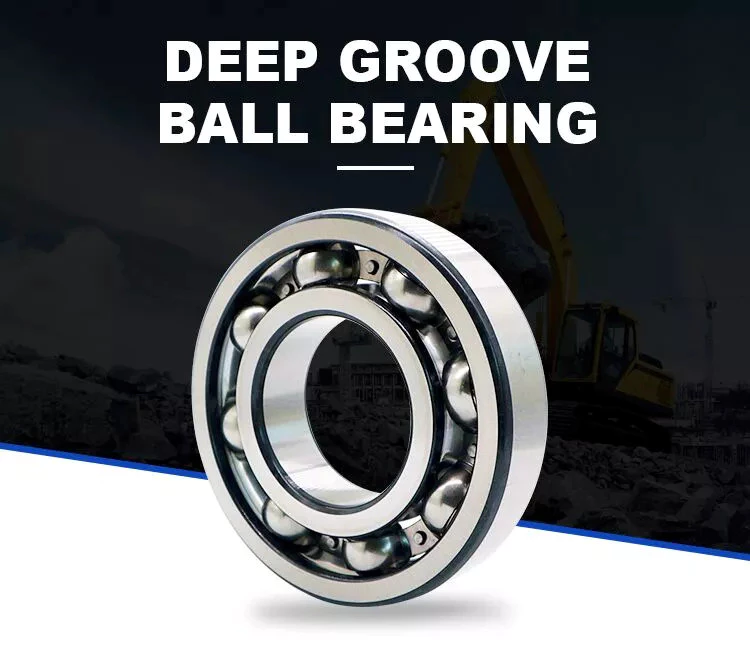
They support radial and axial loads
Radial ball bearings are used primarily for radial loads, but they also have a capacity for axial load. This load capacity is usually given as a percentage of the radial load rating. Axial load capacity is generally greater for a bearing with a larger difference between the inner and outer ring diameters. The axial load capacity is also affected by the bearing’s raceway depth, with shallow raceways being more suitable for heavier axial loads.
The two main types of axial and radial loads are defined by their orientation. Axial loads apply forces in one direction while radial loads act on the opposite direction. In both cases, the bearing must support the forces that are imposed. Axial loads apply forces to a bearing in a single direction, while radial loads apply forces in both directions. Regardless of the type of load, axial and radial loads should be considered when selecting a bearing for a given application.
Angular and radial ball bearings differ in their materials. Radial ball bearings are made largely of through-hardened materials. They typically have a Rockwell hardness rating of 58 Rc. The raceways and balls of these bearings are made of 440C stainless steel. They may also contain shields and seals. SAE 52100 steel is the most common material for the raceway, while molybdenum steels are excellent for high temperatures.
They have a contact angle between the balls and the races
When comparing axial load bearings with their radial counterparts, the angular contact angle is more important. Axial load bearings, have a contact angle between the balls and the races of 35 degrees. They are suitable for axial loads and a limited radial load. The contact angle of these bearings is a result of the shape of the inner and outer rings. Each rolling element comes into contact with the inner and outer rings only at one point, forming a 30 degree angle with the radial plane. The radial force of the axial load on these bearings is therefore increased by increasing the contact angle between the balls and the races.
This contact angle determines the amount of friction between the balls and the races, and allows angular contact bearings to withstand heavy radial and thrust loads. In addition, the larger the contact angle, the greater the axial load support. Angular contact bearings come in standard imperial (inch) and metric (mm) sizes. The angular contact angle is determined by the free radial play value and the curvature of the inner track.
They are water-resistant
In addition to their water-resistant qualities, corrosion-resistant ball bearings can also protect against the damaging effects of corrosive environments. Generally, standard metals, such as steel, are susceptible to rust, which can significantly reduce their performance and extend the life of parts. However, plastics, stainless steel, and ceramics can provide corrosion-resistant ball bearings. And because these materials are much more durable, they offer other advantages, such as being easy to maintain.
Among the advantages of plastic ball bearings is their high resistance to extreme temperatures, high speeds, and corrosion. Depending on their construction, plastic bearings are often able to resist corrosion and anti-static properties. They’re lightweight and inexpensive compared to steel ball bearings. CZPT Sales Corporation was established in 1987 with a modest turnover of four lacs. As of the last financial year, it has grown to 500 lacs in sales.
Other advantages of water-resistant ball bearings include corrosion resistance, which is a key consideration in many applications. While stainless steel is highly corrosion-resistant, it decreases the bearing’s load-carrying capacity. Also, corrosion-resistant deep groove ball bearings are usually made with a specified internal clearance, which absorbs loss in clearance during mounting and shaft expansion. This factor affects their performance, and if these are compromised, a replacement may be necessary.
They are tough
A few things make ball bearings tough: they’re made of real materials, which means that they have inherent imperfections. Grade-1 balls are made especially for high-stress applications, such as Formula One engines. Grade-3 balls, on the other hand, strike the perfect balance between performance and cost. Ceramic balls, for example, are made to spin at a high rate of 400 RPM, and they’re finished with a mirror finish.
A steel carbon ball bearing is one of the toughest forms of ball bearings available. The material is incredibly strong, but the contact between the balls isn’t the best. Low-carbon steel is best for linear shafting and is usually coated with a polymer to prevent damage. Steel ball bearings with moderate amounts of carbon are tough, durable, and water-resistant. They’re ideal for gears, but their high-carbon steel counterparts are particularly tough and can resist corrosion.
A ceramic ball bearing is another option. This type has steel inner and outer rings but ceramic balls. Ceramic balls can withstand higher temperatures than steel and are also electrically insulating. Ceramic ball bearings also tend to be lighter and are more resistant to wear and tear. They’re also ideal for applications in which grease is not an option, such as in space shuttles. Despite the fact that ceramic ball bearings are tough, they’re still cheaper than steel ball bearings.
They are conductive
You may have heard the term “ball bearing” if you’ve studied introductory physics. What does that mean? Essentially, ball bearings are conductive because of their ability to conduct electricity. This ability is reflected in the charge distribution on the surface of the ball. Positive charges are drawn toward the positive plate, while negative charges are drawn away from the positively charged ball bearing. You may have even seen a ball bearing in action.
However, despite their conductive nature, ball bearings can still become damaged by electrical discharge. A higher voltage can cause the balls to pit, and the raceways to become uneven. These uneven surfaces will first show up as excessive noise, and eventually cause the bearing to malfunction. Fortunately, engineers have found a way to counter this problem: conductive grease. This grease enables current to flow through the ball bearing, preventing both heat and voltage buildup.
The difference between steel and ceramic ball bearings is their density. Steel bearings are more conductive than glass or hybrid ceramics. Steel ball bearings have an even grain structure and are conductive for resonance flow. When moving fast, the air surrounding the steel ball bearing carries resonance from the inner ring to the outer. This makes them ideal for high-speed resonance transfer. In addition to being conductive, glass microbeads are harder and lighter than steel.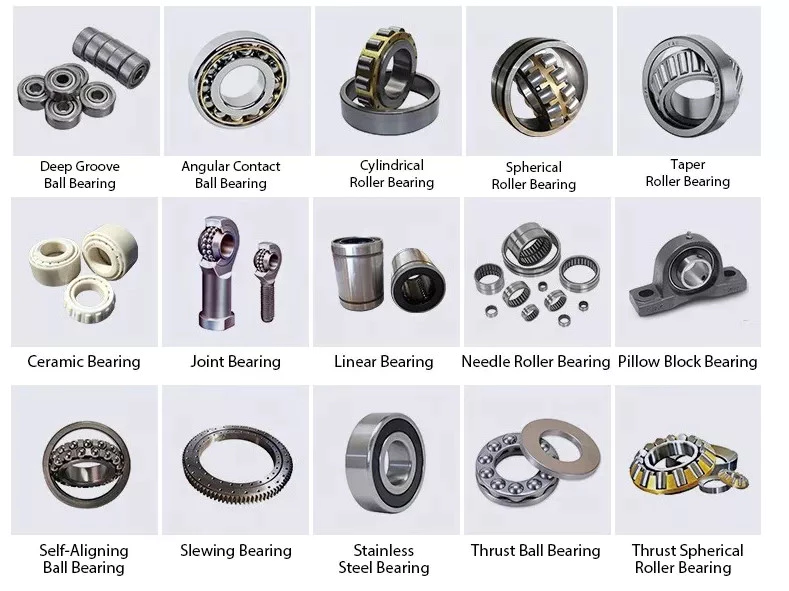
They are used in pulley systems
Pulley systems use ball bearings to move the sprocket, which is a wheel that rotates. These bearings are installed on the center mounting hole of the pulley wheel. They protect the entire system from heat, while allowing higher speed and smooth operation. They distribute the weight of the load evenly, minimizing friction and wobbling, and ensure a smooth rotation. Ball bearings are typically made from steel and are installed inside the pulley wheel.
The moment of inertia and bearing friction are measured to within ten percent accuracy. These two variables affect the speed of the pulley system, which can lead to crashes if the weight holders are not balanced. Therefore, ball bearings are used to minimize the chance of such crashes. When you want to know more about ball bearings in pulley systems, here are the advantages they provide.
Another benefit of ball bearings in pulley systems is that they have lower friction than their solid counterparts. In order to reduce friction, however, ball bearings must be made of good materials. Some of the common ball materials are high-quality plastics and stainless steel. Good materials and clever block design are essential to minimizing friction. If you are planning to use ball bearings in your pulley system, check out the following tips and make sure you are choosing the right one for your application.
editor by czh 2023-02-20
