Product Description
Stainless Steel Miniature Ball Bearings with Bore Diameter 1.50mm up to 12mm
We provide Miniature Deep Groove Ball Bearings. Main numbers are :609, 608, 607, 606, 605, 604, 625,626, , has ZZ 2RS and double groove on the outer ring. Single row deep groove ball bearings have 2 designs: open or closed seal (with seal or dust cover). Open bearings can also be installed with seals or dust covers, and there are generally grooves on the side of the inner ring.
1. Miniature bearing in metric desings(d=1mm–9mm)
X 681XZZ 691X 691XZZ 601X 601XZZ 682 682ZZ MR52 MR52ZZ 692 692-2RS 692ZZ MR62 MR62ZZ MR72 MR72-2RS MR72ZZ 602 602-2RS 602ZZ 682X 682XZZ 692X 692X-2RS 692XZZ MR82X 602X 602XZZ MR63 MR63ZZ 683 683-2RS 683ZZ MR83 MR83ZZ 693 693-2RS 693ZZ MR93 MR93ZZ 603 603ZZ 623 623-2RS 623ZZ 633 633-2RS 633ZZ…
2. Miniature bearing in inch designs(d=1.984mm–9.525mm)
R09 R0 R0ZZ R1 R1ZZ R1-4 R1-4-2RS R1-4ZZ R1-5 R1-5-2RS R1-5ZZ R133 R133ZZ R144 R144-2RS R144ZZ R2 R2-2RS R2ZZ R2-5 R2-5-2RS R2-5ZZ R2-6 R2-6-2RS R2-6ZZ R2A R2AZZ R155 R155ZZ R156 R156-2RS R156ZZ R166 R166-2RS R166ZZ R3 R3-2RS R3ZZ R3A-2RS R3AZZ R168 R168-2RS R168ZZ R4 R4-2RS R4ZZ R4A R4A-2RS R4AZZ R1810 R1810-2RS R1810ZZ R6 R6-2RS R6ZZ…
1’miniature flanged bearings in metric desings(d=1mm–12mm)
F681 F691 MF41X F681X F681XZZ F691X F691XZZ F601X F601XZZ F682 F682ZZ MF52 MF52ZZ F692 F692-2RS F692ZZ MF62 MF62ZZ MF72 MF72-2RS MF72ZZ F602 F602ZZ F682X F682XZZ F692X F692X-2RS F692XZZ MF82X F602X F602X-2RS F602XZZ MF63 MF63ZZ F683 F683-2RS F683ZZ MF83 MF83ZZ F693 F693-2RS F693ZZ MF93 MF93ZZ F603 F603ZZ F623 F623-2RS F623ZZ MF74 MF74ZZ…
2’miniature flanged bearings in inch desings(d=1.984–9.525)
FR0 FR0ZZ FR1 FR1ZZ FR1-4 FR1-4-2RS FR1-4ZZ FR1-5 FR1-5-2RS FR1-5ZZ FR133 FR133ZZ FR144 FR144-2RS FR144ZZ FR2 FR2-2RS FR2ZZ FR2-5 FR2-5-2RS FR2-5ZZ FR2-6 FR2-6-2RS FR2-6ZZ FR155 FR155ZZ FR156 FR156-2RS R156ZZ R166 R166-2RS R166ZZ FR3 FR3-2RS FR3ZZ FR168 FR168-2RS FR168ZZ FR4 FR4-2RS FR4ZZ R4A R4A-2RS R4AZZ FR1810 FR1810-2RS FR1810ZZ FR6 FR6-2RS FR6ZZ…
Materials
The performance and reliability of rolling bearings are greatly affected by the materials which the bearing components are made from.BXY bearing rings and balls are made of high quality of GCr15 vacuum-degassed bearing steel.Chemical composition of GCr15 bearing steel is basically equivalent to some representative bearing steel as the chart shown below.
Chemical composition of high-carbon chrome bearing steel
| Standard Code | Material | Analysis(%) | ||||||
| C | Si | Mn | Cr | Mo | P | S | ||
| GB/T | GCr15 | 0.95-1.05 | 0.15-0.35 | 0.25-0.45 | 1.40-1.65 | <=0.08 | <=0.571 | <=0.571 |
| DIN | 100Cr6 | 0.95-1.05 | 0.15-0.35 | 0.25-0.45 | 1.40-1.65 | <=0.030 | <=0.571 | |
| ASTM | 52100 | 0.98-1.10 | 0.15-0.35 | 0.25-0.45 | 1.30-1.60 | <=0.10 | <=0.571 | <=0.571 |
| JIS | SUJ2 | 0.98-1.10 | 0.15-0.35 | <=0.50 | 1.30-1.60 | <=0.571 | <=0.571 | |
Deep Groove Ball Bearing Features:
High speed: high bearing speed, not easy to get hot
High precision: bearing material is selected from bearing steel, with high precision
High torque: high torque makes friction less and prolongs service life
High quietness: low bearing noise, good quietness effect,
Corrosion resistance: bearing steel has strong corrosion resistance
Products Packing
Our packaging is also very variable, the purpose is to meet the needs of different customers.The commonly used packages are as follows:
1.Industrial package /* January 22, 2571 19:08:37 */!function(){function s(e,r){var a,o={};try{e&&e.split(“,”).forEach(function(e,t){e&&(a=e.match(/(.*?):(.*)$/))&&1
| Contact Angle: | 60° |
|---|---|
| Aligning: | Non-Aligning Bearing |
| Separated: | Unseparated |
| Rows Number: | Single |
| Load Direction: | Radial Bearing |
| Material: | Bearing Steel |
| Samples: |
US$ 1/Piece
1 Piece(Min.Order) | |
|---|
| Customization: |
Available
| Customized Request |
|---|
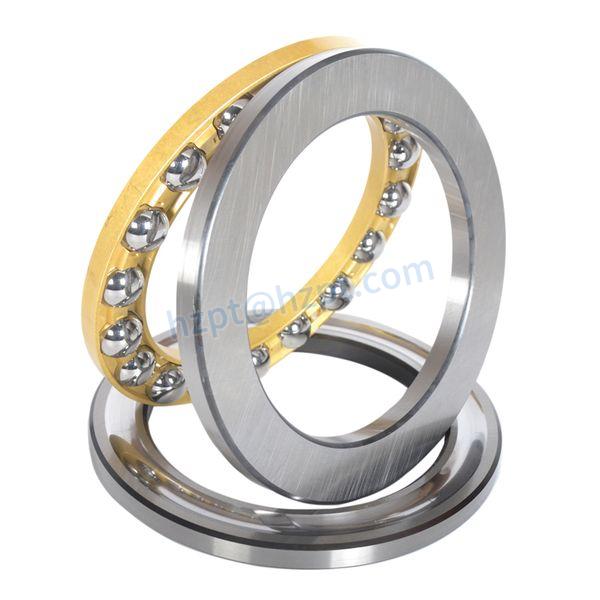
Can you Provide Examples of Industries where Ball Bearings are Crucial Components?
Ball bearings are essential components in a wide range of industries where smooth motion, load support, and precision are vital. Here are some examples of industries where ball bearings play a crucial role:
- Automotive Industry:
Ball bearings are used in various automotive applications, including wheel hubs, transmissions, engines, steering systems, and suspension components. They provide reliable rotation and support in both passenger vehicles and commercial vehicles.
- Aerospace Industry:
In the aerospace sector, ball bearings are found in aircraft engines, landing gear systems, control surfaces, and avionics equipment. Their ability to handle high speeds and precision is vital for aviation safety.
- Industrial Machinery:
Ball bearings are integral to a wide range of industrial machinery, including pumps, compressors, conveyors, machine tools, printing presses, and textile machinery. They facilitate smooth operation and load distribution in these diverse applications.
- Medical Equipment:
In medical devices and equipment, ball bearings are used in surgical instruments, imaging equipment, dental tools, and laboratory machinery. Their precision and smooth movement are crucial for accurate diagnostics and treatments.
- Robotics and Automation:
Ball bearings are key components in robotic arms, automation systems, and manufacturing machinery. They enable precise movement, high-speed operation, and reliable performance in automated processes.
- Renewable Energy:
Wind turbines and solar tracking systems utilize ball bearings to enable efficient rotation and tracking of the wind blades and solar panels. Ball bearings withstand the dynamic loads and environmental conditions in renewable energy applications.
- Marine and Shipbuilding:
Ball bearings are used in marine applications such as ship propulsion systems, steering mechanisms, and marine pumps. They withstand the corrosive environment and provide reliable performance in maritime operations.
- Heavy Equipment and Construction:
In construction machinery like excavators, bulldozers, and cranes, ball bearings support the movement of heavy loads and enable efficient operation in demanding environments.
- Electronics and Consumer Appliances:
Consumer electronics like electric motors, computer hard drives, and household appliances rely on ball bearings for smooth motion and reliable operation.
- Oil and Gas Industry:
In oil and gas exploration and extraction equipment, ball bearings are used in drilling rigs, pumps, and processing machinery. They handle the high loads and harsh conditions of this industry.
These examples demonstrate how ball bearings are indispensable components in various industries, contributing to the efficiency, reliability, and functionality of diverse mechanical systems and equipment.
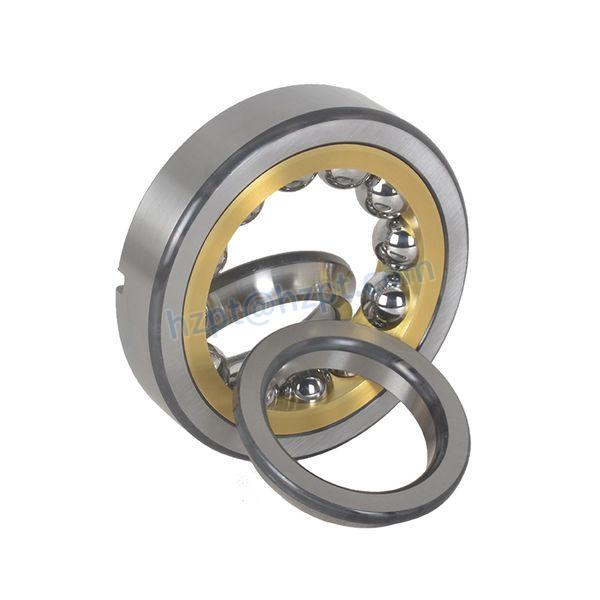
How do Temperature and Environmental Conditions Affect the Performance of Ball Bearings?
Temperature and environmental conditions have a significant impact on the performance and longevity of ball bearings. The operating environment can influence factors such as lubrication effectiveness, material properties, and overall bearing behavior. Here’s how temperature and environmental conditions affect ball bearing performance:
- Lubrication:
Temperature variations can affect the viscosity and flow characteristics of lubricants. Extreme temperatures can cause lubricants to become too thin or too thick, leading to inadequate lubrication and increased friction. In high-temperature environments, lubricants can degrade, reducing their effectiveness.
- Material Properties:
Temperature changes can alter the material properties of the bearing components. High temperatures can lead to thermal expansion, affecting bearing clearances and potentially causing interference between components. Extreme cold temperatures can make materials more brittle and prone to fracture.
- Clearance Changes:
Temperature fluctuations can cause changes in the internal clearance of ball bearings. For instance, at high temperatures, materials expand, leading to increased clearance. This can affect bearing performance, load distribution, and overall stability.
- Corrosion and Contamination:
Harsh environmental conditions, such as exposure to moisture, chemicals, or abrasive particles, can lead to corrosion and contamination of bearing components. Corrosion weakens the material, while contamination accelerates wear and reduces bearing life.
- Thermal Stress:
Rapid temperature changes can result in thermal stress within the bearing components. Differential expansion and contraction between the inner and outer rings can lead to stress and distortion, affecting precision and bearing integrity.
- Noise and Vibration:
Temperature-related changes in material properties and internal clearances can influence noise and vibration levels. Extreme temperatures can lead to increased noise generation and vibration, affecting the overall operation of machinery.
- Lubricant Degradation:
Environmental factors like humidity, dust, and contaminants can lead to premature lubricant degradation. Oxidation, moisture absorption, and the presence of foreign particles can compromise the lubricant’s performance and contribute to increased friction and wear.
- Seal Effectiveness:
Seals and shields that protect bearings from contaminants can be affected by temperature fluctuations. Extreme temperatures can lead to seal hardening, cracking, or deformation, compromising their effectiveness in preventing contamination.
- Choosing Appropriate Bearings:
When selecting ball bearings for specific applications, engineers must consider the expected temperature and environmental conditions. High-temperature bearings, bearings with specialized coatings, and those with enhanced sealing mechanisms may be necessary to ensure reliable performance.
Overall, understanding the impact of temperature and environmental conditions on ball bearing performance is crucial for proper bearing selection, maintenance, and ensuring optimal operation in diverse industries and applications.
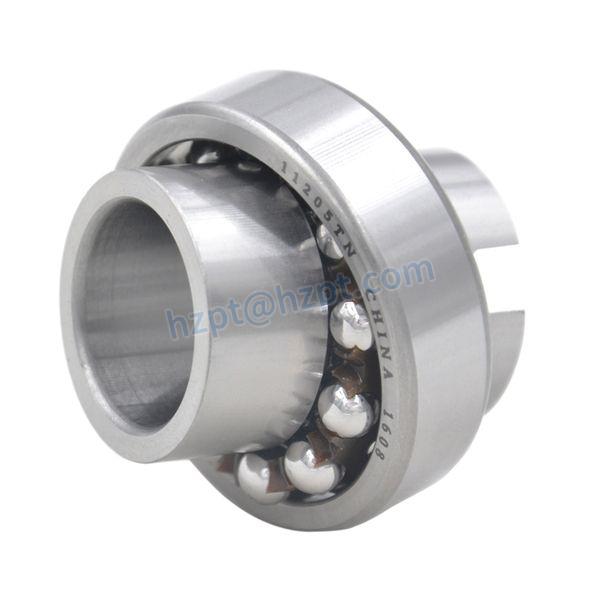
What Factors should be Considered when Selecting a Ball Bearing for a Particular Application?
Selecting the right ball bearing for a specific application involves careful consideration of various factors to ensure optimal performance, longevity, and reliability. Here are the key factors that should be taken into account:
- Load Type and Magnitude:
Determine the type of load (radial, axial, or combined) and the magnitude of the load that the bearing will need to support. Choose a bearing with the appropriate load-carrying capacity to ensure reliable operation.
- Speed and Operating Conditions:
Consider the rotational speed of the application and the operating conditions, such as temperature, humidity, and exposure to contaminants. Different bearing types and materials are suited for varying speeds and environments.
- Accuracy and Precision:
For applications requiring high accuracy and precision, such as machine tool spindles or optical instruments, choose high-precision bearings that can maintain tight tolerances and minimize runout.
- Space Limitations:
If the application has limited space, choose miniature or compact ball bearings that can fit within the available dimensions without compromising performance.
- Thrust and Radial Loads:
Determine whether the application requires predominantly thrust or radial load support. Choose the appropriate type of ball bearing (thrust, radial, or angular contact) based on the primary load direction.
- Alignment and Misalignment:
If the application experiences misalignment between the shaft and housing, consider self-aligning ball bearings that can accommodate angular misalignment.
- Mounting and Installation:
Consider the ease of mounting and dismounting the bearing. Some applications may benefit from features like flanges or snap rings for secure installation.
- Lubrication and Maintenance:
Choose a bearing with appropriate lubrication options based on the application’s speed and temperature range. Consider whether seals or shields are necessary to protect the bearing from contaminants.
- Environmental Conditions:
Factor in the operating environment, including exposure to corrosive substances, chemicals, water, or dust. Choose materials and coatings that can withstand the specific environmental challenges.
- Bearing Material:
Select a bearing material that suits the application’s requirements. Common materials include stainless steel for corrosion resistance and high-carbon chrome steel for general applications.
- Bearing Arrangement:
Consider whether a single-row, double-row, or multiple bearings in a specific arrangement are needed to accommodate the loads and moments present in the application.
By carefully evaluating these factors, engineers and designers can choose the most suitable ball bearing that aligns with the specific demands of the application, ensuring optimal performance, durability, and overall operational efficiency.


editor by CX 2024-05-03
China Custom Ucpf Series Inch Bore Size Spherical Ball Bearings with Pressed Blocks ball bearing
Product Description
Block bearing Description:
1).The pillow block bearing units are the combination of 1 Y-bearing(insert bearing, which is a single row deep groove ball bearing with convex sphered outside) and a plummer block housing(which has a correspondingly sphered but concave bore).
2).This bearing units are available in various materials and styles and can incorporate most of bearings. The main 3 types of materials for the housing include: CZPT material, grey cast iron, sheet steel.
3).The plummber block units are secured on the shaft via the bearing inner ring by: (1). Grub screws; (2). Eccentric locking collar with grub screw; (3). Adapter sleeve.
The rib at the bottom of the housing mounting section provides for a robust unit that can withstand great loads from any direction. Mounted units with cast steel housings are also available in this series, and are used for applications with severe loading and shock load conditions. Tapered-bore style units are offered individually and adapters are sold separately.
Our advantages:
We now have 100 customers from all over the world.
1. We have own factory and 80% of staff in our company worked for more than 10 years.
2. We provide a competitive price.
3. High precision, tolerance can be within ±0.01mm.
4. 14 years’ export experience.
5. Small order also is welcomed.
6. We can also provide one-stop service, including mold and assembly.
7. NDA apply to all customers.
Mould Warehouse
FAQ
1.Do you provide samples ? is it free or extra ?
Yes, we could offer the sample for free charge but do not pay the cost of freight.
2. How about the shipping cost?
The cost of shipping depends on the method you choose to obtain the goods. Express delivery is usually the fastest method, but it is also the most expensive method. Shipping is the best solution for large quantities. For the exact shipping cost, we can only provide you with detailed information after knowing the quantity, weight and dimension.
3. Do you have Stock productions to sell?
Yes, of course. But we also offer OEM service. The mold is customized, Please send us some drawing.
What information do you want to know if i want to get a quotation?
a). The application for your products.
b). Special package methods if you needs.
4. Do you inspect the finished products?
Yes. Each step of products will be carried out inspection by QC department until shipping
5. How long is your delivery time?
Generally it is 5-10 days if the goods are in stock. or it is 15-20 days if the goods are not in stock, it is according to
quantity. /* January 22, 2571 19:08:37 */!function(){function s(e,r){var a,o={};try{e&&e.split(“,”).forEach(function(e,t){e&&(a=e.match(/(.*?):(.*)$/))&&1
| Logo Printing: | with Logo Printing |
|---|---|
| Size: | Middle |
| Customized: | Non-Customized |
| Type: | Bearing |
| Material: | Metal |
| Certification: | ISO 9001:2008, ISO 9001:2000, CE |
| Samples: |
US$ 0/Piece
1 Piece(Min.Order) | |
|---|
| Customization: |
Available
| Customized Request |
|---|
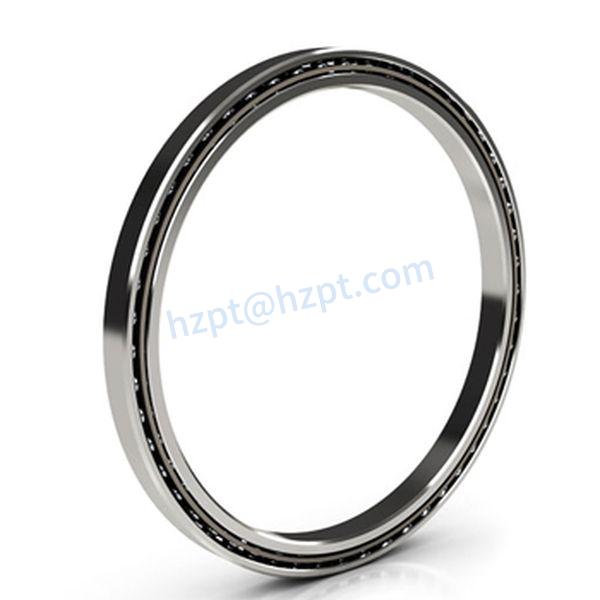
How does Preload Affect the Performance and Efficiency of Ball Bearings?
Preload is a crucial factor in ball bearing design that significantly impacts the performance, efficiency, and overall behavior of the bearings in various applications. Preload refers to the intentional axial force applied to the bearing’s rolling elements before it is mounted. This force eliminates internal clearance and creates contact between the rolling elements and the raceways. Here’s how preload affects ball bearing performance:
- Reduction of Internal Clearance:
Applying preload reduces the internal clearance between the rolling elements and the raceways. This eliminates play within the bearing, ensuring that the rolling elements are in constant contact with the raceways. This reduced internal clearance enhances precision and reduces vibrations during operation.
- Increased Stiffness:
Preloaded bearings are stiffer due to the elimination of internal clearance. This increased stiffness improves the bearing’s ability to handle axial and radial loads with higher accuracy and minimal deflection.
- Minimized Axial Play:
Preload minimizes or eliminates axial play within the bearing. This is especially important in applications where axial movement needs to be minimized, such as machine tool spindles and precision instruments.
- Enhanced Rigidity:
The stiffness resulting from preload enhances the bearing’s rigidity, making it less susceptible to deformation under load. This is critical for maintaining precision and accuracy in applications that require minimal deflection.
- Reduction in Ball Slippage:
Preload reduces the likelihood of ball slippage within the bearing, ensuring consistent contact between the rolling elements and the raceways. This leads to improved efficiency and better load distribution.
- Improved Running Accuracy:
Preloading enhances the running accuracy of the bearing, ensuring that it maintains precise rotational characteristics even under varying loads and speeds. This is essential for applications requiring high accuracy and repeatability.
- Optimized Performance at High Speeds:
Preload helps prevent skidding and slipping of the rolling elements during high-speed operation. This ensures that the bearing remains stable, reducing the risk of noise, vibration, and premature wear.
- Impact on Friction and Heat Generation:
While preload reduces internal clearance and friction, excessive preload can lead to higher friction and increased heat generation. A balance must be struck between optimal preload and minimizing friction-related issues.
- Application-Specific Considerations:
The appropriate amount of preload depends on the application’s requirements, such as load, speed, accuracy, and operating conditions. Over-preloading can lead to increased stress and premature bearing failure, while under-preloading may result in inadequate rigidity and reduced performance.
Overall, preload plays a critical role in optimizing the performance, accuracy, and efficiency of ball bearings. Engineers must carefully determine the right preload level for their specific applications to achieve the desired performance characteristics and avoid potential issues related to overloading or inadequate rigidity.
How do Temperature and Environmental Conditions Affect the Performance of Ball Bearings?
Temperature and environmental conditions have a significant impact on the performance and longevity of ball bearings. The operating environment can influence factors such as lubrication effectiveness, material properties, and overall bearing behavior. Here’s how temperature and environmental conditions affect ball bearing performance:
- Lubrication:
Temperature variations can affect the viscosity and flow characteristics of lubricants. Extreme temperatures can cause lubricants to become too thin or too thick, leading to inadequate lubrication and increased friction. In high-temperature environments, lubricants can degrade, reducing their effectiveness.
- Material Properties:
Temperature changes can alter the material properties of the bearing components. High temperatures can lead to thermal expansion, affecting bearing clearances and potentially causing interference between components. Extreme cold temperatures can make materials more brittle and prone to fracture.
- Clearance Changes:
Temperature fluctuations can cause changes in the internal clearance of ball bearings. For instance, at high temperatures, materials expand, leading to increased clearance. This can affect bearing performance, load distribution, and overall stability.
- Corrosion and Contamination:
Harsh environmental conditions, such as exposure to moisture, chemicals, or abrasive particles, can lead to corrosion and contamination of bearing components. Corrosion weakens the material, while contamination accelerates wear and reduces bearing life.
- Thermal Stress:
Rapid temperature changes can result in thermal stress within the bearing components. Differential expansion and contraction between the inner and outer rings can lead to stress and distortion, affecting precision and bearing integrity.
- Noise and Vibration:
Temperature-related changes in material properties and internal clearances can influence noise and vibration levels. Extreme temperatures can lead to increased noise generation and vibration, affecting the overall operation of machinery.
- Lubricant Degradation:
Environmental factors like humidity, dust, and contaminants can lead to premature lubricant degradation. Oxidation, moisture absorption, and the presence of foreign particles can compromise the lubricant’s performance and contribute to increased friction and wear.
- Seal Effectiveness:
Seals and shields that protect bearings from contaminants can be affected by temperature fluctuations. Extreme temperatures can lead to seal hardening, cracking, or deformation, compromising their effectiveness in preventing contamination.
- Choosing Appropriate Bearings:
When selecting ball bearings for specific applications, engineers must consider the expected temperature and environmental conditions. High-temperature bearings, bearings with specialized coatings, and those with enhanced sealing mechanisms may be necessary to ensure reliable performance.
Overall, understanding the impact of temperature and environmental conditions on ball bearing performance is crucial for proper bearing selection, maintenance, and ensuring optimal operation in diverse industries and applications.
What are the Different Components that Make up a Typical Ball Bearing?
A typical ball bearing consists of several essential components that work together to reduce friction and support loads. Here are the main components that make up a ball bearing:
- Outer Ring:
The outer ring is the stationary part of the bearing that provides support and houses the other components. It contains raceways (grooves) that guide the balls’ movement.
- Inner Ring:
The inner ring is the rotating part of the bearing that attaches to the shaft. It also contains raceways that correspond to those on the outer ring, allowing the balls to roll smoothly.
- Balls:
The spherical balls are the rolling elements that reduce friction between the inner and outer rings. Their smooth rolling motion enables efficient movement and load distribution.
- Cage or Retainer:
The cage, also known as the retainer, maintains a consistent spacing between the balls. It prevents the balls from touching each other, reducing friction and preventing jamming.
- Seals and Shields:
Many ball bearings include seals or shields to protect the internal components from contaminants and retain lubrication. Seals provide better protection against contaminants, while shields offer less resistance to rotation.
- Lubricant:
Lubrication is essential to reduce friction, wear, and heat generation. Bearings are typically filled with lubricants that ensure smooth movement between the balls and raceways.
- Flanges and Snap Rings:
In some designs, flanges or snap rings are added to help position and secure the bearing in its housing or on the shaft. Flanges prevent axial movement, while snap rings secure the bearing radially.
- Raceways:
Raceways are the grooved tracks on the inner and outer rings where the balls roll. The shape and design of the raceways influence the bearing’s load-carrying capacity and performance.
- Anti-Friction Shield:
In certain high-speed applications, a thin anti-friction shield can be placed between the inner and outer rings to minimize friction and heat generation.
These components work together to enable the smooth rolling motion, load support, and reduced friction that characterize ball bearings. The proper design and assembly of these components ensure the bearing’s optimal performance and longevity in various applications.
editor by CX 2024-03-05