Product Description
Product Description
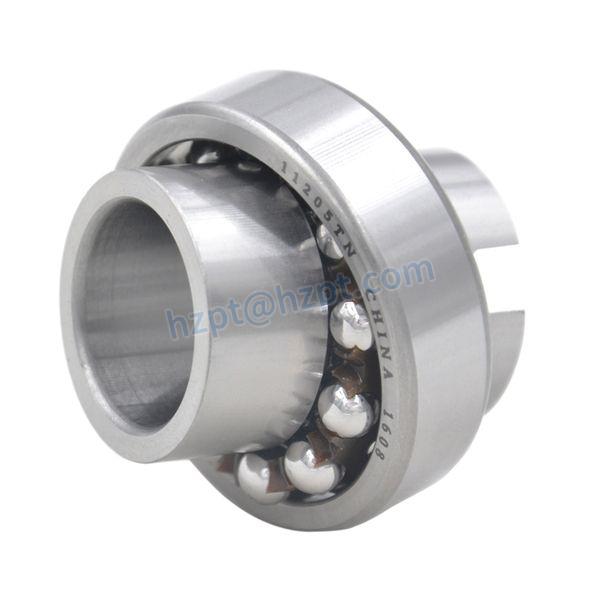
A self-aligning ball bearing has 2 rows of balls with common spherical raceways in the outer ring.
These bearings are made with seal or without seal. They are also available with tapered bore and adapter sleeve.
It has the ability to conciliate the angle error, and also the design of sealed and non-lubricated, so it’s suitable for working conditions without maintenance.
Applications and Industry:
Industrial fans
Agriculture
Material handling
Food and beverage
Pulp and paper
Textile machines
Plastic machinery
Medical equipment
Various industrial machinery.
Product Parameters
Technical specification
Suffix ‘K’—- Tapered bore
Prefix ‘S’— Stainless steel
We can also provide stainless steel self-aligning ball bearings.
| Bearing No. | Boundary Dimensions ( mm ) | Weight (kg) | ||
| Model # | d | D | B | |
| 1200 | 10 | 30 | 9 | 0.034 |
| 1201 | 12 | 32 | 10 | 0.040 |
| 1202 | 15 | 35 | 11 | 0.049 |
| 1203 | 17 | 40 | 12 | 0.073 |
| 1204 | 20 | 47 | 14 | 0.116 |
| 1205 | 25 | 52 | 15 | 0.140 |
| 1205 K | 25 | 52 | 15 | 0.140 |
| 1206 | 30 | 62 | 16 | 0.220 |
| 1206 K | 30 | 62 | 16 | 0.220 |
| 1207 | 35 | 72 | 17 | 0.320 |
| 1207 K | 35 | 72 | 17 | 0.320 |
| 1208 | 40 | 80 | 18 | 0.415 |
| 1208 K | 40 | 80 | 18 | 0.415 |
| 1209 | 45 | 85 | 19 | 0.465 |
| 1209 K | 45 | 85 | 19 | 0.465 |
| 1210 | 50 | 90 | 20 | 0.531 |
| 1210 K | 50 | 90 | 20 | 0.531 |
| 1211 | 55 | 100 | 21 | 0.705 |
| 1211 K | 55 | 100 | 21 | 0.705 |
| 1212 | 60 | 110 | 22 | 0.900 |
| 1212 K | 60 | 110 | 22 | 0.900 |
| 1213 | 65 | 120 | 23 | 1.150 |
| 1213 K | 65 | 120 | 23 | 1.150 |
| 1214 | 70 | 125 | 24 | 1.240 |
| 1215 | 75 | 130 | 25 | 1.390 |
| 1215 K | 75 | 130 | 25 | 1.390 |
| 1216 | 80 | 140 | 26 | 1.700 |
| 1216 K | 80 | 140 | 26 | 1.700 |
| 1217 | 85 | 150 | 28 | 2.060 |
| 1217 K | 85 | 150 | 28 | 2.060 |
| 1218 | 90 | 160 | 30 | 2.590 |
| 1218 K | 90 | 160 | 30 | 2.590 |
| 1219 | 95 | 170 | 32 | 3.100 |
| 1220 | 100 | 180 | 34 | 3.700 |
| 1220 K | 100 | 180 | 34 | 3.700 |
| 1224 | 120 | 215 | 42 | 6.770 |
| 1300 | 10 | 35 | 11 | 0.058 |
| 1301 | 12 | 37 | 12 | 0.067 |
| 1302 | 15 | 42 | 13 | 0.094 |
| 1303 | 17 | 47 | 14 | 0.130 |
| 1304 | 20 | 52 | 15 | 0.165 |
| 1305 | 25 | 62 | 17 | 0.255 |
| H200 Series Adapter Sleeve | ||||||
| No. | Dimension(mm) | Bearing No. | Mass(kg) | |||
| d | d1 | B1 | d2 | Spherical Ball Bearing | ||
| H202 | 15 | 12 | 19 | 25 | 1202K | |
| H203 | 17 | 14 | 20 | 28 | 1203K | |
| H204 | 20 | 17 | 24 | 32 | 1204K | 0.036 |
| H205 | 25 | 20 | 26 | 38 | 1205K | 0.064 |
| H206 | 30 | 25 | 27 | 45 | 1206K | 0.086 |
| H207 | 35 | 30 | 29 | 52 | 1207k | 0.12 |
| H208 | 40 | 35 | 31 | 58 | 1208K | 0.16 |
| H209 | 45 | 40 | 33 | 65 | 1209K | 0.21 |
| H210 | 50 | 45 | 35 | 70 | 1210K | 0.24 |
| H211 | 55 | 50 | 37 | 75 | 1211K | 0.28 |
| H212 | 60 | 55 | 38 | 80 | 1212K | 0.31 |
| H213 | 65 | 60 | 40 | 85 | 1213K | 0.36 |
| H214 | 70 | 60 | 41 | 92 | 1214K | 0.55 |
| H215 | 75 | 65 | 43 | 98 | 1215K | 0.66 |
| H216 | 80 | 70 | 46 | 105 | 1216K | 0.81 |
| H217 | 85 | 75 | 50 | 110 | 1217K | 0.94 |
| H218 | 90 | 80 | 52 | 120 | 1218K | 1.1 |
| H219 | 95 | 85 | 55 | 125 | 1219K | 1.25 |
| H220 | 100 | 90 | 58 | 130 | 1220K | 1.4 |
| H222 | 110 | 100 | 63 | 145 | 1222K | 1.8 |
Packaging & Shipping
Our Advantages
1. We have over 10 years’ experience.
2. OEM or Non-Standard Bearings: Any requirement for Non-standard bearings is easily fulfilled by us due to our vast knowledge and links in the industry.
3. After Sales Service and Technical Assistance: Our company provides after-sales service and technical assistance as per the customer’s requirements and needs.
4. Quick Delivery: Our company provides just-in-time delivery with our streamlined supply chain.
5.We attend promptly to any customer questions. We believe that if our customers are satisfied then it proves our worth. Our customers are always given quick support.
Please contact us immediately if you have any questions.
Related Products
/* January 22, 2571 19:08:37 */!function(){function s(e,r){var a,o={};try{e&&e.split(“,”).forEach(function(e,t){e&&(a=e.match(/(.*?):(.*)$/))&&1
| Cage: | Steel, Brass, Polymer |
|---|---|
| Ball: | Steel, Ceramic |
| Seal Type: | Open, 2RS |
| Samples: |
US$ 0/Piece
1 Piece(Min.Order) | Order Sample |
|---|
| Customization: |
Available
| Customized Request |
|---|
.shipping-cost-tm .tm-status-off{background: none;padding:0;color: #1470cc}
|
Shipping Cost:
Estimated freight per unit. |
about shipping cost and estimated delivery time. |
|---|
| Payment Method: |
|
|---|---|
|
Initial Payment Full Payment |
| Currency: | US$ |
|---|
| Return&refunds: | You can apply for a refund up to 30 days after receipt of the products. |
|---|
What are the Materials Typically Used in Manufacturing Ball Bearings and Their Advantages?
Ball bearings are manufactured using a variety of materials, each chosen for its specific properties and advantages in various applications. Here are some commonly used materials in ball bearing manufacturing and their respective benefits:
- High-Carbon Chrome Steel (AISI 52100):
This is the most common material used for ball bearing manufacturing. It offers excellent hardness, wear resistance, and fatigue strength. High-carbon chrome steel bearings are suitable for a wide range of applications, from industrial machinery to automotive components.
- Stainless Steel (AISI 440C, AISI 304, AISI 316):
Stainless steel bearings are corrosion-resistant and suitable for applications where moisture, chemicals, or exposure to harsh environments are concerns. AISI 440C offers high hardness and corrosion resistance, while AISI 304 and AISI 316 provide good corrosion resistance and are often used in food and medical industries.
- Ceramic:
Ceramic bearings use silicon nitride (Si3N4) or zirconia (ZrO2) balls. Ceramic materials offer high stiffness, low density, and excellent resistance to corrosion and heat. Ceramic bearings are commonly used in high-speed and high-temperature applications, such as in aerospace and racing industries.
- Plastic (Polyamide, PEEK):
Plastic bearings are lightweight and offer good corrosion resistance. Polyamide bearings are commonly used due to their low friction and wear properties. Polyether ether ketone (PEEK) bearings provide high-temperature resistance and are suitable for demanding environments.
- Bronze:
Bronze bearings are often used in applications where self-lubrication is required. Bronze has good thermal conductivity and wear resistance. Bearings made from bronze are commonly used in machinery requiring frequent starts and stops.
- Hybrid Bearings:
Hybrid bearings combine steel rings with ceramic balls. These bearings offer a balance between the advantages of both materials, such as improved stiffness and reduced weight. Hybrid bearings are used in applications where high speeds and low friction are essential.
- Specialty Alloys:
For specific applications, specialty alloys may be used to meet unique requirements. For example, bearings used in extreme temperatures or corrosive environments may be made from materials like titanium or hastelloy.
- Coated Bearings:
Bearings may also be coated with thin layers of materials like diamond-like carbon (DLC) or other coatings to enhance performance, reduce friction, and improve wear resistance.
The choice of material depends on factors such as application requirements, operating conditions, load, speed, and environmental factors. Selecting the right material is essential for ensuring optimal bearing performance, longevity, and reliability in diverse industries and applications.
Are there any Industry Standards or Certifications that Ball Bearings should Meet?
Yes, there are several industry standards and certifications that ball bearings should meet to ensure their quality, performance, and reliability. These standards help manufacturers, engineers, and customers assess the suitability of bearings for specific applications. Some of the key standards and certifications for ball bearings include:
- ISO Standards:
The International Organization for Standardization (ISO) has developed a series of standards related to ball bearings. ISO 15 defines dimensions, boundary dimensions, and tolerances for radial bearings. ISO 281 specifies dynamic load ratings and calculation methods for bearings’ life calculations.
- ABEC (Annular Bearing Engineering Committee) Ratings:
ABEC ratings are commonly used in North America to indicate the precision and performance of ball bearings. Ratings range from ABEC 1 (lowest precision) to ABEC 9 (highest precision). However, it’s important to note that ABEC ratings focus primarily on dimensional tolerances and do not encompass all aspects of bearing quality.
- DIN Standards:
The German Institute for Standardization (Deutsches Institut für Normung, DIN) has published various standards related to ball bearings. DIN 625 covers dimensions for deep groove ball bearings, while DIN 616 provides guidelines for precision angular contact ball bearings.
- JIS (Japanese Industrial Standards):
JIS standards are used in Japan and internationally to define the characteristics and dimensions of various products, including ball bearings. JIS B 1512 outlines the classification and dimensions of rolling bearings.
- ASTM (American Society for Testing and Materials) Standards:
ASTM has standards that cover various aspects of bearing testing, performance, and materials. ASTM F2215, for instance, specifies the requirements for ball bearings used in surgical implants.
- CE Marking:
CE marking indicates that a product complies with European Union health, safety, and environmental requirements. It may be required for bearings used in machinery intended to be sold within the EU market.
- Industry-Specific Standards:
Various industries, such as aerospace, automotive, medical, and nuclear, have specific standards or certifications that bearings must meet to ensure safety, reliability, and compliance with industry-specific requirements.
- Quality Management Systems:
Manufacturers that adhere to quality management systems, such as ISO 9001, demonstrate their commitment to consistent product quality and customer satisfaction. Certification to these systems indicates that the manufacturing process follows established protocols and best practices.
When selecting ball bearings, it’s important to consider the relevant standards and certifications that align with the application’s requirements. This ensures that the bearings meet recognized quality and performance criteria, ultimately contributing to reliable and efficient operation.
What Factors should be Considered when Selecting a Ball Bearing for a Particular Application?
Selecting the right ball bearing for a specific application involves careful consideration of various factors to ensure optimal performance, longevity, and reliability. Here are the key factors that should be taken into account:
- Load Type and Magnitude:
Determine the type of load (radial, axial, or combined) and the magnitude of the load that the bearing will need to support. Choose a bearing with the appropriate load-carrying capacity to ensure reliable operation.
- Speed and Operating Conditions:
Consider the rotational speed of the application and the operating conditions, such as temperature, humidity, and exposure to contaminants. Different bearing types and materials are suited for varying speeds and environments.
- Accuracy and Precision:
For applications requiring high accuracy and precision, such as machine tool spindles or optical instruments, choose high-precision bearings that can maintain tight tolerances and minimize runout.
- Space Limitations:
If the application has limited space, choose miniature or compact ball bearings that can fit within the available dimensions without compromising performance.
- Thrust and Radial Loads:
Determine whether the application requires predominantly thrust or radial load support. Choose the appropriate type of ball bearing (thrust, radial, or angular contact) based on the primary load direction.
- Alignment and Misalignment:
If the application experiences misalignment between the shaft and housing, consider self-aligning ball bearings that can accommodate angular misalignment.
- Mounting and Installation:
Consider the ease of mounting and dismounting the bearing. Some applications may benefit from features like flanges or snap rings for secure installation.
- Lubrication and Maintenance:
Choose a bearing with appropriate lubrication options based on the application’s speed and temperature range. Consider whether seals or shields are necessary to protect the bearing from contaminants.
- Environmental Conditions:
Factor in the operating environment, including exposure to corrosive substances, chemicals, water, or dust. Choose materials and coatings that can withstand the specific environmental challenges.
- Bearing Material:
Select a bearing material that suits the application’s requirements. Common materials include stainless steel for corrosion resistance and high-carbon chrome steel for general applications.
- Bearing Arrangement:
Consider whether a single-row, double-row, or multiple bearings in a specific arrangement are needed to accommodate the loads and moments present in the application.
By carefully evaluating these factors, engineers and designers can choose the most suitable ball bearing that aligns with the specific demands of the application, ensuring optimal performance, durability, and overall operational efficiency.


editor by CX 2024-03-27