Product Description
Enzolo Profile
HangZhou Enzolo Technology Co., Ltd is the major worldwide manufacturer and supplier of motorcycle, scooter and ATV parts and accessories for over 20 years.
Our strengths are efficient management ( fully-operated ERP system) and superior quality control ( inspect 1 by one ). The most important thing is the sincere service that we provide.
We have a experienced team of professional sales to maintain excellent communication with clients and provide clients-oriented after-sale service.
ENZOLO offered complete one-stop service. If you need any motorcycle parts and accessories, please send us photos or drawings or samples to get fast quotation !
ENZOLO Main Motorcycle Models
Honda Models:
C100, C110, C125, SUPRA110, WAVE110, SPACY110, WAVE125, INVOVAi125, ECO DELUXE 100, CD100 Hero Splendor, WH100, WH125, PCX125, CG125, CG150, CG200, CG250, CG300, WY125, WY150, CGL125, CB110, CB125, STORM125, CB1-125, CBZ160, CB190, CBR250, CBX250, NXR125 BROSS, NXR150 BROSS, NXR200 BROSS, CTX200, CBF125, CBF150, etc.
Suzuki Models:
AX100, AX4, GD110, QS110, SMASH110, VIVAX115, AN125, AN150, GN125, EN125, GS125, GS150R, GIXXER, GSX150, DR200, etc.
Yamaha Models:
T50, T80, V50, JOG50, BWS50, V80, CY80, RX100, RX115, YB100, JOG100, BWS100, CRUX110, JY110, CRYPTON, T105, RS110, RX125, BWS125, DT125, DTK125, DT175, DTK175, YBR125, SRZ125, SRZ150, XTZ125, XTZ150, FAZER150, XT200, LC135, FZ16, etc.
Bajaj Models:
CT100, Boxer BM100, BM150, Pulsar180, Pulsar200, Pulsar200 NS, Pulsar220, Pulsar220 NS, XCD125, XCD135, Platina125, Caliper, KB4S, 3W4S, RE205D, RE4S, etc.
Other Brands:
JH70, JH90, DY90, DY100, CD110, JH110, KTM100, LF110, LX110, LX125, LX150, DY125, DY150, ZS200, KEEWAY, TVS start, TVS Sport, TVS king, TVS victor, TVS apache160, TVS apache180, HERO, XY125, XY150, XY200GY-6, XY200GY-8, XY200GY, GY200, CROSS200, BROSS200, GY6-80, GY6-100, GY6-125, GY6-150, SYM125, MIO100, CBT125, CM150, TIGER150, TIGER200, QJ125, HJ125-8, HJ150, etc.
ENZOLO Motorcycle Parts:
Cylinder head, Valve, Crankshaft, Piston Ring, Brake Shoes, Handle Switch, Cylinder kit, Piston Kit, Carburetor, Clutch, Motor, Tire, Camshaft, Clutch Plate, Timing Chain, Wheel Hub, Side Mirror, Wheel Rim , Brake Pad, Brake Cylinder, Lock System, Sprocket Kit, Speedometer, Headlight, Spark Plug,Ignition Coil, Lighting Series, Fuel Tank, Front Shock Absorber, Rear Shock Absorber, Front Shock Absorber, Transmission Shaft Assy, Foot Pegs, Shift Lever, Clutch Line, Front Brake Line, Chain, Seat, Fuel Tank , Side Cover,etc.
Detailed Photos
Product Description
| Brand | ENZOLO |
| OEM & ODM Services | Available |
| OEM Packaging & Logo | Available |
| Product Name | Bearings |
| Packaging | ENZOLO Packaging/Neutral/Customized |
| Please Send Photo of the Parts | To Get Fast Quotation |
| Motorcycle Fitment | For Motorcycles |
| ENZOLO | Welcome Dealers |
Our Advantages
Company Activities
FAQ
1. Do you offer samples ? Are samples free ?
Yes, we offer samples, but you need to pay samples and shipping. We will refund your sample order when you place the first order with ENZOLO.
2. Can you do OEM service for me ?
Yes, we accept OEM orders. You can send logo and package files to us, we will send you sample photos and videos as soon as we can.
3. What’s your payment terms ?
30% deposit by T/T, 70% before shipping.
4. How long is your lead time ?
Generally it will take around 30 days after receiving your advance payment, specific delivery time depends on the parts and quantity of your order.
5. How can i get the price quickly ?
It is ok to get a fast quotation if you send us photos, drawings or samples of your parts.
Fast Quotation
/* March 10, 2571 17:59:20 */!function(){function s(e,r){var a,o={};try{e&&e.split(“,”).forEach(function(e,t){e&&(a=e.match(/(.*?):(.*)$/))&&1
| After-sales Service: | One Year |
|---|---|
| Warranty: | One Year |
| Type: | Steering Bearing |
| Material: | Stainless Steel |
| Certification: | ISO9001:2001, CCC, SONCAP, CE |
| Number of Row: | Single Row |
| Samples: |
US$ 1/Piece
1 Piece(Min.Order) | |
|---|
| Customization: |
Available
| Customized Request |
|---|
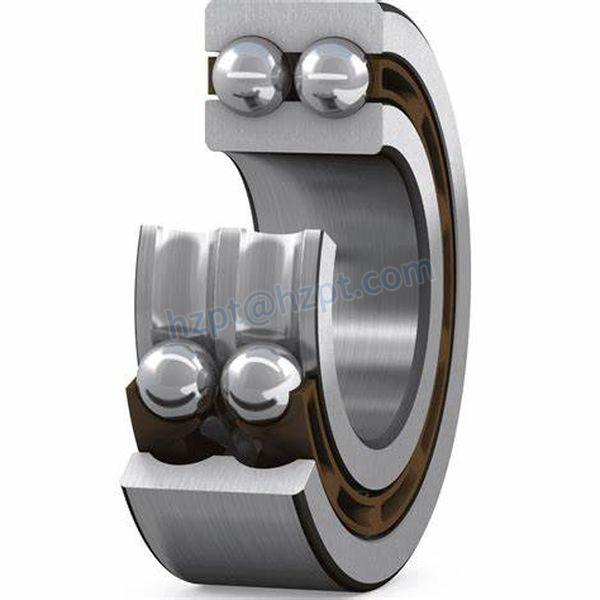
What are the Challenges Associated with Noise Reduction in Ball Bearings?
Noise reduction in ball bearings is a crucial consideration, especially in applications where noise levels must be minimized for operational efficiency and user comfort. While ball bearings are designed to operate smoothly, there are several challenges associated with reducing noise in their operation:
- Vibration:
Vibration generated by the movement of rolling elements and raceways can lead to noise. Even minor irregularities in bearing components or the mounting system can cause vibration that translates into audible noise.
- Bearing Type and Design:
The type and design of the ball bearing can impact noise generation. For example, deep groove ball bearings are known for their quiet operation, while angular contact bearings can generate more noise due to their higher contact angles.
- Lubrication:
Improper or inadequate lubrication can result in increased friction and wear, leading to noise. Choosing the right lubricant and maintaining proper lubrication levels are essential for reducing noise in ball bearings.
- Bearing Clearance and Preload:
Incorrect clearance or preload settings can lead to noise issues. Excessive clearance or inadequate preload can cause the rolling elements to impact the raceways, resulting in noise during rotation.
- Material and Manufacturing Quality:
The quality of materials and manufacturing processes can affect noise levels. Inconsistent or low-quality materials, improper heat treatment, or manufacturing defects can lead to noise generation during operation.
- Surface Finish:
The surface finish of the rolling elements and raceways can impact noise. Rough surfaces can generate more noise due to increased friction and potential irregularities.
- Sealing and Shielding:
Seals and shields that protect bearings can influence noise levels. While they are necessary for contamination prevention, they can also cause additional friction and generate noise.
- Operating Conditions:
External factors such as temperature, speed, and load can influence noise levels. High speeds or heavy loads can amplify noise due to increased stress on the bearing components.
- Wear and Deterioration:
As ball bearings wear over time, noise levels can increase. Worn components or inadequate lubrication can lead to more significant noise issues as the bearing operates.
To address these challenges and reduce noise in ball bearings, manufacturers and engineers employ various techniques, such as optimizing design, selecting suitable bearing types, using proper lubrication, maintaining accurate preload settings, and ensuring high-quality materials and manufacturing processes. Noise reduction efforts are essential to improve overall product quality, meet noise regulations, and enhance user experience in various applications.
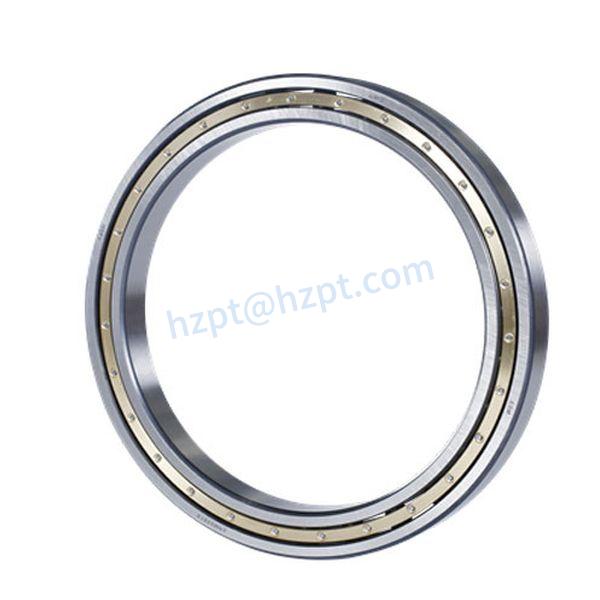
What are the Differences between Deep Groove Ball Bearings and Angular Contact Ball Bearings?
Deep groove ball bearings and angular contact ball bearings are two common types of ball bearings, each designed for specific applications and load conditions. Here are the key differences between these two types of bearings:
- Design and Geometry:
Deep Groove Ball Bearings:
Deep groove ball bearings have a simple design with a single row of balls that run along deep raceways in both the inner and outer rings. The rings are usually symmetrical and non-separable, resulting in a balanced load distribution.
Angular Contact Ball Bearings:
Angular contact ball bearings have a more complex design with two rows of balls, oriented at an angle to the bearing’s axis. This arrangement allows for the transmission of both radial and axial loads, making them suitable for combined loads and applications requiring high precision.
- Load Carrying Capacity:
Deep Groove Ball Bearings:
Deep groove ball bearings are primarily designed to carry radial loads. They can handle axial loads in both directions, but their axial load-carrying capacity is generally lower compared to angular contact ball bearings.
Angular Contact Ball Bearings:
Angular contact ball bearings are specifically designed to handle both radial and axial loads. The contact angle between the rows of balls determines the bearings’ axial load-carrying capacity. They can handle higher axial loads and are commonly used in applications with thrust loads.
- Contact Angle:
Deep Groove Ball Bearings:
Deep groove ball bearings have no defined contact angle, as the balls move in a deep groove along the raceways. They are primarily designed for radial loads.
Angular Contact Ball Bearings:
Angular contact ball bearings have a specified contact angle between the rows of balls. This contact angle allows them to carry both radial and axial loads and is crucial for their ability to handle combined loads.
- Applications:
Deep Groove Ball Bearings:
Deep groove ball bearings are commonly used in applications that primarily require radial loads, such as electric motors, pumps, and conveyor systems. They are also suitable for high-speed operation.
Angular Contact Ball Bearings:
Angular contact ball bearings are used in applications where both radial and axial loads are present, such as in machine tools, automotive wheel hubs, and aerospace components. They are especially useful for applications that require precise axial positioning and handling of thrust loads.
- Limitations:
Deep Groove Ball Bearings:
Deep groove ball bearings are not as suitable for handling significant axial loads and may experience skidding under certain conditions due to their deep raceways.
Angular Contact Ball Bearings:
Angular contact ball bearings can experience increased heat generation and wear at higher speeds due to the contact angle of the balls.
In summary, the design, load-carrying capacity, contact angle, and applications differ between deep groove ball bearings and angular contact ball bearings. Choosing the appropriate type depends on the specific load conditions and requirements of the application.
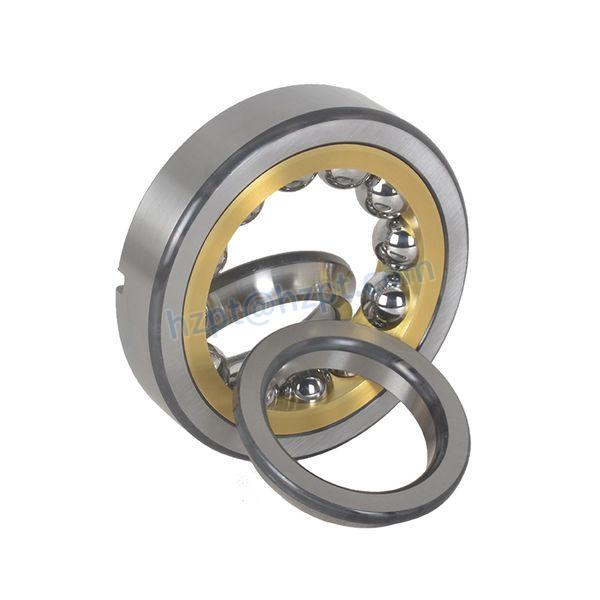
What are the Different Components that Make up a Typical Ball Bearing?
A typical ball bearing consists of several essential components that work together to reduce friction and support loads. Here are the main components that make up a ball bearing:
- Outer Ring:
The outer ring is the stationary part of the bearing that provides support and houses the other components. It contains raceways (grooves) that guide the balls’ movement.
- Inner Ring:
The inner ring is the rotating part of the bearing that attaches to the shaft. It also contains raceways that correspond to those on the outer ring, allowing the balls to roll smoothly.
- Balls:
The spherical balls are the rolling elements that reduce friction between the inner and outer rings. Their smooth rolling motion enables efficient movement and load distribution.
- Cage or Retainer:
The cage, also known as the retainer, maintains a consistent spacing between the balls. It prevents the balls from touching each other, reducing friction and preventing jamming.
- Seals and Shields:
Many ball bearings include seals or shields to protect the internal components from contaminants and retain lubrication. Seals provide better protection against contaminants, while shields offer less resistance to rotation.
- Lubricant:
Lubrication is essential to reduce friction, wear, and heat generation. Bearings are typically filled with lubricants that ensure smooth movement between the balls and raceways.
- Flanges and Snap Rings:
In some designs, flanges or snap rings are added to help position and secure the bearing in its housing or on the shaft. Flanges prevent axial movement, while snap rings secure the bearing radially.
- Raceways:
Raceways are the grooved tracks on the inner and outer rings where the balls roll. The shape and design of the raceways influence the bearing’s load-carrying capacity and performance.
- Anti-Friction Shield:
In certain high-speed applications, a thin anti-friction shield can be placed between the inner and outer rings to minimize friction and heat generation.
These components work together to enable the smooth rolling motion, load support, and reduced friction that characterize ball bearings. The proper design and assembly of these components ensure the bearing’s optimal performance and longevity in various applications.


editor by CX 2024-02-12