Product Description
Deep Groove Ball Bearing 6310, made of bearing steel GCr15
Bearing No.: 6310
Dimensions(dxDxB): 50 x 110 x 27mm
Material: Chrome Steel GCr15
Grade: P0
Clearance: C0
Weight: 1.082kg
Cr dynamic/cor static: 38000N/61800N
Limiting speed (grease/oil): 6000rpm/7000rpm
Packing: Industrial packing (Plastic film/Craft paper/Carton)
Customized packing ways are acceptable.
For more details of 6300 series bearing, please leave message or directly contact our representitive
| Single row deep groove ball bearing / Fuqin | |||||||||
| Table 3: 6300 series | |||||||||
| Bearing No. | Dimensions | ||||||||
| d | D | B | r smin | r 1 smin | |||||
| 6300 | 6300-N | 6300-ZN | 6300-2Z | 6300-2RS | 10 | 35 | 11 | 0.6 | 0.5 |
| 6301 | 6301-N | 6301-ZN | 6301-2Z | 6301-2RS | 12 | 37 | 12 | 1 | 0.5 |
| 6302 | 6302-N | 6302-ZN | 6302-2Z | 6302-2RS | 15 | 42 | 13 | 1 | 0.5 |
| 6303 | 6303-N | 6303-ZN | 6303-2Z | 6303-2RS | 17 | 47 | 14 | 1 | 0.5 |
| 6304 | 6304-N | 6304-ZN | 6304-2Z | 6304-2RS | 20 | 52 | 15 | 1.1 | 0.5 |
| 6305 | 6305-N | 6305-ZN | 6305-2Z | 6305-2RS | 25 | 62 | 17 | 1.1 | 0.5 |
| 6306 | 6306-N | 6306-ZN | 6306-2Z | 6306-2RS | 30 | 72 | 19 | 1.1 | 0.5 |
| 6307 | 6307-N | 6307-ZN | 6307-2Z | 6307-2RS | 35 | 80 | 21 | 1.5 | 0.5 |
| 6308 | 6308-N | 6308-ZN | 6308-2Z | 6308-2RS | 40 | 90 | 23 | 1.5 | 0.5 |
| 6309 | 6309-N | 6309-ZN | 6309-2Z | 6309-2RS | 45 | 100 | 25 | 1.5 | 0.5 |
| 6310 | 6310-N | 6310-ZN | 6310-2Z | 6310-2RS | 50 | 110 | 27 | 2.0 | 0.5 |
| 6311 | 6311-N | 6311-ZN | 6311-2Z | 6311-2RS | 55 | 120 | 29 | 2.0 | 0.5 |
| 6312 | 6312-N | 6312-ZN | 6312-2Z | 6312-2RS | 60 | 130 | 31 | 2.1 | 0.5 |
| 6313 | 6313-N | 6313-ZN | 6313-2Z | 6313-2RS | 65 | 140 | 33 | 2.1 | 0.5 |
| 6314 | 6314-N | 6314-ZN | 6314-2Z | 6314-2RS | 70 | 150 | 35 | 2.1 | 0.5 |
| 6315 | 6315-N | 6315-2Z | 6315-2RS | 75 | 160 | 37 | 2.1 | 0.5 | |
| 6316 | 6316-N | 6316-2Z | 6316-2RS | 80 | 170 | 39 | 2.1 | 0.5 | |
| 6317 | 6317-N | 6317-2Z | 6317-2RS | 85 | 180 | 41 | 3.0 | 0.5 | |
| 6318 | 6318-N | 6318-2Z | 6318-2RS | 90 | 190 | 43 | 3.0 | 0.5 | |
| 6319 | 6319-N | 6319-2Z | 95 | 200 | 45 | 3.0 | 0.5 | ||
| 6320 | 6320-N | 6320-2Z | 100 | 215 | 47 | 3.0 | |||
/* March 10, 2571 17:59:20 */!function(){function s(e,r){var a,o={};try{e&&e.split(“,”).forEach(function(e,t){e&&(a=e.match(/(.*?):(.*)$/))&&1
| Separated: | Unseparated |
|---|---|
| Load Direction: | Radial Bearing |
| Material: | Bearing Steel |
| Rolling Body: | Ball Bearings |
| The Number of Rows: | Single |
| Outer Dimension: | Small and Medium-Sized (60-115mm) |
| Samples: |
US$ 0/Piece
1 Piece(Min.Order) | |
|---|
| Customization: |
Available
| Customized Request |
|---|
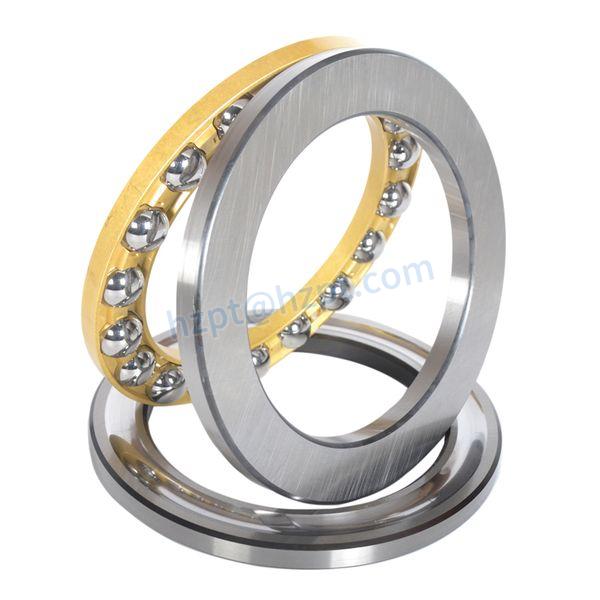
Can you Provide Examples of Industries where Ball Bearings are Crucial Components?
Ball bearings are essential components in a wide range of industries where smooth motion, load support, and precision are vital. Here are some examples of industries where ball bearings play a crucial role:
- Automotive Industry:
Ball bearings are used in various automotive applications, including wheel hubs, transmissions, engines, steering systems, and suspension components. They provide reliable rotation and support in both passenger vehicles and commercial vehicles.
- Aerospace Industry:
In the aerospace sector, ball bearings are found in aircraft engines, landing gear systems, control surfaces, and avionics equipment. Their ability to handle high speeds and precision is vital for aviation safety.
- Industrial Machinery:
Ball bearings are integral to a wide range of industrial machinery, including pumps, compressors, conveyors, machine tools, printing presses, and textile machinery. They facilitate smooth operation and load distribution in these diverse applications.
- Medical Equipment:
In medical devices and equipment, ball bearings are used in surgical instruments, imaging equipment, dental tools, and laboratory machinery. Their precision and smooth movement are crucial for accurate diagnostics and treatments.
- Robotics and Automation:
Ball bearings are key components in robotic arms, automation systems, and manufacturing machinery. They enable precise movement, high-speed operation, and reliable performance in automated processes.
- Renewable Energy:
Wind turbines and solar tracking systems utilize ball bearings to enable efficient rotation and tracking of the wind blades and solar panels. Ball bearings withstand the dynamic loads and environmental conditions in renewable energy applications.
- Marine and Shipbuilding:
Ball bearings are used in marine applications such as ship propulsion systems, steering mechanisms, and marine pumps. They withstand the corrosive environment and provide reliable performance in maritime operations.
- Heavy Equipment and Construction:
In construction machinery like excavators, bulldozers, and cranes, ball bearings support the movement of heavy loads and enable efficient operation in demanding environments.
- Electronics and Consumer Appliances:
Consumer electronics like electric motors, computer hard drives, and household appliances rely on ball bearings for smooth motion and reliable operation.
- Oil and Gas Industry:
In oil and gas exploration and extraction equipment, ball bearings are used in drilling rigs, pumps, and processing machinery. They handle the high loads and harsh conditions of this industry.
These examples demonstrate how ball bearings are indispensable components in various industries, contributing to the efficiency, reliability, and functionality of diverse mechanical systems and equipment.
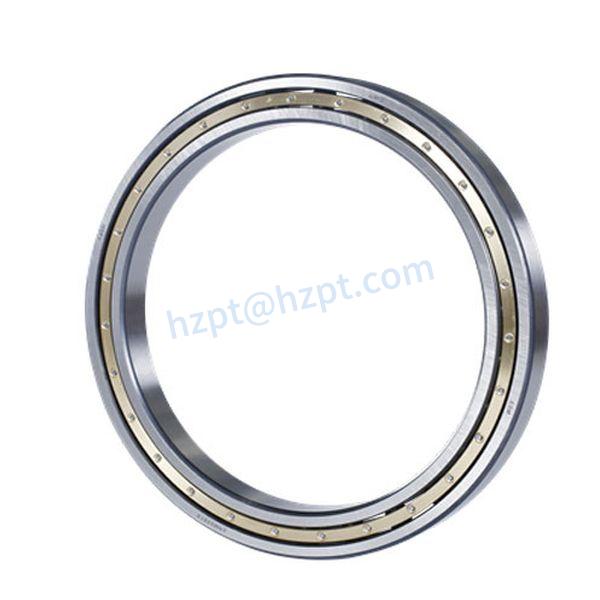
What are the Differences between Deep Groove Ball Bearings and Angular Contact Ball Bearings?
Deep groove ball bearings and angular contact ball bearings are two common types of ball bearings, each designed for specific applications and load conditions. Here are the key differences between these two types of bearings:
- Design and Geometry:
Deep Groove Ball Bearings:
Deep groove ball bearings have a simple design with a single row of balls that run along deep raceways in both the inner and outer rings. The rings are usually symmetrical and non-separable, resulting in a balanced load distribution.
Angular Contact Ball Bearings:
Angular contact ball bearings have a more complex design with two rows of balls, oriented at an angle to the bearing’s axis. This arrangement allows for the transmission of both radial and axial loads, making them suitable for combined loads and applications requiring high precision.
- Load Carrying Capacity:
Deep Groove Ball Bearings:
Deep groove ball bearings are primarily designed to carry radial loads. They can handle axial loads in both directions, but their axial load-carrying capacity is generally lower compared to angular contact ball bearings.
Angular Contact Ball Bearings:
Angular contact ball bearings are specifically designed to handle both radial and axial loads. The contact angle between the rows of balls determines the bearings’ axial load-carrying capacity. They can handle higher axial loads and are commonly used in applications with thrust loads.
- Contact Angle:
Deep Groove Ball Bearings:
Deep groove ball bearings have no defined contact angle, as the balls move in a deep groove along the raceways. They are primarily designed for radial loads.
Angular Contact Ball Bearings:
Angular contact ball bearings have a specified contact angle between the rows of balls. This contact angle allows them to carry both radial and axial loads and is crucial for their ability to handle combined loads.
- Applications:
Deep Groove Ball Bearings:
Deep groove ball bearings are commonly used in applications that primarily require radial loads, such as electric motors, pumps, and conveyor systems. They are also suitable for high-speed operation.
Angular Contact Ball Bearings:
Angular contact ball bearings are used in applications where both radial and axial loads are present, such as in machine tools, automotive wheel hubs, and aerospace components. They are especially useful for applications that require precise axial positioning and handling of thrust loads.
- Limitations:
Deep Groove Ball Bearings:
Deep groove ball bearings are not as suitable for handling significant axial loads and may experience skidding under certain conditions due to their deep raceways.
Angular Contact Ball Bearings:
Angular contact ball bearings can experience increased heat generation and wear at higher speeds due to the contact angle of the balls.
In summary, the design, load-carrying capacity, contact angle, and applications differ between deep groove ball bearings and angular contact ball bearings. Choosing the appropriate type depends on the specific load conditions and requirements of the application.
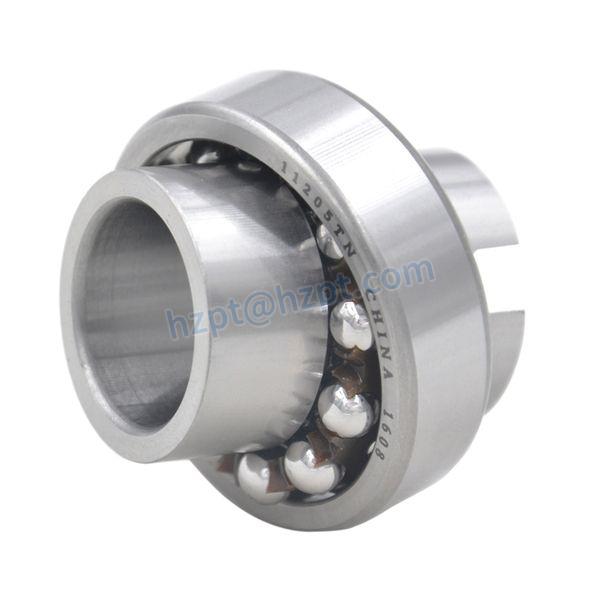
What Factors should be Considered when Selecting a Ball Bearing for a Particular Application?
Selecting the right ball bearing for a specific application involves careful consideration of various factors to ensure optimal performance, longevity, and reliability. Here are the key factors that should be taken into account:
- Load Type and Magnitude:
Determine the type of load (radial, axial, or combined) and the magnitude of the load that the bearing will need to support. Choose a bearing with the appropriate load-carrying capacity to ensure reliable operation.
- Speed and Operating Conditions:
Consider the rotational speed of the application and the operating conditions, such as temperature, humidity, and exposure to contaminants. Different bearing types and materials are suited for varying speeds and environments.
- Accuracy and Precision:
For applications requiring high accuracy and precision, such as machine tool spindles or optical instruments, choose high-precision bearings that can maintain tight tolerances and minimize runout.
- Space Limitations:
If the application has limited space, choose miniature or compact ball bearings that can fit within the available dimensions without compromising performance.
- Thrust and Radial Loads:
Determine whether the application requires predominantly thrust or radial load support. Choose the appropriate type of ball bearing (thrust, radial, or angular contact) based on the primary load direction.
- Alignment and Misalignment:
If the application experiences misalignment between the shaft and housing, consider self-aligning ball bearings that can accommodate angular misalignment.
- Mounting and Installation:
Consider the ease of mounting and dismounting the bearing. Some applications may benefit from features like flanges or snap rings for secure installation.
- Lubrication and Maintenance:
Choose a bearing with appropriate lubrication options based on the application’s speed and temperature range. Consider whether seals or shields are necessary to protect the bearing from contaminants.
- Environmental Conditions:
Factor in the operating environment, including exposure to corrosive substances, chemicals, water, or dust. Choose materials and coatings that can withstand the specific environmental challenges.
- Bearing Material:
Select a bearing material that suits the application’s requirements. Common materials include stainless steel for corrosion resistance and high-carbon chrome steel for general applications.
- Bearing Arrangement:
Consider whether a single-row, double-row, or multiple bearings in a specific arrangement are needed to accommodate the loads and moments present in the application.
By carefully evaluating these factors, engineers and designers can choose the most suitable ball bearing that aligns with the specific demands of the application, ensuring optimal performance, durability, and overall operational efficiency.


editor by CX 2024-02-12