Product Description
HBB High Performance Single Row 4 Point Contact Ball Bearings
Normally, Slewing Bearings are large-size rolling bearings that can accommodate axial,radial and moment loads acting either singly or in combination and in any direction. They can perform both slewing (oscillating) movements as well as rotational movements.
Basically, a slewing bearing consists of an inner ring (a), an outer ring (b) and rolling elements − balls (c) or cylindrical rollers − that are separated by polyamide spacers (d). The rings, 1 of which usually incorporates a gear (e), are provided with holes (f) to accommodate attachment bolts. The holes may be threaded. Generally, only the raceways in the rings (h) are hardened and precision-ground. Integral seals (g) made of acrylonitrile-butadiene rubber (NBR) keep the lubricant in, and contaminants out of the bearing. Slewing bearings are re-lubricated Slewing bearings through grease fittings (i) to reduce maintenance and operating costs.
Compared to traditional pivot arrangements, slewing bearing arrangements provide many design and performance advantages. The compactness and large inner diameter simplify the design of the bearing arrangement and its associated components.
The low sectional height of these bearings means that the pinion lever can be kept short. In most cases only flat surfaces on the associated components are needed.
Slewing bearings were originally designed to be mounted only on horizontal support structures, but can now be used successfully in vertical bearing arrangements. The forces and load distribution in slewing bearings, when subjected to axial, radial and moment loads.
Technical Speficiations:
Slewing bearings perform extremely well in a variety of applications such as:
access platforms; bucket wheel excavators; conveyor booms; cranes of all types, small, medium and large excavators; inHangZhou tables; ladle turrets; offshore applications; robots; railway bogies; rotary platforms; stackers; solar mirrors; tunnel boring machines; wind turbines; radar antenna
Real Products Show:
Factory Show:
| Standard or Nonstandard: | Standard |
|---|---|
| Feature: | High Speed, Antimagnetic, Cold-Resistant, Corrosion-Resistant, Heat-Resistant |
| Sealing Gland: | Sealed On Both Sides |
| Rolling-Element Number: | Single-Row |
| Roller Type: | Deep Groove Raceway |
| Material: | Bearing Steel |
| Samples: |
US$ 5000/Piece
1 Piece(Min.Order) | |
|---|
What is a bushing?
What is a bushing? Basically, bushings are spherical or spherical bearings for machines with sliding or rotating shaft assemblies. Due to their excellent load-carrying capacity and anti-friction properties, these bushings are used in almost all industrial applications. This makes them useful in industries such as construction, mining, agriculture, transportation, hydropower, food processing and material handling.
Shell information
The demand for bushings is closely related to the global transformer market. Growing renewable energy sources and high replacement rates of aging grid infrastructure are driving the global demand for transformer bushings. Increased urbanization is another factor driving the demand for transformer bushings. Among global regions, Asia Pacific is the largest market for medium voltage transformer bushings. The following section provides a detailed analysis of the market.
Bulk-type bushings are used for lower voltage ratings and consist of a center conductor stud or tube and an insulator housing. They are available in dry or oil filled versions, and their oil content is shared with the transformer main tank. However, the trend is slowly turning towards RIP bushings. Regardless of how different types of bushings are used, it is important to understand the difference between them.
A recent CZPT survey indicated that bushings account for 17% of all transformer failures. Among them, 30% caused fire accidents and 10% caused explosions. This is not a small risk, especially for such important electrical components as transformers. Because casing is so important, utilities are increasingly looking to preventative maintenance. However, this requires continuous monitoring of the bushing and its insulation. There are many benefits to using online condition monitoring.
One of the main benefits of locating and replacing faulty bushings is improved operability and safety. If you notice that your car is unstable in the corners, your bushings are worn. Anti-roll bar bushings can also be a sign of bushing damage. Do not ignore these warning signs as they can have dangerous consequences. To avoid these potential problems, make sure to get your vehicle serviced as soon as you notice any of these symptoms.
Be sure to park your vehicle on a level surface before you start changing your car bushings. You may need to unlock the hood latch and apply the brakes before continuing. Then, open the valve cover. This will allow you to see the engine area and bushings. You should also check that the wheels are not moving and avoid placing sharp objects in the engine bay. If you have time, open the hood and if you can see the bushings, turn on the headlights.
type
There are various types of bushings, each serving a different purpose. Oil-filled types are the most common and are designed for vertical installations. On the other hand, the embedded ferrule can accommodate the connection to the wire leads in the lower end of the ferrule. This feature significantly reduces the length of the sump end of the casing, but also adds additional complexity and cost.
There are two basic types of bushings. The first is a solid pour and the second is a capacitive graded variety. Solid cast bushings are typically used for low voltage transformer windings, while gas insulated bushings are insulated with pressurized gas. Gas-insulated bushings are also used in SF6 circuit breakers. If you are in the market for a new bushing, be sure to consider its cantilever strength and design.
Electrical bushings are an important part of various electrical equipment. They help carry high-voltage current through the enclosure and act as an insulator between a live conductor and a metal body at ground potential. Bulk-type bushings consist of a central conductive rod (usually copper or aluminum) and an insulator (silicone rubber compound or composite resin) surrounding the rod.
Transformers require transformer bushings. The construction and materials used in the bushing play a key role in the durability and longevity of the transformer. Transformers with weak bushings can fail, causing extensive damage. Moisture or voids can cause insulation breakdown, resulting in extensive electrical damage. Appropriate materials and optimized construction can reduce electric field stress and extend the life of the bushing.
Capacitor grading bushings are more expensive and are used in almost all high voltage systems. They use a conductive layer within the insulating layer between the center conductor and the insulator. Different manufacturers use different materials to produce these bushings. Earlier, capacitor grading bushings were made of concentric ceramic cylinders with metallized surfaces. They are also made from laminated cardboard tubes with conductive layers.
Function
A bushing is a support member that performs its function by acting as a washer and reducing noise and vibration. Bushings are used in valve covers and are made of corrosion-resistant materials to perform these functions. These products can be found in all types of machinery from cars to airplanes. Below are some common uses for bushings. Read on to discover more. Here are some of the most important features of the shell.
Electrical bushings transmit electricity. They can be used in circuit breakers, transformers, power capacitors and shunt reactors. The conductors of the bushing can be built directly into the bushing or through the bushing. Both current and voltage represent electricity. The bushing must have insulation capable of withstanding the voltage and its current-carrying conductors must be capable of carrying the rated current without overheating the adjacent insulation.
The bushing wraps around the stem, which is a relatively simple replacement part. It is a hardened part that prevents leaks and improves sealing. Plus, its low-cost replacement makes it a very easy-to-machine part. Bushings are also used in valves for guiding purposes. These two features make bushings an important part of many machines and applications. So, learn more about them.
Copper and brass are commonly used bushing materials. They have high compressive strength and high surface pressure. This material is suitable for bearings in low speed situations and heavy duty applications. Copper and brass are the most common types of casings, and they are both made in China. They are all relatively inexpensive and are available in a variety of materials and sizes. If you are considering purchasing a casing, keep in mind that it must meet national standards.
cost
Whether you’re looking for a replacement bushing for your rear suspension or just need to replace the fork, you have a few different options. The two main types of bushings are coated and uncoated. If you want to save money on bushing replacements, you should consider getting a cheaper lower fork. Whether you’re replacing bushings to improve ride quality or prevent damage to your wheel loader, you’ll find a bushing replacement option that fits your budget.
While most cars are compatible with bushings, some iconic parts from premium brands like BMW and Mercedes require special tools to replace. If you are not confident in your mechanical abilities, consider hiring a mechanic to do it. Mechanical replacement bushings typically range from $200 to $500. If you’re comfortable with mechanics and have some mechanical knowledge, you can save money by trying the job yourself. For example, control arm bushings range in price from $20 to $80. It is important to check the alignment after replacing the bushing to avoid further damage.
Control arm bushing replacements are usually relatively inexpensive, but you may need to replace several at the same time. You should check the prices of several mechanics before making a decision. You can easily save between $50 and $100 by comparing quotes. Plus, you’ll save a lot of money by finding the right mechanic for the job. You can also use an online comparison tool to compare prices. You can find a mechanic that suits your needs at an affordable price.
Control arm bushings are also an inexpensive way to replace parts of a car’s front or rear suspension. Typically, control arm bushings are made of two metal cylinders covered with a thick layer of rubber. They wear out due to accidents, potholes and off-roading. They are mounted with a bolt that goes through the inner barrel. It is important to replace these bushings as often as needed to improve operation.


editor by CX 2023-04-18
China 013.30.1000 1122mm Single Row 4 Points Contact Ball Slewing Bearing with Internal Gear supplier
Item Description
HBB Substantial Performance One Row 4 Point Contact Ball Bearings
Generally, Slewing Bearings are big-size rolling bearings that can accommodate axial,radial and second loads acting possibly singly or in mix and in any path. They can carry out both slewing (oscillating) actions as properly as rotational movements.
Fundamentally, a slewing bearing consists of an interior ring (a), an outer ring (b) and rolling factors − balls (c) or cylindrical rollers − that are separated by polyamide spacers (d). The rings, 1 of which typically incorporates a gear (e), are supplied with holes (f) to accommodate attachment bolts. The holes may be threaded. Usually, only the raceways in the rings (h) are hardened and precision-floor. Integral seals (g) created of acrylonitrile-butadiene rubber (NBR) hold the lubricant in, and contaminants out of the bearing. Slewing bearings are re-lubricated Slewing bearings by way of grease fittings (i) to decrease servicing and working fees.
When compared to conventional pivot arrangements, slewing bearing preparations provide many design and functionality advantages. The compactness and large internal diameter simplify the layout of the bearing arrangement and its connected factors.
The lower sectional height of these bearings implies that the pinion lever can be held brief. In most instances only flat surfaces on the related factors are needed.
Slewing bearings had been originally created to be mounted only on horizontal assist structures, but can now be used efficiently in vertical bearing arrangements. The forces and load distribution in slewing bearings, when subjected to axial, radial and second masses.
Specialized Speficiations:
Slewing bearings perform very properly in a range of applications these kinds of as:
accessibility platforms bucket wheel excavators conveyor booms cranes of all kinds, tiny, medium and big excavators inHangZhou tables ladle turrets offshore programs robots railway bogies rotary platforms stackers photo voltaic mirrors tunnel dull devices wind turbines radar antenna
Genuine Goods Present:
Manufacturing facility Present:
| To Be Negotiated | 1 Piece (Min. Order) |
###
| Standard or Nonstandard: | Standard |
|---|---|
| Feature: | High Speed, Antimagnetic, Cold-Resistant, Corrosion-Resistant, Heat-Resistant |
| Sealing Gland: | Sealed On Both Sides |
| Rolling-Element Number: | Single-Row |
| Roller Type: | Deep Groove Raceway |
| Material: | Bearing Steel |
###
| Samples: |
US$ 5000/Piece
1 Piece(Min.Order) |
|---|
| To Be Negotiated | 1 Piece (Min. Order) |
###
| Standard or Nonstandard: | Standard |
|---|---|
| Feature: | High Speed, Antimagnetic, Cold-Resistant, Corrosion-Resistant, Heat-Resistant |
| Sealing Gland: | Sealed On Both Sides |
| Rolling-Element Number: | Single-Row |
| Roller Type: | Deep Groove Raceway |
| Material: | Bearing Steel |
###
| Samples: |
US$ 5000/Piece
1 Piece(Min.Order) |
|---|
The benefits of rubber bushings and how they work
If you have experienced increased vibration while driving, you know the importance of replacing the control arm bushings. The resulting metal-to-metal contact can cause annoying driving problems and be a threat to your safety. Over time, the control arm bushings begin to wear out, a process that can be exacerbated by harsh driving conditions and environmental factors. Additionally, larger tires that are more susceptible to bushing wear are also prone to increased vibration transfer, especially for vehicles with shorter sidewalls. Additionally, these plus-sized tires, which are designed to fit on larger rims, have a higher risk of transmitting vibrations through the bushings.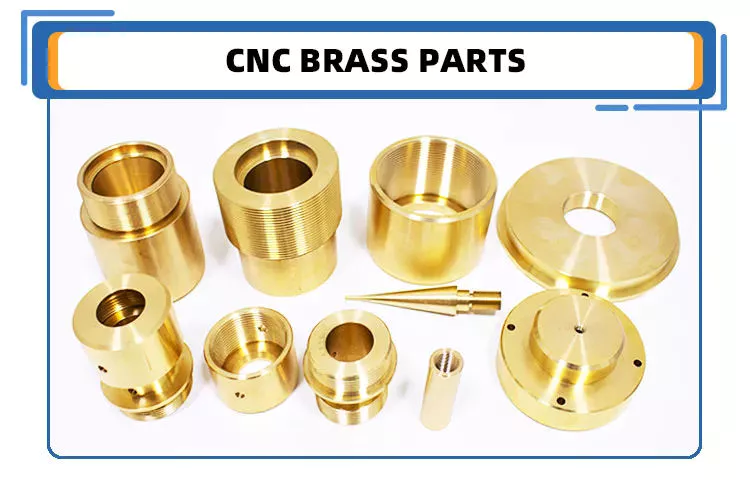
rubber
Rubber bushings are rubber tubes that are glued into the inner or outer curve of a cylindrical metal part. The rubber is made of polyurethane and is usually prestressed to avoid breaking during installation. In some cases, the material is also elastic, so it can slide. These properties make rubber bushings an integral part of a vehicle’s suspension system. Here are some benefits of rubber bushings and how they work.
Rubber bushings are used to isolate and reduce vibration caused by the movement of the two pieces of equipment. They are usually placed between two pieces of machinery, such as gears or balls. By preventing vibrations, rubber bushings improve machine function and service life. In addition to improving the overall performance of the machine, the rubber bushing reduces noise and protects the operator from injury. The rubber on the shock absorber also acts as a vibration isolator. It suppresses the energy produced when the two parts of the machine interact. They allow a small amount of movement but minimize vibration.
Both rubber and polyurethane bushings have their advantages and disadvantages. The former is the cheapest, but not as durable as polyurethane. Compared to polyurethane, rubber bushings are a better choice for daily commutes, especially long commutes. Polyurethane bushings provide better steering control and road feel than rubber, but can be more expensive than the former. So how do you choose between polyurethane and rubber bushings?
Polyurethane
Unlike rubber, polyurethane bushings resist high stress environments and normal cycling. This makes them an excellent choice for performance builds. However, there are some disadvantages to using polyurethane bushings. Read on to learn about the advantages and disadvantages of polyurethane bushings in suspension applications. Also, see if a polyurethane bushing is suitable for your vehicle.
Choosing the right bushing for your needs depends entirely on your budget and application. Softer bushings have the lowest performance but may have the lowest NVH. Polyurethane bushings, on the other hand, may be more articulated, but less articulated. Depending on your needs, you can choose a combination of features and tradeoffs. While these are good options for everyday use, for racing and hardcore handling applications, a softer option may be a better choice.
The initial hardness of the polyurethane bushing is higher than that of the rubber bushing. The difference between the two materials is determined by durometer testing. Polyurethane has a higher hardness than rubber because it does not react to load in the same way. The harder the rubber, the less elastic, and the higher the tear. This makes it an excellent choice for bushings in a variety of applications.
hard
Solid bushings replace the standard bushings on the subframe, eliminating axle clutter. New bushings raise the subframe by 0.59″ (15mm), correcting the roll center. Plus, they don’t create cabin noise. So you can install these bushings even when your vehicle is lowered. But you should consider some facts when installing solid casing. Read on to learn more about these casings.
The stiffest bushing material currently available is solid aluminum. This material hardly absorbs vibrations, but it is not recommended for everyday use. Its stiffness makes it ideal for rail vehicles. The aluminum housing is prone to wear and tear and may not be suitable for street use. However, the solid aluminum bushings provide the stiffest feel and chassis feedback. However, if you want the best performance in everyday driving, you should choose a polyurethane bushing. They have lower friction properties and eliminate binding.
Sturdy subframe bushings will provide more driver feedback. Additionally, it will strengthen the rear body, eliminating any movement caused by the subframe. You can see this structural integration on the M3 and M4 models. The benefits of solid subframe bushings are numerous. They will improve rear-end handling without compromising drivability. So if you plan to install a solid subframe bushing, be sure to choose a solid bushing.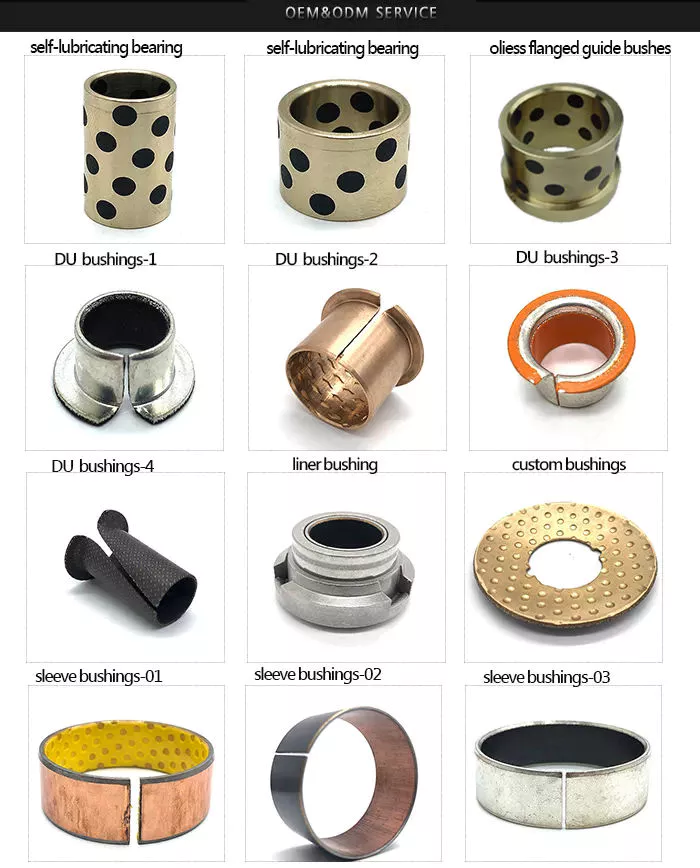
Capacitor classification
In the circuit, there is a high electric field on both sides of the capacitor grading bushing. This is due to their capacitor cores. The dielectric properties of the primary insulating layer have a great influence on the electric field distribution within the bushing. This article discusses the advantages and disadvantages of capacitor grade bushings. This article discusses the advantages and disadvantages of grading bushings for capacitors in DC power systems.
One disadvantage of capacitor grading bushings is that they are not suitable for higher voltages. Capacitor grading bushings are prone to serious heating problems. This may reduce their long-term reliability. The main disadvantage of capacitor grading bushings is that they increase the radial thermal gradient of the main insulation. This can lead to dielectric breakdown.
Capacitor grading bushing adopts cylindrical structure, which can suppress the influence of temperature on electric field distribution. This reduces the coefficient of inhomogeneity of the electric field in the confinement layer. Capacitor grading bushings have a uniform electric field distribution across their primary insulation. Capacitive graded bushings are also more reliable than nonlinear bushings.
Electric field variation is the most important cause of failure. The electrode extension layer can be patterned to control the electric field to avoid flashover or partial discharge of the primary insulating material. This design can be incorporated into capacitor grading bushings to provide better electric fields in high voltage applications. This type of bushing is suitable for a wide range of applications. This article discusses the advantages and disadvantages of capacitor grade bushings.
Metal
When choosing between plastic and metal sleeves, it is important to choose a product that can handle the required load. Plastic bushings tend to deteriorate and often crack under heavy loads, reducing their mechanical strength and service life. Metal bushings, on the other hand, conduct heat more efficiently, preventing any damage to the mating surfaces. Plastic bushings can also be made with lubricating fillers added to a resin matrix.
Plastic bushings have many advantages over metal bushings, including being cheap and versatile. Plastic bushings are now used in many industries because they are inexpensive and quick to install. These plastic products are also self-lubricating and require less maintenance than metals. They are often used in applications where maintenance costs are high or parts are difficult to access. Also, if they are prone to wear and tear, they are easy to replace.
Metal bushings can be made of PTFE, plastic or bronze and are self-lubricating. Graphite plugs are also available for some metal bushings. Their high load capacity and excellent fatigue resistance make them a popular choice for automotive applications. The bi-metallic sintered bronze layer in these products provides excellent load-carrying capacity and good friction properties. The steel backing also helps reduce processing time and avoids the need for additional pre-lubrication.
plastic
A plastic bushing is a small ball of material that is screwed onto a nut or locknut on a mechanical assembly. Plastic bushings are very durable and have a low coefficient of friction, making them a better choice for durable parts. Since they do not require lubrication, they last longer and cost less than their metal counterparts. Unlike metal bushings, plastic bushings also don’t scratch or attract dirt.
One type of acetal sleeve is called SF-2. It is made of metal alloy, cold rolled steel and bronze spherical powder. A small amount of surface plastic penetrated into the voids of the copper spherical powder. Plastic bushings are available in a variety of colors, depending on the intended application. SF-2 is available in black or grey RAL 7040. Its d1 diameter is sufficient for most applications.
Another acetal sleeve is UHMW-PE. This material is used in the production of bearings and in low load applications. This material can withstand pressures from 500 to 800 PSI and is widely available. It is also self-lubricating and readily available. Due to its high resistance to temperature and chemical agents, it is an excellent choice for low-load industrial applications. If you’re in the market for an alternative to nylon, consider acetal.
Positional tolerances in many automotive components can cause misalignment. Misaligned plastic bushings can negatively impact the driver’s experience. For example, the cross tubes used to mount the seat to the frame are made by a stamping process. The result is a misalignment that can increase torque. Also, the plastic bushing is pushed to one side of the shaft. The increased pressure results in higher friction, which ultimately results in a poor driving experience.
v
editor by czh 2023-01-20