Product Description
ACTIVE-POWER INDUSTRIES Angular Contact Ball Bearing Ba240-3Wsa/Ba240-3Asa China Factory 7311AC 162250Ja 7311Pd6B Angular Contact Ball Bearing
Product Description
The connection line between the steel ball of the contact ball bearing and the contact point of the inner and outer rings forms an angle with the radial direction. Contact angles are generally divided into 15°, 30°, and 40°, which are represented by letters C, A, and B respectively.
Angular contact ball bearings mainly bear large unidirectional axial loads, and the larger the contact angle, the greater the load-bearing capacity. The material of the cage is steel plate, brass, or engineering plastic, and the forming method is stamping or turning, which is selected according to the bearing form or service conditions. Others include combined angular contact ball bearings, double-row angular contact ball bearings, and four-point contact ball bearings.
Angular contact ball bearings can bear radial load and axial load at the same time. Can work at higher speeds. The larger the contact angle, the higher the axial load-carrying capacity. High-precision and high-speed bearings usually take a contact angle of 15 degrees. Under the action of axial force, the contact angle will increase. Single-row angular contact ball bearings can only bear axial load in 1 direction and will cause additional axial force when bearing radial load. And it can only limit the axial displacement of the shaft or housing in 1 direction. If it is installed in pairs, make the outer rings of a pair of bearings face each other, that is, the wide end faces the wide end face, and the narrow end faces the narrow end face. This avoids causing additional axial forces and limits the shaft or housing to axial play in both directions.
Because the raceway of the inner and outer rings of the angular contact ball bearing can have relative displacement on the horizontal axis, it can bear radial load and axial load at the same time – combined load (single row angular contact ball bearing can only bear axial load in 1 direction, Therefore, they are generally installed in pairs). The material of the cage includes brass, synthetic resin, etc., which are distinguished according to the bearing type and service conditions.
Product Parameters
| Product Name | Angular Contact Ball Bearing |
| Type | Angular Contact Ball Bearing |
| Structure | Angular Contact |
| Applicable Industries | The machinery manufacturing plant, machine tools, mechanical equipment, motor automobile hub, agricultural machinery |
| Brand Name | RPZ /LONK/XWFD/ XWFD ZMW |
| Accuracy class | P0, P6, P5, P4, P2 or as required20mm-500mm |
| Seal type | Open / 2RS |
| Size | 20mm-500mm |
| Number of Rows | Single row |
| Origin | ZheJiang , China |
| Product Model | 7000cac 7200c 7001acm |
| Material | Gcr15 chrome steel / stainless steel bearing |
| Features | long life, low friction, high speed |
| Retainer Type | Brass / bakelite / steel |
| Angular Contact Bearing | ||||
| 7000AC | 7200AC | 7303AC | 7406AC | 3304-2RS/ZZ |
| 7001AC | 7201AC | 7304AC | 7407ACP6 | 3305-2RS/ZZ |
| 7002AC | 7202AC | 7305AC | 7408AC | 3306-2RS/ZZ |
| 7003AC | 7203AC | 7306AC | 7409AC | 3307-2RS/ZZ |
| 7004AC | 7204AC | 7307AC | 7410AC | 3308-2RS/ZZ |
| 7005AC | 7205AC | 7308AC | 7412ACM | 3309-2RS/ZZ |
| 7006AC | 7206AC | 7309AC | 7412BM | 3310-2RS/ZZ |
| 7007AC | 7207AC | 7310AC | 7414ACM | 3311-2RS/ZZ |
| 7008AC | 7208AC | 7311AC | 7414BM | 3312-2RS/ZZ |
| 7009AC | 7209AC | 7312AC | 7416ACM | 3313-2RS/ZZ |
| 7571AC | 7210C | 7313AC | 7416BM | 3314-2RS/ZZ |
| 7011AC | 7210AC | 7314AC | 7418ACM | 3315-2RS/ZZ |
| 7012AC | 7211AC | 7315AC | 7418BM | 3316-2RS/ZZ |
| 7013AC | 7212AC | 7315BM | 3317-2RS/ZZ | |
| 7014AC | 7213AC | 7317AC | 3204-2RS/ZZ | 3318-2RS/ZZ |
| 7015AC | 7214AC | 7317BM | 3205-2RS/ZZ | 3319-2RS/ZZ |
| 7016AC | 7216AC | 7318AC | 3206-2RS/ZZ | 3320-2RS/ZZ |
| 7017AC | 7217AC | 7318BTN | 3207-2RS/ZZ | |
| 7018AC | 7218AC | 7319AC | 3208-2RS/ZZ | QJ210 |
| 7571AC | 7219AC | 7319BM | 3209-2RS/ZZ | QJ211 |
| 7571AC | 7220AC | 7320AC | 3210-2RS/ZZ | QJ212 |
| 7571AC | 7221AC | 7320BM | 3211-2RS/ZZ | QJ213 |
| 7026AC | 7222AC | 7322AC | 3212-2RS/ZZ | QJ214 |
| 7571AC | 7224AC | 7322BM | 3213-2RS/ZZ | QJ215 |
| 7030AC | 7228AC | 7324ACM | 3214-2RS/ZZ | QJ216 |
| 7032AC | 7232AC | 7324BM | 3215-2RS/ZZ | QJ217 |
| 7034AC | 7236AC | 7326ACM | 3216-2RS/ZZ | QJ218 |
| 7036AC | 7240AC | 7328ACM | 3217-2RS/ZZ | QJ219 |
| 7038AC | 7244AC | 7328BM | 3218-2RS/ZZ | QJ220 |
| 7330ACM | 3219-2RS/ZZ | QJ222 | ||
| 7332ACM | 3220-2RS/ZZ | QJ224 | ||
| 7334ACM | QJ226 | |||
| 7336ACM | QJ228 | |||
| 7338ACM | QJ230 | |||
| 7340ACM | QJ232 | |||
Company Profile
HangZhou Active-Power Industrial. is located in HangZhou, ZheJiang , China. The factory has been committed to the production research and development of bearings for more than 20 years. We support OEM and ODM bearing customization.
The main products are: Deep Groove Ball Bearing Taper Roller Bearing Tapered Roller Bearing Auto Wheel Hub Bearing Cylindrical Roller Bearing Spherical Roller Bearing Motor Bearing Needle Roller Bearing Angular Contact Ball Bearing.
FAQ
Q1:What is your Before-sales Service?
1>. Offer to bear related consultation about technology and application;
2>.Help customers with bearing choice, clearance configuration, product” life, and reliability analysis;
3>. Offer highly cost-effective and complete solution program according to site conditions;
4>. Offer localized program on introduced equipment to save running cost
Q2: What is your After-sales Service?
1>. Offer training about bearing installation and maintenance;
2>.Help customers with trouble diagnosis and failure analysis;
3>. Visit customers regularly and feedback on their rational suggestions and requirements to the company.
Q3: How about your company’s strength?
1>.FREE SAMPLES:
contact us by email or trade manager, we will send the free samples according to your request.
2>. World-Class Bearing:
We provide our customers with all types of indigenous roller bearings of world-class quality.
3>.OEM or Non-Stand Bearings:
Any requirement for Non-standard roller bearings is Easily Fulfilled by us due to our vast knowledge and links in the industry.
4>.Genuine products With Excellent Quality:
The company has always proved the 100% quality products it provides with genuine intent.
5>. After-Sales Service and Technical Assistance:
The company provides after-sales service and technical assistance as per the customer’s requirements and needs.
6>.Quick Delivery:
The company provides just-in-time delivery with its streamlined supply chain.
7>.Cost Saving:
We provide long-life, shock-resistant, and high-reliability roller bearings with excellent quality and better performance.
Resulting in increased cost savings.
Q4: What will we do if you are not satisfied with the product?
A: If have any abnormal, Please contact us at the first time, and we will immediately process
Q5: How long will you respond to our problems?
A: We will respond within 1 hour. 24 hours to solve your problem
Q6: Is optional lubrication provided?
A: We can offer a wide range of oils and greases for a variety of applications. Please contact our engineer for technical
assistance with any special requirements
/* January 22, 2571 19:08:37 */!function(){function s(e,r){var a,o={};try{e&&e.split(“,”).forEach(function(e,t){e&&(a=e.match(/(.*?):(.*)$/))&&1
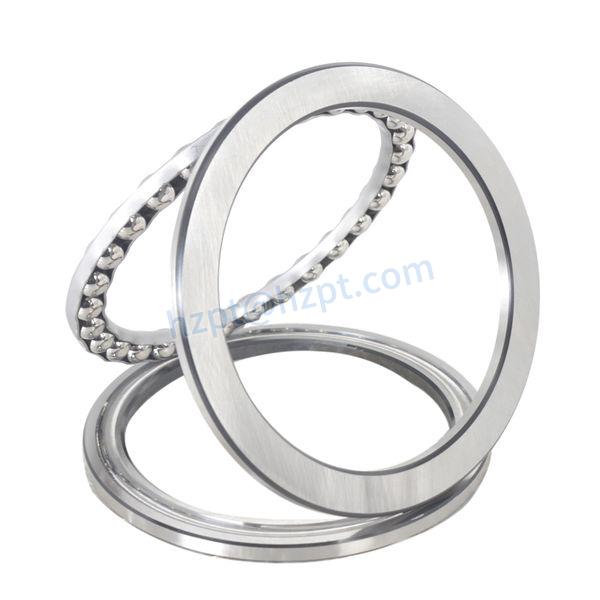
| Contact Angle: | 60° |
|---|---|
| Aligning: | Non-Aligning Bearing |
| Separated: | Separated |
| Rows Number: | Multiple |
| Load Direction: | Thrust Bearing |
| Material: | Brass |
| Samples: |
US$ 0/Piece
1 Piece(Min.Order) | |
|---|
| Customization: |
Available
| Customized Request |
|---|
What are the Materials Typically Used in Manufacturing Ball Bearings and Their Advantages?
Ball bearings are manufactured using a variety of materials, each chosen for its specific properties and advantages in various applications. Here are some commonly used materials in ball bearing manufacturing and their respective benefits:
- High-Carbon Chrome Steel (AISI 52100):
This is the most common material used for ball bearing manufacturing. It offers excellent hardness, wear resistance, and fatigue strength. High-carbon chrome steel bearings are suitable for a wide range of applications, from industrial machinery to automotive components.
- Stainless Steel (AISI 440C, AISI 304, AISI 316):
Stainless steel bearings are corrosion-resistant and suitable for applications where moisture, chemicals, or exposure to harsh environments are concerns. AISI 440C offers high hardness and corrosion resistance, while AISI 304 and AISI 316 provide good corrosion resistance and are often used in food and medical industries.
- Ceramic:
Ceramic bearings use silicon nitride (Si3N4) or zirconia (ZrO2) balls. Ceramic materials offer high stiffness, low density, and excellent resistance to corrosion and heat. Ceramic bearings are commonly used in high-speed and high-temperature applications, such as in aerospace and racing industries.
- Plastic (Polyamide, PEEK):
Plastic bearings are lightweight and offer good corrosion resistance. Polyamide bearings are commonly used due to their low friction and wear properties. Polyether ether ketone (PEEK) bearings provide high-temperature resistance and are suitable for demanding environments.
- Bronze:
Bronze bearings are often used in applications where self-lubrication is required. Bronze has good thermal conductivity and wear resistance. Bearings made from bronze are commonly used in machinery requiring frequent starts and stops.
- Hybrid Bearings:
Hybrid bearings combine steel rings with ceramic balls. These bearings offer a balance between the advantages of both materials, such as improved stiffness and reduced weight. Hybrid bearings are used in applications where high speeds and low friction are essential.
- Specialty Alloys:
For specific applications, specialty alloys may be used to meet unique requirements. For example, bearings used in extreme temperatures or corrosive environments may be made from materials like titanium or hastelloy.
- Coated Bearings:
Bearings may also be coated with thin layers of materials like diamond-like carbon (DLC) or other coatings to enhance performance, reduce friction, and improve wear resistance.
The choice of material depends on factors such as application requirements, operating conditions, load, speed, and environmental factors. Selecting the right material is essential for ensuring optimal bearing performance, longevity, and reliability in diverse industries and applications.
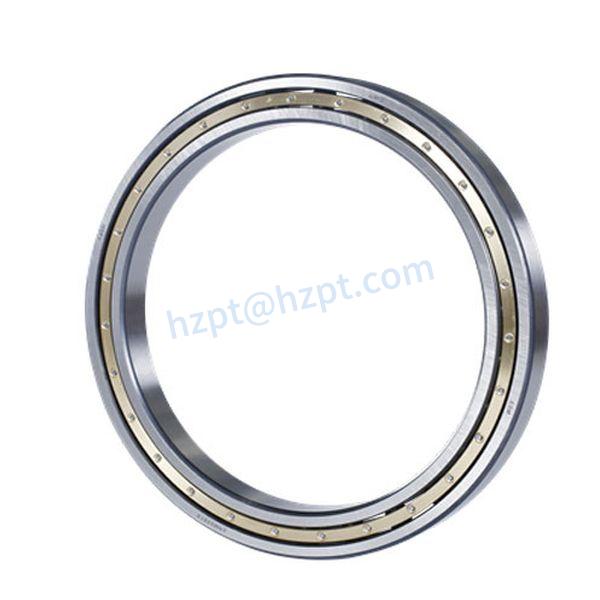
What are the Differences between Deep Groove Ball Bearings and Angular Contact Ball Bearings?
Deep groove ball bearings and angular contact ball bearings are two common types of ball bearings, each designed for specific applications and load conditions. Here are the key differences between these two types of bearings:
- Design and Geometry:
Deep Groove Ball Bearings:
Deep groove ball bearings have a simple design with a single row of balls that run along deep raceways in both the inner and outer rings. The rings are usually symmetrical and non-separable, resulting in a balanced load distribution.
Angular Contact Ball Bearings:
Angular contact ball bearings have a more complex design with two rows of balls, oriented at an angle to the bearing’s axis. This arrangement allows for the transmission of both radial and axial loads, making them suitable for combined loads and applications requiring high precision.
- Load Carrying Capacity:
Deep Groove Ball Bearings:
Deep groove ball bearings are primarily designed to carry radial loads. They can handle axial loads in both directions, but their axial load-carrying capacity is generally lower compared to angular contact ball bearings.
Angular Contact Ball Bearings:
Angular contact ball bearings are specifically designed to handle both radial and axial loads. The contact angle between the rows of balls determines the bearings’ axial load-carrying capacity. They can handle higher axial loads and are commonly used in applications with thrust loads.
- Contact Angle:
Deep Groove Ball Bearings:
Deep groove ball bearings have no defined contact angle, as the balls move in a deep groove along the raceways. They are primarily designed for radial loads.
Angular Contact Ball Bearings:
Angular contact ball bearings have a specified contact angle between the rows of balls. This contact angle allows them to carry both radial and axial loads and is crucial for their ability to handle combined loads.
- Applications:
Deep Groove Ball Bearings:
Deep groove ball bearings are commonly used in applications that primarily require radial loads, such as electric motors, pumps, and conveyor systems. They are also suitable for high-speed operation.
Angular Contact Ball Bearings:
Angular contact ball bearings are used in applications where both radial and axial loads are present, such as in machine tools, automotive wheel hubs, and aerospace components. They are especially useful for applications that require precise axial positioning and handling of thrust loads.
- Limitations:
Deep Groove Ball Bearings:
Deep groove ball bearings are not as suitable for handling significant axial loads and may experience skidding under certain conditions due to their deep raceways.
Angular Contact Ball Bearings:
Angular contact ball bearings can experience increased heat generation and wear at higher speeds due to the contact angle of the balls.
In summary, the design, load-carrying capacity, contact angle, and applications differ between deep groove ball bearings and angular contact ball bearings. Choosing the appropriate type depends on the specific load conditions and requirements of the application.
How do Ball Bearings Differ from Other Types of Bearings like Roller Bearings?
Ball bearings and roller bearings are two common types of rolling-element bearings, each with distinct designs and characteristics. Here’s a comparison of ball bearings and roller bearings:
- Design:
Ball Bearings: Ball bearings use spherical balls to separate and reduce friction between the bearing’s inner and outer rings. The balls enable rolling motion and smooth contact, minimizing friction.
Roller Bearings: Roller bearings, as the name suggests, use cylindrical or tapered rollers instead of balls. These rollers have larger contact areas, distributing loads over a broader surface.
- Friction and Efficiency:
Ball Bearings: Due to the point contact between the balls and the rings, ball bearings have lower friction and are more efficient at high speeds.
Roller Bearings: Roller bearings have a larger contact area, resulting in slightly higher friction compared to ball bearings. They are more suitable for heavy-load applications where efficiency is prioritized over high speeds.
- Load Capacity:
Ball Bearings: Ball bearings excel at handling light to moderate loads in both radial and axial directions. They are commonly used in applications where smooth rotation and low friction are important.
Roller Bearings: Roller bearings have a higher load-carrying capacity than ball bearings. They can support heavier radial and axial loads and are preferred for applications with significant loads or impact forces.
- Variability:
Ball Bearings: Ball bearings come in various designs, including deep groove, angular contact, and thrust ball bearings, each suitable for different applications.
Roller Bearings: Roller bearings have diverse types, including cylindrical, spherical, tapered, and needle roller bearings, each optimized for specific load and motion requirements.
- Speed Capability:
Ball Bearings: The reduced friction in ball bearings makes them suitable for high-speed applications, such as electric motors and precision machinery.
Roller Bearings: Roller bearings can handle higher loads but are generally better suited for moderate to low speeds due to slightly higher friction.
- Applications:
Ball Bearings: Ball bearings are used in applications where smooth motion, low friction, and moderate loads are essential, such as electric fans, bicycles, and some automotive components.
Roller Bearings: Roller bearings find applications in heavy machinery, construction equipment, automotive transmissions, and conveyor systems, where heavier loads and durability are crucial.
In summary, ball bearings and roller bearings differ in their design, friction characteristics, load capacities, speed capabilities, and applications. The choice between them depends on the specific requirements of the machinery and the type of loads and forces involved.


editor by CX 2024-05-10