Product Description
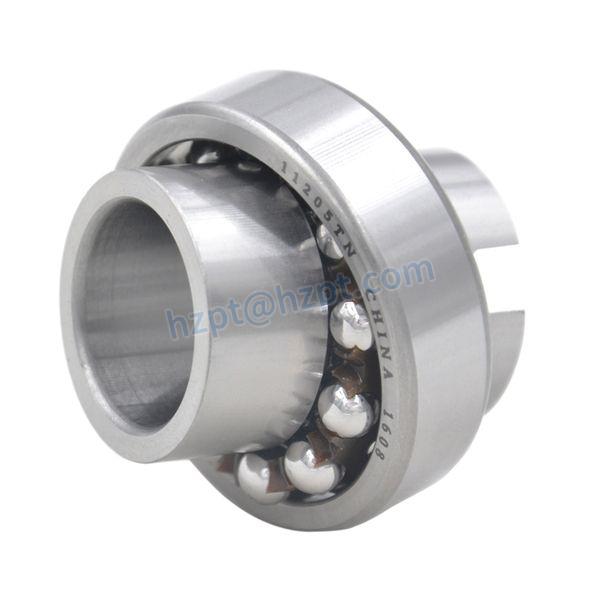
High load capacity self-aligning ball bearing 2217K 2218K 2219K 2220K 2222K with 110x200x53 mm to reduce friction for metallurgy
Self aligning ball bearings mainly bear radial loads and can also withstand small axial loads. The axial displacement of the
shaft (shell) is limited within the clearance limit, with automatic centering performance, allowing normal operation under
conditions of relatively small internal and external inclination. It is suitable for components where the support seat hole cannot strictly guarantee coaxiality. Self aligning ball bearings are suitable for bearing heavy and impact loads, precision instruments,low noise motors, automobiles, motorcycles, metallurgy, rolling mills, mines, petroleum, papermaking, cement, sugar squeezing and other industries, as well as general machinery.
|
Type |
BALL |
|
Structure |
Self-Aligning |
|
Applicable Industries |
Food Shop, Energy & Mining, Food & Beverage Shops, Advertising Company |
|
Precision Rating |
P0 P6 P5 P4 P2 |
|
Seals Type |
OPEN OR SEAL |
|
Number of Row |
Double row |
|
Product name |
Self-aligning Roller Bearing |
Product Parameters
| Bearing No | Dimensionmm) | MabB(kg | Bearing No | Dimension(mm) | Mass(kg | ||||
| d | D | B | d | D | B | ||||
| 1200 | 10 | 30 | 9 | 0.035 | 1300 | 10 | 35 | 11 | 0.060 |
| 1201 | 12 | 32 | 10 | 0.042 | 1301 | 12 | 37 | 12 | 0.070 |
| 1202 | 15 | 35 | 11 | 0.051 | 1302 | 15 | 42 | 13 | 0.100 |
| 1203 | 17 | 40 | 12 | 0.076 | 1303 | 17 | 47 | 14 | 0.140 |
| 1204 | 20 | 47 | 14 | 0.120 | 1304 | 20 | 52 | 15 | 0.170 |
| 1206 | 25 | 52 | 15 | 0.140 | 1305 | 25 | 62 | 17 | 0.260 |
| 1206 | 30 | 62 | 16 | 0.230 | 1306 | 30 | 72 | 19 | 0.400 |
| 1207 | 35 | 72 | 17 | 0.320 | 1307 | 35 | 80 | 21 | 0.540 |
| 1208 | 40 | 80 | 18 | 0.410 | 1308 | 40 | 90 | 23 | 0.710 |
| 1209 | 45 | 85 | 19 | 0.490 | 1309 | 45 | 100 | 25 | 0.960 |
| 1210 | 50 | 90 | 20 | 0.540 | 1310 | 50 | 110 | 27 | 1.210 |
| 1211 | 55 | 100 | 21 | 0.720 | 1311 | 55 | 120 | 29 | 1.580 |
| 1212 | 60 | 110 | 22 | 0.900 | 1312 | 60 | 180 | 31 | 1.90 |
| 1213 | 65 | 120 | 23 | 0.920 | 1313 | 65 | 140 | 33 | 2.390 |
| 1214 | 70 | 125 | 24 | 1.290 | 1314 | 70 | 150 | 35 | 3.000 |
| 1215 | 75 | 130 | 25 | 1.350 | 1315 | 75 | 160 | 37 | 3.600 |
| 1216 | 80 | 140 | 26 | 1.650 | 1316 | 80 | 170 | 39 | 4.200 |
| 1217 | 85 | 150 | 28 | 2.100 | 2300 | 10 | 35 | 17 | 0.090 |
| 2200 | 10 | 30 | 14 | 0.050 | 2301 | 12 | 37 | 17 | 0.100 |
| 2201 | 12 | 32 | 14 | 0.053 | 2302 | 15 | 42 | 17 | 0.110 |
| 2202 | 15 | 35 | 14 | 0.600 | 2303 | 17 | 47 | 19 | 0.170 |
| 2203 | 17 | 40 | 16 | 0.090 | 2304 | 20 | 52 | 21 | 0.220 |
| 2204 | 20 | 47 | 18 | 0.150 | 2305 | 25 | 62 | 24 | 0.350 |
| 2205 | 25 | 52 | 18 | 0.190 | 2306 | 50 | 72 | 27 | 0.500 |
| 2206 | 80 | 62 | 20 | 0.260 | 2307 | 35 | 80 | 31 | 0.680 |
| 2207 | 35 | 72 | 23 | 0.440 | 2308 | 40 | 90 | 33 | 0.930 |
| 2208 | 40 | 90 | 23 | 0.530 | 2309 | 45 | 100 | 36 | 1.250 |
| 2209 | 45 | 85 | 23 | 0.550 | 2310 | 50 | 110 | 40 | 1.640 |
| 2210 | 50 | 90 | 23 | 0.680 | 2311 | 55 | 120 | 43 | 2.100 |
| 2211 | 55 | 100 | 25 | 0.810 | 2312 | 60 | 130 | 46 | 2.600 |
| 2212 | 60 | 110 | 28 | 1.100 | 2313 | 65 | 140 | 48 | 3.200 |
| 2213 | 65 | 120 | 31 | 1.500 | 2314 | 70 | 150 | 51 | 3.900 |
| 2214 | 70 | 125 | 31 | 1.620 | 2315 | 75 | 160 | 55 | 4.700 |
| 2215 | 75 | 130 | 31 | 1.720 | |||||
Applications:
- Industrial fans
- Agriculture
- Material handling
- Food and beverage
- Pulp and paper
Detailed Photos
Our Advantages
1.Free Sample bearing
2.ISO Standard
3.Bearing Small order accepted
4.In Stock bearing
5.OEM bearing service
6.Professional:16 years manufacture bearing
7.Customized bearing, Customer’s bearing drawing or samples accepted
8.Competitive price bearing
9.TT Payment or Western Union or Trade Assurance Order
****More produce***
Packaging & Shipping
Why choose us ?
1. Quality Control To ensure the quality of our vehicles and other products, Our QC staffs do strict supplier evaluations, in-coming inspections, in-process inspections, final inspections and pre-delivery inspections. The most important is that we listen to what our customers say and are always looking for ways to improve the quality of our products through continuous improvement.
2. OEM Ability We have built stable and long-term cooperate relationshilp with supermarkets,we canalso provide ODM, OEM and Agent services to our customers over the world.
3. Parts Available We have spare bearings for immediate delivery to anywhere in the world. Our Bearings widely used in the fields of motor, fan, injection molding machine, mining, mechanical equipment, metallurgy, rolling, automobile, railway, iron and steel, power, textile, packaging, petroleum, paper making, etc
4. Good Warranty We take customer satisfaction and product quality as the first priority for us. We supply reliable warranties and good after-sales services.
FAQ
*Q:Can I get samples from you?
A:We are honored to offer you samples for quality check.
*Q:What parts are manufactured by you?
A: :90% of bearings are manufactured by us.
*Q:What’s the leading time? (How long do you need to prepare my goods?)
A:10 days for sample orders. 30 days for mass production orders (based on different quantities)
*Q:How long do I need to wait before my goods arrive?
A:3-5 days for international express. 5-7 days for air transportation, 35-40 days for sea transportation.
*Q:Can you put my brand name (logo) on these products?
A: Yes, or container order. Sticker order qty over 100pcs.
*Q:What payment methods do you accept?
A:T/T, L/C, Western Union, etc.
*Q:What certificates do you have?
A: All of our products are with CE IAF certificate. For some models, the certificates are already available. For other models, we will need your assistance to apply the certificates. For some models, the certificates are already available. For other models, we will need your assistance to apply the certificates.
*Q:What is your product quality?
A:Our raw materials are purchased from qualified suppliers. And we have a strong quality control team to guarantee our quality. We always care what you care!!
*Q:What is your warranty?
A:Our warranty is 24 months after delivery. We always pay high attention to after sale service!! For those out of warranty, we have adequate parts.
Electrical and easy wear parts are not included in warranty range.
*Q:How are parts availability?
A:We keep stock of spare parts and make sure all parts available whenever you need.
Factory Display
/* January 22, 2571 19:08:37 */!function(){function s(e,r){var a,o={};try{e&&e.split(“,”).forEach(function(e,t){e&&(a=e.match(/(.*?):(.*)$/))&&1
| Hardness: | HRC60-63 |
|---|---|
| Available: | DDU, Zz, VV, Open, Nr, M, C0, C2, C3, C4 |
| Quanlity: | P0, P6, P5, P4, P2, Z1V1, Z2V2, Z3V3 |
| Samples: |
US$ 0/Piece
1 Piece(Min.Order) | Order Sample |
|---|
| Customization: |
Available
| Customized Request |
|---|
.shipping-cost-tm .tm-status-off{background: none;padding:0;color: #1470cc}
|
Shipping Cost:
Estimated freight per unit. |
about shipping cost and estimated delivery time. |
|---|
| Payment Method: |
|
|---|---|
|
Initial Payment Full Payment |
| Currency: | US$ |
|---|
| Return&refunds: | You can apply for a refund up to 30 days after receipt of the products. |
|---|
What are the Materials Typically Used in Manufacturing Ball Bearings and Their Advantages?
Ball bearings are manufactured using a variety of materials, each chosen for its specific properties and advantages in various applications. Here are some commonly used materials in ball bearing manufacturing and their respective benefits:
- High-Carbon Chrome Steel (AISI 52100):
This is the most common material used for ball bearing manufacturing. It offers excellent hardness, wear resistance, and fatigue strength. High-carbon chrome steel bearings are suitable for a wide range of applications, from industrial machinery to automotive components.
- Stainless Steel (AISI 440C, AISI 304, AISI 316):
Stainless steel bearings are corrosion-resistant and suitable for applications where moisture, chemicals, or exposure to harsh environments are concerns. AISI 440C offers high hardness and corrosion resistance, while AISI 304 and AISI 316 provide good corrosion resistance and are often used in food and medical industries.
- Ceramic:
Ceramic bearings use silicon nitride (Si3N4) or zirconia (ZrO2) balls. Ceramic materials offer high stiffness, low density, and excellent resistance to corrosion and heat. Ceramic bearings are commonly used in high-speed and high-temperature applications, such as in aerospace and racing industries.
- Plastic (Polyamide, PEEK):
Plastic bearings are lightweight and offer good corrosion resistance. Polyamide bearings are commonly used due to their low friction and wear properties. Polyether ether ketone (PEEK) bearings provide high-temperature resistance and are suitable for demanding environments.
- Bronze:
Bronze bearings are often used in applications where self-lubrication is required. Bronze has good thermal conductivity and wear resistance. Bearings made from bronze are commonly used in machinery requiring frequent starts and stops.
- Hybrid Bearings:
Hybrid bearings combine steel rings with ceramic balls. These bearings offer a balance between the advantages of both materials, such as improved stiffness and reduced weight. Hybrid bearings are used in applications where high speeds and low friction are essential.
- Specialty Alloys:
For specific applications, specialty alloys may be used to meet unique requirements. For example, bearings used in extreme temperatures or corrosive environments may be made from materials like titanium or hastelloy.
- Coated Bearings:
Bearings may also be coated with thin layers of materials like diamond-like carbon (DLC) or other coatings to enhance performance, reduce friction, and improve wear resistance.
The choice of material depends on factors such as application requirements, operating conditions, load, speed, and environmental factors. Selecting the right material is essential for ensuring optimal bearing performance, longevity, and reliability in diverse industries and applications.
Are there any Industry Standards or Certifications that Ball Bearings should Meet?
Yes, there are several industry standards and certifications that ball bearings should meet to ensure their quality, performance, and reliability. These standards help manufacturers, engineers, and customers assess the suitability of bearings for specific applications. Some of the key standards and certifications for ball bearings include:
- ISO Standards:
The International Organization for Standardization (ISO) has developed a series of standards related to ball bearings. ISO 15 defines dimensions, boundary dimensions, and tolerances for radial bearings. ISO 281 specifies dynamic load ratings and calculation methods for bearings’ life calculations.
- ABEC (Annular Bearing Engineering Committee) Ratings:
ABEC ratings are commonly used in North America to indicate the precision and performance of ball bearings. Ratings range from ABEC 1 (lowest precision) to ABEC 9 (highest precision). However, it’s important to note that ABEC ratings focus primarily on dimensional tolerances and do not encompass all aspects of bearing quality.
- DIN Standards:
The German Institute for Standardization (Deutsches Institut für Normung, DIN) has published various standards related to ball bearings. DIN 625 covers dimensions for deep groove ball bearings, while DIN 616 provides guidelines for precision angular contact ball bearings.
- JIS (Japanese Industrial Standards):
JIS standards are used in Japan and internationally to define the characteristics and dimensions of various products, including ball bearings. JIS B 1512 outlines the classification and dimensions of rolling bearings.
- ASTM (American Society for Testing and Materials) Standards:
ASTM has standards that cover various aspects of bearing testing, performance, and materials. ASTM F2215, for instance, specifies the requirements for ball bearings used in surgical implants.
- CE Marking:
CE marking indicates that a product complies with European Union health, safety, and environmental requirements. It may be required for bearings used in machinery intended to be sold within the EU market.
- Industry-Specific Standards:
Various industries, such as aerospace, automotive, medical, and nuclear, have specific standards or certifications that bearings must meet to ensure safety, reliability, and compliance with industry-specific requirements.
- Quality Management Systems:
Manufacturers that adhere to quality management systems, such as ISO 9001, demonstrate their commitment to consistent product quality and customer satisfaction. Certification to these systems indicates that the manufacturing process follows established protocols and best practices.
When selecting ball bearings, it’s important to consider the relevant standards and certifications that align with the application’s requirements. This ensures that the bearings meet recognized quality and performance criteria, ultimately contributing to reliable and efficient operation.
How do Ball Bearings Differ from Other Types of Bearings like Roller Bearings?
Ball bearings and roller bearings are two common types of rolling-element bearings, each with distinct designs and characteristics. Here’s a comparison of ball bearings and roller bearings:
- Design:
Ball Bearings: Ball bearings use spherical balls to separate and reduce friction between the bearing’s inner and outer rings. The balls enable rolling motion and smooth contact, minimizing friction.
Roller Bearings: Roller bearings, as the name suggests, use cylindrical or tapered rollers instead of balls. These rollers have larger contact areas, distributing loads over a broader surface.
- Friction and Efficiency:
Ball Bearings: Due to the point contact between the balls and the rings, ball bearings have lower friction and are more efficient at high speeds.
Roller Bearings: Roller bearings have a larger contact area, resulting in slightly higher friction compared to ball bearings. They are more suitable for heavy-load applications where efficiency is prioritized over high speeds.
- Load Capacity:
Ball Bearings: Ball bearings excel at handling light to moderate loads in both radial and axial directions. They are commonly used in applications where smooth rotation and low friction are important.
Roller Bearings: Roller bearings have a higher load-carrying capacity than ball bearings. They can support heavier radial and axial loads and are preferred for applications with significant loads or impact forces.
- Variability:
Ball Bearings: Ball bearings come in various designs, including deep groove, angular contact, and thrust ball bearings, each suitable for different applications.
Roller Bearings: Roller bearings have diverse types, including cylindrical, spherical, tapered, and needle roller bearings, each optimized for specific load and motion requirements.
- Speed Capability:
Ball Bearings: The reduced friction in ball bearings makes them suitable for high-speed applications, such as electric motors and precision machinery.
Roller Bearings: Roller bearings can handle higher loads but are generally better suited for moderate to low speeds due to slightly higher friction.
- Applications:
Ball Bearings: Ball bearings are used in applications where smooth motion, low friction, and moderate loads are essential, such as electric fans, bicycles, and some automotive components.
Roller Bearings: Roller bearings find applications in heavy machinery, construction equipment, automotive transmissions, and conveyor systems, where heavier loads and durability are crucial.
In summary, ball bearings and roller bearings differ in their design, friction characteristics, load capacities, speed capabilities, and applications. The choice between them depends on the specific requirements of the machinery and the type of loads and forces involved.


editor by CX 2024-04-04