Product Description
Product Description
Deep groove ball bearings mainly bear radial load as well as take moderate axial load. With less coefficient of friction, high limiting speed, large size range and variations of structure, deep groove ball bearings are suitable for precision instruments, low noise motors, automobiles, motorcycles, air-conditioners, washers, cleaners and other common machineries as a widely used type of bearings in machinery industry.
| Related Bearings |
|
Part Number |
ID | OD | Bore | Size |
| 6000 | 10 | 26 | 8 | 10*26*8 |
| 6001 | 12 | 28 | 8 | 12*28*8 |
| 6002 | 15 | 32 | 9 | 15*32*9 |
| 6003 | 17 | 35 | 10 | 17*35*10 |
| 6004 | 20 | 42 | 12 | 20*42*12 |
| 6005 | 25 | 47 | 12 | 25*47*12 |
| 6200 | 10 | 30 | 9 | 10*30*9 |
| 6201 | 12 | 32 | 10 | 12*32*10 |
| 6202 | 15 | 35 | 11 | 15*35*11 |
| 6203 | 17 | 40 | 12 | 17*40*12 |
| 6204 | 20 | 47 | 14 | 20*47*14 |
| 6205 | 25 | 52 | 15 | 25*52*15 |
| 6300 | 10 | 35 | 11 | 10*35*11 |
| 6301 | 12 | 37 | 12 | 12*37*12 |
| 6302 | 15 | 42 | 13 | 15*42*13 |
| 6303 | 17 | 47 | 14 | 17*47*14 |
| 6304 | 20 | 52 | 15 | 20*52*15 |
| 6305 | 25 | 62 | 17 | 25*62*17 |
Company Profile
ZheZheJiang nmanli Technology Co., Ltd. is a professional supplier of a series of auto and motorcycle spare parts Located in China, ZheJiang Province.
Our products are enjoyed by both domestic and foreign clients, the high quality products and service have lead us won a set of clients throughout the world such as South America, Southeast Asia, Africa, Middle East and European countries. From the beginning to end, we uphold our enterprise spirit of “Quality first sincerity foremost”. We warmly welcome all foreign friends to be our business partners on the basis of mutual benefits, and wish to establish good relationship with each other in the near future.
Certifications
FAQ
1. How to get the best price from CZPT MOTOR?
The bulk order price can be negotiated.We will quote the lastest best price according to customer purchase list.
2. What is your terms of payment?
T/T 30% as deposit, and 70% balance against B/L copy. or by L/C.
3. What is your terms of delivery?
EXW, FOB, CFR, CIF.
4. What about the MOQ – minimum order quantity?
100 pcs – 1000 pcs, MOQ for different products are different, please check with us before order.
5. Do you accept OEM order?
Yes, we can customize products according to customers’ drawings or samples.
6. How about your delivery time?
Generally, it will take 15 to 30 days after receiving your advance payment. The specific delivery time depends on the items and the quantity of your order.
7 How do you make our business long-term and good relationship?
We keep good quality and competitive price to ensure our customers benefit.
/* January 22, 2571 19:08:37 */!function(){function s(e,r){var a,o={};try{e&&e.split(“,”).forEach(function(e,t){e&&(a=e.match(/(.*?):(.*)$/))&&1
| Bore Size: | 5.992 – 6 mm |
|---|---|
| OEM: | Avaliable |
| Clearance: | C0 |
| Color: | Customized |
| Structure: | Deep Groove |
| Precision Rating: | P0/ABEC-1 |
| Samples: |
US$ 2/Piece
1 Piece(Min.Order) | |
|---|
| Customization: |
Available
| Customized Request |
|---|
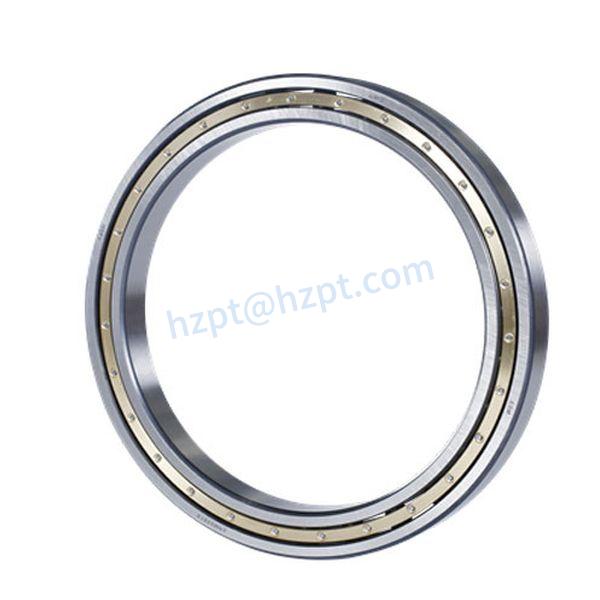
Are there Specific Maintenance Practices to Ensure the Longevity of Ball Bearings?
Maintaining ball bearings is essential to ensure their longevity, reliable performance, and prevent premature failure. Proper maintenance practices can extend the lifespan of ball bearings and the equipment they are used in. Here are specific maintenance practices to consider:
- Regular Lubrication:
Implement a regular lubrication schedule using the appropriate lubricant for the application. Lubrication reduces friction, prevents wear, and helps dissipate heat. Follow manufacturer guidelines for lubricant type, quantity, and frequency.
- Clean Environment:
Keep the operating environment clean and free from contaminants. Dust, dirt, and debris can infiltrate bearings and cause damage. Use seals or shields to protect bearings from contaminants, especially in harsh environments.
- Proper Installation:
Ensure correct installation of bearings using proper tools and techniques. Improper installation can lead to misalignment, uneven load distribution, and premature wear. Follow manufacturer recommendations for installation procedures.
- Regular Inspections:
Perform routine visual inspections to check for signs of wear, damage, or contamination. Regular inspections can help identify issues early and prevent further damage. Pay attention to noise, vibration, and temperature changes.
- Temperature Monitoring:
Monitor bearing temperatures during operation using infrared thermometers or sensors. Abnormal temperature increases can indicate inadequate lubrication, misalignment, or other problems.
- Correct Handling:
Handle bearings with care to prevent damage during storage, transportation, and installation. Avoid dropping or subjecting them to impacts that can affect their internal components.
- Bearing Removal and Replacement:
Follow proper procedures when removing and replacing bearings. Use appropriate tools and techniques to avoid damage to the bearing or the surrounding components.
- Alignment Maintenance:
Maintain proper shaft and housing alignment to prevent excessive loads and wear on the bearing. Misalignment can lead to increased stress and premature failure.
- Training and Education:
Provide training to operators and maintenance personnel on proper bearing maintenance and handling practices. Educated personnel are more likely to identify issues and perform maintenance correctly.
- Documented Records:
Keep records of maintenance activities, inspections, lubrication schedules, and any issues encountered. This documentation helps track the bearing’s performance over time and informs future maintenance decisions.
By implementing these maintenance practices, you can ensure the longevity of ball bearings, minimize downtime, reduce operational costs, and maintain the reliability of the equipment they are a part of.
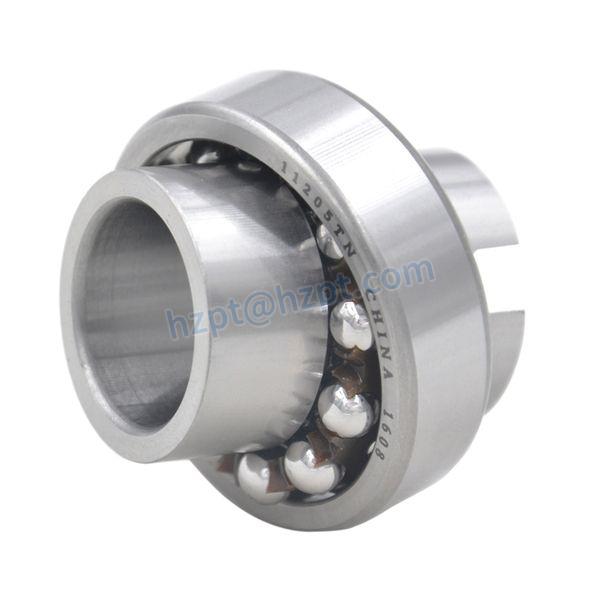
Are there any Industry Standards or Certifications that Ball Bearings should Meet?
Yes, there are several industry standards and certifications that ball bearings should meet to ensure their quality, performance, and reliability. These standards help manufacturers, engineers, and customers assess the suitability of bearings for specific applications. Some of the key standards and certifications for ball bearings include:
- ISO Standards:
The International Organization for Standardization (ISO) has developed a series of standards related to ball bearings. ISO 15 defines dimensions, boundary dimensions, and tolerances for radial bearings. ISO 281 specifies dynamic load ratings and calculation methods for bearings’ life calculations.
- ABEC (Annular Bearing Engineering Committee) Ratings:
ABEC ratings are commonly used in North America to indicate the precision and performance of ball bearings. Ratings range from ABEC 1 (lowest precision) to ABEC 9 (highest precision). However, it’s important to note that ABEC ratings focus primarily on dimensional tolerances and do not encompass all aspects of bearing quality.
- DIN Standards:
The German Institute for Standardization (Deutsches Institut für Normung, DIN) has published various standards related to ball bearings. DIN 625 covers dimensions for deep groove ball bearings, while DIN 616 provides guidelines for precision angular contact ball bearings.
- JIS (Japanese Industrial Standards):
JIS standards are used in Japan and internationally to define the characteristics and dimensions of various products, including ball bearings. JIS B 1512 outlines the classification and dimensions of rolling bearings.
- ASTM (American Society for Testing and Materials) Standards:
ASTM has standards that cover various aspects of bearing testing, performance, and materials. ASTM F2215, for instance, specifies the requirements for ball bearings used in surgical implants.
- CE Marking:
CE marking indicates that a product complies with European Union health, safety, and environmental requirements. It may be required for bearings used in machinery intended to be sold within the EU market.
- Industry-Specific Standards:
Various industries, such as aerospace, automotive, medical, and nuclear, have specific standards or certifications that bearings must meet to ensure safety, reliability, and compliance with industry-specific requirements.
- Quality Management Systems:
Manufacturers that adhere to quality management systems, such as ISO 9001, demonstrate their commitment to consistent product quality and customer satisfaction. Certification to these systems indicates that the manufacturing process follows established protocols and best practices.
When selecting ball bearings, it’s important to consider the relevant standards and certifications that align with the application’s requirements. This ensures that the bearings meet recognized quality and performance criteria, ultimately contributing to reliable and efficient operation.
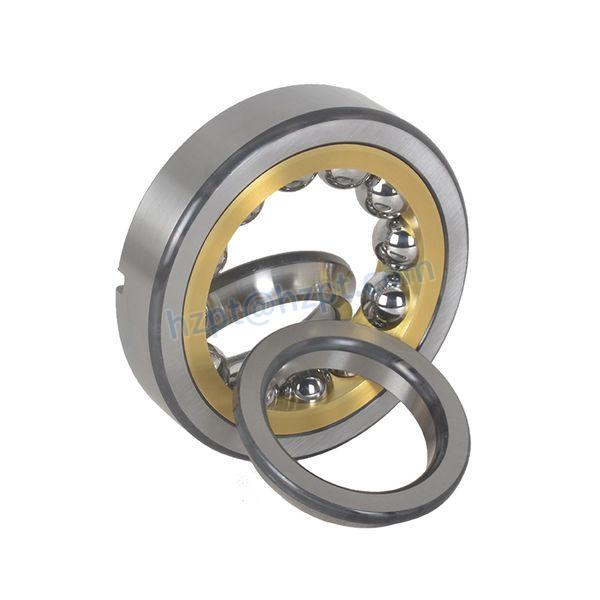
What are the Different Components that Make up a Typical Ball Bearing?
A typical ball bearing consists of several essential components that work together to reduce friction and support loads. Here are the main components that make up a ball bearing:
- Outer Ring:
The outer ring is the stationary part of the bearing that provides support and houses the other components. It contains raceways (grooves) that guide the balls’ movement.
- Inner Ring:
The inner ring is the rotating part of the bearing that attaches to the shaft. It also contains raceways that correspond to those on the outer ring, allowing the balls to roll smoothly.
- Balls:
The spherical balls are the rolling elements that reduce friction between the inner and outer rings. Their smooth rolling motion enables efficient movement and load distribution.
- Cage or Retainer:
The cage, also known as the retainer, maintains a consistent spacing between the balls. It prevents the balls from touching each other, reducing friction and preventing jamming.
- Seals and Shields:
Many ball bearings include seals or shields to protect the internal components from contaminants and retain lubrication. Seals provide better protection against contaminants, while shields offer less resistance to rotation.
- Lubricant:
Lubrication is essential to reduce friction, wear, and heat generation. Bearings are typically filled with lubricants that ensure smooth movement between the balls and raceways.
- Flanges and Snap Rings:
In some designs, flanges or snap rings are added to help position and secure the bearing in its housing or on the shaft. Flanges prevent axial movement, while snap rings secure the bearing radially.
- Raceways:
Raceways are the grooved tracks on the inner and outer rings where the balls roll. The shape and design of the raceways influence the bearing’s load-carrying capacity and performance.
- Anti-Friction Shield:
In certain high-speed applications, a thin anti-friction shield can be placed between the inner and outer rings to minimize friction and heat generation.
These components work together to enable the smooth rolling motion, load support, and reduced friction that characterize ball bearings. The proper design and assembly of these components ensure the bearing’s optimal performance and longevity in various applications.


editor by CX 2024-03-29