Product Description
Product Description
Structure and Parts of Bearings
Cage
In daily operations, cage will be subjected not only to mechanical action from friction, tension and inertial force, but to chemical reaction from lubricants, additives, solvents or coolants. Therefore, design and materials of cage are very inportant for its performance and the reliability of bearing in usage.
Flate/FUDA offers the following kinds of cage for deep groove ball bearings:
Materials of Bearings
Materials for bearing rings and parts largely determine the bearing’s performance and life. FLATE/FUDA puts more efforts to select materials for bearing rings and part suppliers in a rigorous manner.
Materials and components of bearing rings for FLATE/FUDA bearings are provided by the world’s top suppliers special for serving bearign manufacturers, fundamentally solvign the issue that our bearings lag behind imported bearings in terms of materialsfor a long time.
FLATE boasts a set of strict and polished incoming goods inspection system. Before being put into storage, every batch of steels and parts is under systemic inspection, including analysis of material composition, metallographice analysis, accuracy check, assembly test, etc.
Materials for Bearing Ring and Roller Body
Bearing ring and roller body are mainly made of high C-Cr bearing steel. Listed below are compositions of material for bearing ring and roller body.
| Steel Code | Chemical composition% | ||||||||
| Gcr15 SAE52100 DIN 100 Cr6 JIS SUJ2 |
C | Si | Mn | P | S | Cr | Mo | Cu | Ni |
| 0.95-1.05 | 0.15-0.35 | 0.25-0.45 | <0.571 | <0.571 | 1.40-1.65 | – | <0.25 | <0.30 | |
Material for bearing ring and roller body mainly consists of high C-Cr bearing steel.
Material of cages
Material of cages need good wear resistance, stable size and metal strength. Therefore, operation environment should be mainly considered in selection of material of cages.
Drawing steel sheet cage
These light cages hold a high strength with reduced friction and wear in an effective way after surface treatment. The following table covers compositions of material for cold-rolled steel sheet.
| Steel code | Chemical Composition% | ||||||
| JISG 3141 SPCC |
C | Si | Mn | P | S | Ni | Cr |
| <0.12 | – | <0.5 | <0.04 | <0.045 | – | – | |
Brass cage
Cut brass cage is adopted in small and medium bearings. However, brass cage is not suitable for compressors with ammonia cooling due to potential seasonal cracking of brass. It is recommended to replace it with iron cage.
Nylon cage
According to the type and usage of bearings, nylon cages are widely adopted, but they are inappropriate for environments where the temperature is above 120ºC or below 40 ºC. Most of cast molding cages adopt nylon PA66 material, with or without glass fiber reinforcement whose advantage is a good combination of strength and elasticity.
Materials for dust shield and seal ring
Material for dust shield
FLATE/FUDA bearings use cold-rolled tin plate as the standard mateiral for dust shields, but also use stainless steel of AISI-300 specification at times.
Material for seal ring
Seal rings are mainly made of NBR. For high temperature, fluororubbers and silicon rubbers are widely used as well.
| Type | ASTM D1418 Name | Temperature Range | Hardness (Shore A) |
Features | Restriction |
| Nitrile butaduene rubber | NBR | -40ºC~120ºC | 40-90 | Low compression High ductility High corrosion resistance superior oil resistance |
Unsuitable for high temperature conditions; No exposure to the sun and corrosion of chemicals |
| Silicon rubber | MQ/PMQ VMQ/PVMP |
-70ºC~200ºC | 25-80 | High temperature resistance Desiccation resistance Sunshine resistance aging resistance to ozone |
Poor surface abrasion performance and crack resistance, higher wear resistance |
| Hydrogenated (nitrile-butadiene rubber) |
HNBR/NEM | -35ºC~65ºC | 50-90 | Heat resistance High ductility Chemical resistance |
Unsuitable for high temperature conditions and shall avoid exposure to the sun and corrosion of chemicals |
| Fluororubber | FKM/FPM | -28ºC~200ºC | 50-95 | High temperature resistance Significant chemical resistance corrosion resistance to petroleum products |
It is not suitable for working conditions of low temperature. |
| ACM rubber | ACM Rubber | -18ºC~175ºC | 40-90 | Stronger resistance to hot oil Sunlight and ozone Higher crack resistance |
poor waterproof performance; unsuitable for working condition of ultra-low temperature |
| Warning:flurorubber is safe and harmless under normal working condition of below 200ºC, but it will give off smoke if the temperature exceeds the ultimate temperature of 300ºC that is equivalent to flame for cutting steel tubes. Inhalation of the smoke is harmful to human bodies including eyes. In addition, the smoke should be avoided to contact skin. | |||||
Lubrication of Bearings
| Grease lubrication | Lipid lubricants are much easier to use than oil lubricants. Due to its ciscosity,grease is more durable and only needs simple sealing equipment to contain. Grease is hard to be changed, beacause the usual approach of it is to press grease into device to make fresh grease squeeze used grease out. General speaking, grease with low viscosity primary oil is more suitable for high speed operations at low temperature, while grease with high viscosity primary oil is suitable for heavy load. |
| Oil lubrication | Oil lubrication is more suitbale for applications under conditions of high speed and high temperature, effectively taking the heat generated in operation of bearings away. Viscosity of oil determines the effects of oil lubrication. Low viscosity will lead to inadequate formation of oil film, while high viscosity will increase viscous drag and temperature. In general, the higher rotational speed is the lower viscosity of lubricant oil will be; the larger load is, the higher viscosity of lubricant oil will be. |
| Primary oil | In grease, primary oil accounts for 75-96%. In mass fraction, the performance of grease mainly relies on the nature of primary oil. Particularly when it is with cold flow property and at high temperature, its service life is bound up with primary oil. Grease with low viscosity primary oil is usually applicable to low temperature and low load, while lubrication grease with high viscosity primary oil is applied to high temperature and high load. Primary oil used in grease includes mineral oil and synthetic oil. The commonly used synthetic primary oils contain lipid oil, sythetic hydrocarbon oil, perfluoropolyether, silicon oil and PPO, etc. |
| Thickener | Thickener generally accounts for 4~20% in mass fraction. Its functions are to suspend primaty oil, reduce the flow of primaty oil, and increase adhesion of oil to friction surface. Thickener has 2 categories: metallic soap base and non-metallic soap base. Critical operating temperature, mechanical stability, water resistance and other properties of grease are determined by thickener, for example, sodium soap base can react with water to form a kind of latex, which can not be applied to running bearing in the atomsphere of high temperature. |
| Additive | In grease, primary oil accounts for 0.5~10%. In mass fraction, which is used for the improvement of operating performance and life of grease. Accordign to the classification by function, it can be divided into thickener(strong adhesion), antioxidant, extreme-pressure additive, corrosion inhibitor,etc. |
/* January 22, 2571 19:08:37 */!function(){function s(e,r){var a,o={};try{e&&e.split(“,”).forEach(function(e,t){e&&(a=e.match(/(.*?):(.*)$/))&&1
| Contact Angle: | 45° |
|---|---|
| Aligning: | Non-Aligning Bearing |
| Separated: | Unseparated |
| Rows Number: | Multiple |
| Load Direction: | Radial Bearing |
| Material: | AISI440, 440c, 304 |
| Samples: |
US$ 0/Piece
1 Piece(Min.Order) | |
|---|
| Customization: |
Available
| Customized Request |
|---|
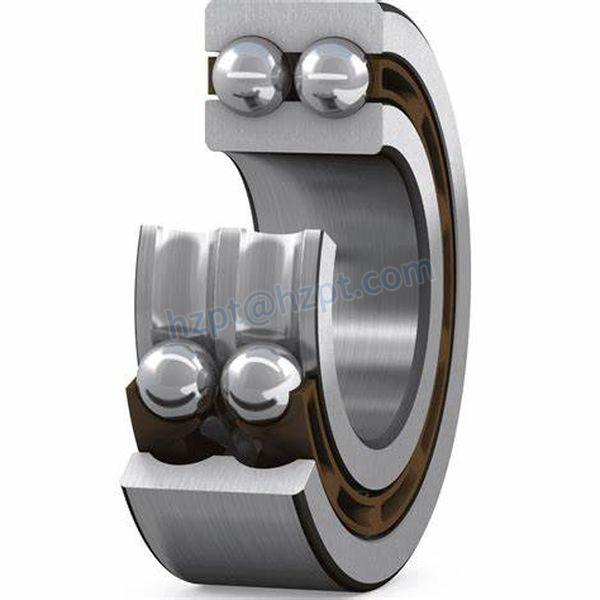
What are the Challenges Associated with Noise Reduction in Ball Bearings?
Noise reduction in ball bearings is a crucial consideration, especially in applications where noise levels must be minimized for operational efficiency and user comfort. While ball bearings are designed to operate smoothly, there are several challenges associated with reducing noise in their operation:
- Vibration:
Vibration generated by the movement of rolling elements and raceways can lead to noise. Even minor irregularities in bearing components or the mounting system can cause vibration that translates into audible noise.
- Bearing Type and Design:
The type and design of the ball bearing can impact noise generation. For example, deep groove ball bearings are known for their quiet operation, while angular contact bearings can generate more noise due to their higher contact angles.
- Lubrication:
Improper or inadequate lubrication can result in increased friction and wear, leading to noise. Choosing the right lubricant and maintaining proper lubrication levels are essential for reducing noise in ball bearings.
- Bearing Clearance and Preload:
Incorrect clearance or preload settings can lead to noise issues. Excessive clearance or inadequate preload can cause the rolling elements to impact the raceways, resulting in noise during rotation.
- Material and Manufacturing Quality:
The quality of materials and manufacturing processes can affect noise levels. Inconsistent or low-quality materials, improper heat treatment, or manufacturing defects can lead to noise generation during operation.
- Surface Finish:
The surface finish of the rolling elements and raceways can impact noise. Rough surfaces can generate more noise due to increased friction and potential irregularities.
- Sealing and Shielding:
Seals and shields that protect bearings can influence noise levels. While they are necessary for contamination prevention, they can also cause additional friction and generate noise.
- Operating Conditions:
External factors such as temperature, speed, and load can influence noise levels. High speeds or heavy loads can amplify noise due to increased stress on the bearing components.
- Wear and Deterioration:
As ball bearings wear over time, noise levels can increase. Worn components or inadequate lubrication can lead to more significant noise issues as the bearing operates.
To address these challenges and reduce noise in ball bearings, manufacturers and engineers employ various techniques, such as optimizing design, selecting suitable bearing types, using proper lubrication, maintaining accurate preload settings, and ensuring high-quality materials and manufacturing processes. Noise reduction efforts are essential to improve overall product quality, meet noise regulations, and enhance user experience in various applications.
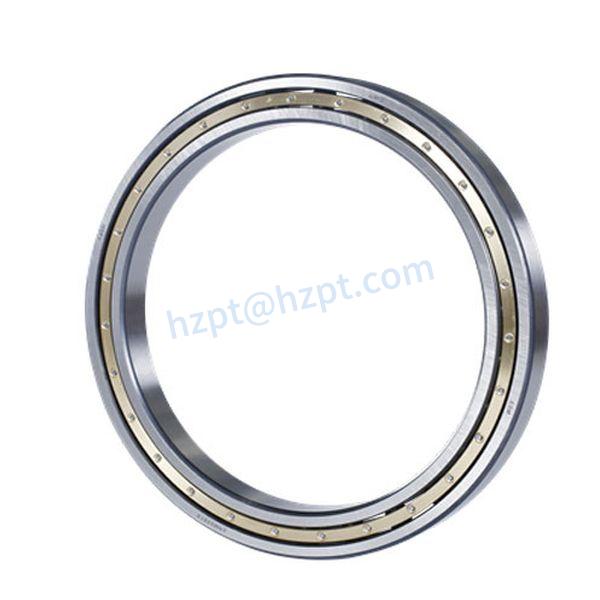
What are the Differences between Deep Groove Ball Bearings and Angular Contact Ball Bearings?
Deep groove ball bearings and angular contact ball bearings are two common types of ball bearings, each designed for specific applications and load conditions. Here are the key differences between these two types of bearings:
- Design and Geometry:
Deep Groove Ball Bearings:
Deep groove ball bearings have a simple design with a single row of balls that run along deep raceways in both the inner and outer rings. The rings are usually symmetrical and non-separable, resulting in a balanced load distribution.
Angular Contact Ball Bearings:
Angular contact ball bearings have a more complex design with two rows of balls, oriented at an angle to the bearing’s axis. This arrangement allows for the transmission of both radial and axial loads, making them suitable for combined loads and applications requiring high precision.
- Load Carrying Capacity:
Deep Groove Ball Bearings:
Deep groove ball bearings are primarily designed to carry radial loads. They can handle axial loads in both directions, but their axial load-carrying capacity is generally lower compared to angular contact ball bearings.
Angular Contact Ball Bearings:
Angular contact ball bearings are specifically designed to handle both radial and axial loads. The contact angle between the rows of balls determines the bearings’ axial load-carrying capacity. They can handle higher axial loads and are commonly used in applications with thrust loads.
- Contact Angle:
Deep Groove Ball Bearings:
Deep groove ball bearings have no defined contact angle, as the balls move in a deep groove along the raceways. They are primarily designed for radial loads.
Angular Contact Ball Bearings:
Angular contact ball bearings have a specified contact angle between the rows of balls. This contact angle allows them to carry both radial and axial loads and is crucial for their ability to handle combined loads.
- Applications:
Deep Groove Ball Bearings:
Deep groove ball bearings are commonly used in applications that primarily require radial loads, such as electric motors, pumps, and conveyor systems. They are also suitable for high-speed operation.
Angular Contact Ball Bearings:
Angular contact ball bearings are used in applications where both radial and axial loads are present, such as in machine tools, automotive wheel hubs, and aerospace components. They are especially useful for applications that require precise axial positioning and handling of thrust loads.
- Limitations:
Deep Groove Ball Bearings:
Deep groove ball bearings are not as suitable for handling significant axial loads and may experience skidding under certain conditions due to their deep raceways.
Angular Contact Ball Bearings:
Angular contact ball bearings can experience increased heat generation and wear at higher speeds due to the contact angle of the balls.
In summary, the design, load-carrying capacity, contact angle, and applications differ between deep groove ball bearings and angular contact ball bearings. Choosing the appropriate type depends on the specific load conditions and requirements of the application.
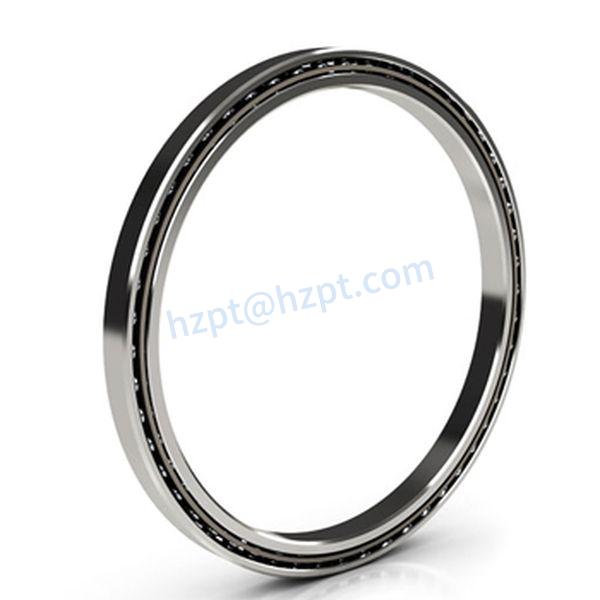
What is a Ball Bearing and How does it Function in Various Applications?
A ball bearing is a type of rolling-element bearing that uses balls to reduce friction between moving parts and support radial and axial loads. It consists of an outer ring, an inner ring, a set of balls, and a cage that separates and maintains a consistent spacing between the balls. Here’s how ball bearings function in various applications:
- Reduction of Friction:
Ball bearings function by replacing sliding friction with rolling friction. The smooth, spherical balls minimize the contact area between the inner and outer rings, resulting in lower friction and reduced heat generation.
- Radial and Axial Load Support:
Ball bearings are designed to support both radial loads (forces perpendicular to the shaft’s axis) and axial loads (forces parallel to the shaft’s axis). The distribution of balls within the bearing ensures load-carrying capacity in multiple directions.
- Smooth Rotational Movement:
Ball bearings facilitate smooth and precise rotational movement. The rolling motion of the balls allows for controlled and continuous rotation with minimal resistance.
- Applications in Machinery:
Ball bearings are used in a wide range of machinery and equipment, including motors, generators, gearboxes, conveyors, and fans. They enable the efficient transfer of motion while reducing wear and energy losses.
- Automotive Industry:
Ball bearings are extensively used in automobiles for various applications, including wheel hubs, transmission systems, steering mechanisms, and engine components. They provide reliability and durability in challenging automotive environments.
- Industrial Machinery:
In industrial settings, ball bearings support rotating shafts and ensure the smooth operation of equipment such as pumps, compressors, and machine tools.
- High-Speed Applications:
Ball bearings are suitable for high-speed applications due to their low friction and ability to accommodate rapid rotation. They are used in applications like electric motors and aerospace components.
- Precision Instruments:
For precision instruments, such as watches, cameras, and medical devices, ball bearings provide accurate rotational movement and contribute to the overall performance of the instrument.
- Variety of Sizes and Types:
Ball bearings come in various sizes, configurations, and materials to suit different applications. Different types include deep groove ball bearings, angular contact ball bearings, thrust ball bearings, and more.
In summary, ball bearings are essential components in a wide range of applications where smooth rotation, load support, and reduced friction are critical. Their versatility, reliability, and efficiency make them indispensable in industries spanning from automotive to industrial machinery to precision instruments.


editor by CX 2024-03-27