Product Description
Product Description
Packaging & Shipping
Company Profile
Our Advantages
FAQ
Basic Info.
| Rows Number | Single | Load Direction | Radial Bearing |
| Material | Bearing Steel | Precision Rating | PO P6 P5 P4 P2 |
| Clearance | CO C1 C2 C3 C4 | Lubrication | Oil Lubrication |
| OEM | Available | Hardness | 59-63HRC |
| Feature | High Speed,Long Life | Transport Package | Single Box |
| Specification | standard | Trademark | Packing |
| Production Capacity | 1500,000 Pieces/Year |
Product Decription
The outer spherical ball bearing is actually a variant of the deep groove ball bearing. Its characteristic is that its outer ring outer diameter surface is a spherical surface, which can be fitted into the corresponding concave spherical surface of the bearing seat to play the role of centering. The outer spherical bearing is mainly used to bear the combined radial and axial load based on the radial load, and it is generally not suitable to bear the axial load alone.
Product Series
| UC200 series | ||||||||||||
| Bearing type | Dimensions(mm) | Weight(KG) | basic load capacity(KN) | Limt speed(r/min) | ||||||||
| d | D | B | C | S | G | H | ds | dynamic | static | |||
| UC201 | 12 | 40 | 27.4 | 14 | 11.5 | 4.5 | 4 | M*0.75 | 0.12 | 7.36 | 4.48 | 4000 |
| UC202 | 15 | 40 | 27.4 | 14 | 11.5 | 4.5 | 4 | M*0.75 | 0.11 | 7.36 | 4.48 | 4000 |
| UC203 | 17 | 40 | 27.4 | 14 | 11.5 | 4.5 | 4 | M*0.75 | 0.1 | 7.36 | 4.48 | 4000 |
| UC204 | 20 | 47 | 31 | 17 | 12.7 | 4.7 | 4.5 | M6*1.0 | 0.16 | 9.88 | 6.2 | 4000 |
| UC205 | 25 | 52 | 34.1 | 17 | 14.3 | 5.5 | 4.7 | M6*1.0 | 0.19 | 10.78 | 6.98 | 3400 |
| UC206 | 30 | 62 | 38.1 | 19 | 15.9 | 6 | 4.5 | M6*1.0 | 0.31 | 14.97 | 10.04 | 2800 |
| UC207 | 35 | 72 | 42.9 | 20 | 17.5 | 6.5 | 5.1 | M8*1.0 | 0.48 | 19.75 | 13.67 | 2400 |
| UC208 | 40 | 80 | 49.2 | 21 | 19 | 8 | 5.8 | M8*1.0 | 0.62 | 22.71 | 15.94 | 2200 |
| UC209 | 45 | 85 | 49.2 | 22 | 19 | 8 | 6.2 | M8*1.0 | 0.67 | 24.36 | 17.71 | 1900 |
| UC210 | 50 | 90 | 51.6 | 23 | 19 | 9 | 6.5 | M10*1.0 | 0.78 | 26.98 | 19.84 | 1800 |
| UC211 | 55 | 100 | 55.6 | 25 | 22.2 | 9 | 7.3 | M10*1.0 | 1.03 | 33.37 | 25.11 | 1600 |
| UC212 | 60 | 110 | 65.1 | 27 | 25.4 | 11 | 7.7 | M10*1.0 | 1.45 | 36.74 | 27.97 | 1500 |
| UC213 | 65 | 120 | 65.1 | 28 | 25.4 | 12 | 8.3 | M10*1.0 | 1.71 | 44.01 | 34.18 | 1400 |
| UC214 | 70 | 125 | 74.6 | 30 | 30.2 | 12 | 8.7 | M12*1.25 | 2.06 | 46.79 | 37.59 | 1300 |
| UC215 | 75 | 130 | 77.8 | 30 | 33.3 | 12 | 9.2 | M12*1.25 | 2.22 | 50.85 | 41.26 | 1200 |
| UC216 | 80 | 140 | 82.6 | 33 | 33.3 | 14 | 9.6 | M12*1.25 | 2.8 | 55.04 | 45.09 | 1100 |
| UC217 | 85 | 150 | 85.7 | 36 | 34.1 | 14 | 10.5 | M12*1.25 | 3.48 | 64.01 | 53.28 | 1000 |
| UC218 | 90 | 160 | 96 | 37 | 39.7 | 14 | 11.1 | M12*1.25 | 4.3 | 73.83 | 60.76 | 950 |
| UC 300series | ||||||||||||
| Bearing type | Dimensions(mm) | Weight(KG) | basic load capacity(KN) | Limt speed(r/min) | ||||||||
| d | D | B | C | S | G | H | ds | dynamic | static | |||
| UC305 | 25 | 62 | 38 | 21 | 15 | 6 | 6.1 | M6*1 | 0.35 | 17.22 | 11.39 | 2800 |
| UC306 | 30 | 72 | 43 | 23 | 17 | 6 | 6.7 | M8*1 | 0.56 | 20.77 | 14.17 | 2600 |
| UC307 | 35 | 80 | 48 | 25 | 19 | 8 | 7.4 | M8*1 | 0.71 | 25.66 | 17.92 | 2200 |
| UC308 | 40 | 90 | 52 | 27 | 22 | 10 | 8.2 | M10*1 | 0.96 | 31.35 | 22.38 | 2000 |
| UC309 | 45 | 100 | 57 | 30 | 22 | 10 | 9 | M10*1 | 1.28 | 40.66 | 30 | 1800 |
| UC310 | 50 | 110 | 61 | 32 | 25 | 12 | 10 | M12*1.25 | 1.65 | 47.58 | 35.71 | 1700 |
| UC311 | 55 | 120 | 66 | 34 | 26 | 12 | 10.7 | M12*1.25 | 1.9 | 55.05 | 41.91 | 1400 |
| UC312 | 60 | 130 | 71 | 36 | 30 | 12 | 11.5 | M12*1.25 | 2.6 | 62.88 | 48.6 | 1300 |
| UC313 | 65 | 140 | 75 | 38 | 33 | 12 | 12.2 | M12*1.25 | 3.15 | 72.21 | 56.68 | 1200 |
| UC314 | 70 | 150 | 78 | 40 | 33 | 14 | 13 | M12*1.25 | 3.83 | 80.1 | 63.48 | 1100 |
| UC315 | 75 | 160 | 82 | 42 | 33 | 14 | 13.8 | M14*1.5 | 4.59 | 87.25 | 71.68 | 1000 |
| UC316 | 80 | 170 | 86 | 44 | 34 | 14 | 14.5 | M16*1.5 | 5.3 | 94.57 | 80.35 | 1000 |
| UC317 | 85 | 180 | 96 | 46 | 40 | 16 | 15 | M16*1.5 | 6.58 | 102.25 | 89.52 | 9050 |
| UC318 | 90 | 190 | 96 | 48 | 40 | 16 | 15.9 | M16*1.5 | 7.5 | 110.81 | 100.76 | 900 |
| UC319 | 95 | 200 | 103 | 50 | 41 | 16 | 16.7 | M16*1.5 | 8.7 | 120.51 | 113.75 | 850 |
| UC320 | 100 | 215 | 108 | 54 | 42 | 18 | 18 | M16*1.5 | 10.8 | 133.06 | 131.18 | 800 |
| Deep groove ball bearing | ||||
| Bearing type | Dimensions(mm) | Weight(kg) | ||
| Inner diameter | Outer diameter | breadth | ||
| 16001 | 12 | 28 | 7 | 0.019 |
| 16002 | 15 | 32 | 8 | 0.571 |
| 16003 | 17 | 35 | 8 | 0.033 |
| 16004 | 20 | 42 | 8 | 0.048 |
| 16005 | 25 | 47 | 8 | 0.059 |
| 16006 | 30 | 55 | 9 | 0.087 |
| 16007 | 35 | 62 | 99 | 0.107 |
| 16008 | 40 | 68 | 10 | 0.13 |
| 16009 | 45 | 75 | 10 | 0.167 |
| 16571 | 50 | 80 | 11 | 0.175 |
| 16011 | 55 | 90 | 11 | 0.257 |
| 16012 | 60 | 95 | 11 | 0.281 |
| 16013 | 65 | 100 | 13 | 0.3 |
| 16014 | 70 | 110 | 13 | 0.437 |
| 16015 | 75 | 115 | 14 | 0.463 |
| 16016 | 80 | 125 | 14 | 0.621 |
| 16017 | 85 | 130 | 16 | 0.652 |
| 16018 | 90 | 140 | 16 | 0.87 |
| 16019 | 95 | 145 | 16 | 0.904 |
| Bearing type | Dimensions(mm) | Weight(kg) | ||
| Inner diameter | Outer diameter | breadth | ||
| 16571 | 100 | 150 | 8 | 0.945 |
| 6000 | 10 | 26 | 8 | 0.018 |
| 6001 | 12 | 28 | 9 | 0.571 |
| 6002 | 15 | 32 | 10 | 0.031 |
| 6003 | 17 | 35 | 12 | 0.041 |
| 6004 | 20 | 42 | 12 | 0.068 |
| 6005 | 25 | 47 | 13 | 0.079 |
| 6006 | 30 | 55 | 14 | 0.116 |
| 6007 | 35 | 62 | 15 | 0.151 |
| 6008 | 40 | 68 | 16 | 0.19 |
| 6009 | 45 | 75 | 16 | 0.241 |
| 6571 | 50 | 80 | 18 | 0.261 |
| 6011 | 55 | 90 | 18 | 0.381 |
| 6012 | 60 | 95 | 18 | 0.412 |
| 6013 | 65 | 100 | 20 | 0.439 |
| 6014 | 70 | 110 | 20 | 0.608 |
| 6015 | 75 | 115 | 22 | 0.649 |
| 6016 | 80 | 125 | 22 | 0.872 |
| 6017 | 85 | 130 | 24 | 0.918 |
| 6018 | 90 | 140 | 24 | 1.19 |
More series of deep groove ball bearing
6300 series deep groove ball bearing
6220 series deep groove ball bearing
Production Process
Production Process
Inspection
Our Advantage
Package and shipment
Company Profile
HangZhou Siruibo Bearing Technology Co., Ltd. is a company mainly engaged in manufacturing and selling outer spherical bearings. The registered capital is Five million.
Since its establishment 20 years ago, the company is committed to Mounted Bearing Unit (maintenance-free bearings, engraving machine bearings, holding machine shaft Bearing, no-tillage machine bearing, fan bearing, high temperature bearing, zinc alloy bearing, food grade bearing unit) research and development. With the most complete varieties and best advanced manufacturing technology in production of Mounted Bearing Unit, to be a reliable enterprises, we welcome your cooperation. Currently, our company produce 10 series of more than 260 varieties of outer spherical bearings and 13 different structural categories of outer spherical bearing special seats, all adopted International standard design and manufacturing. Registered trademark “FOS” .
Through the efforts and unremitting pursuit of all employees of the company, all products accepted by international standards. Over the years of Expansion and technical transformation, we developed into a Mounted Bearing Unit with large scale of professional manufacturers, for the bearing industry in China, has made a contribution to the development of Bearing.
HangZhou Siruibo Bearing Technology Co., Ltd. has a production capacity of 1 million sets/year, with an annual output value of 30 million yuan. We produce 30 varieties monthly , with 45-60 days lead time.
The company has a perfect material and product quality inspection equipment, according to the strict scientific Quality assurance system, to prove satisfactory to our customers. Our products widely used in agricultural Industry machinery, textile machinery and light industry, chemical industry, metallurgy, printing, food, transportation, coal, packaging and other industries and the introduction of machinery .Our products have exported to Europe, America and many countries and regions in South east Asia.
Exhibitions
About us:
We are 1 manufactuer of bearing for more than 20 years.
Give us a chance, we will cooperate with our passion.
Our professional, reliable, experienced products and service can meet your request.
Why choose us?
SAMPLES
1. Samples quantity: 1-10 PCS are available.
2. Free samples: It depends on the Model No., material and quantity. Some of the bearings samples need client to pay samples charge and shipping cost.
3. It’s better to start your order with Trade Assurance to get full protection for your samples order.
CUSTOMIZED
The customized LOGO or drawing is acceptable for us.
MOQ
1. MOQ: 10 PCS mix different standard bearings.
2. MOQ: 3000 PCS customized your brand bearings.
OEM POLICY
1. We can printing your brand (logo, artwork)on the shield or laser engraving your brand on the shield.
2. We can custom your packaging according to your design
3. All copyright own by clients and we promised don’t disclose any info.
SUPPORT
Please visit our bearings website, we strongly encourge that you can communicate with us through email, thanks!
We have all kinds of bearings, just tell me your item number and quantity, best price will be offered to you soon
The material of the bearings, precision rating, seals type, OEM service, etc, all of them we can make according to your requirement.
/* March 10, 2571 17:59:20 */!function(){function s(e,r){var a,o={};try{e&&e.split(“,”).forEach(function(e,t){e&&(a=e.match(/(.*?):(.*)$/))&&1
| Rolling Body: | Ball Bearings |
|---|---|
| The Number of Rows: | Single |
| Outer Dimension: | Small (28-55mm) |
| Material: | Bearing Steel |
| Spherical: | Non-Aligning Bearings |
| Load Direction: | Radial Bearing |
| Samples: |
US$ 1/Piece
1 Piece(Min.Order) | |
|---|
| Customization: |
Available
| Customized Request |
|---|
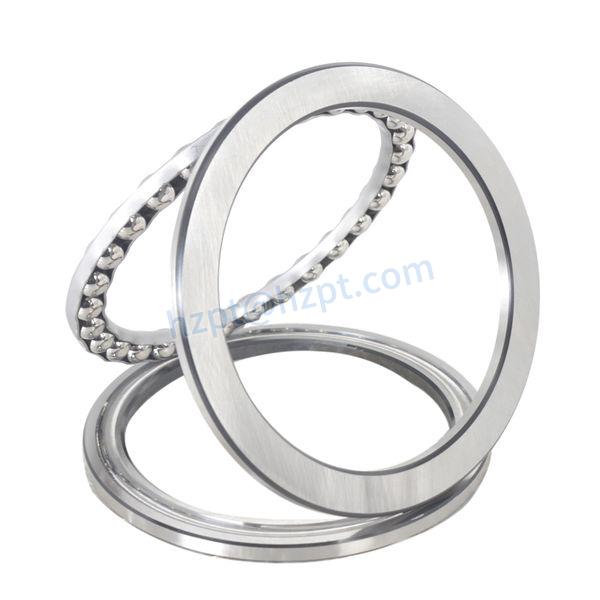
What are the Materials Typically Used in Manufacturing Ball Bearings and Their Advantages?
Ball bearings are manufactured using a variety of materials, each chosen for its specific properties and advantages in various applications. Here are some commonly used materials in ball bearing manufacturing and their respective benefits:
- High-Carbon Chrome Steel (AISI 52100):
This is the most common material used for ball bearing manufacturing. It offers excellent hardness, wear resistance, and fatigue strength. High-carbon chrome steel bearings are suitable for a wide range of applications, from industrial machinery to automotive components.
- Stainless Steel (AISI 440C, AISI 304, AISI 316):
Stainless steel bearings are corrosion-resistant and suitable for applications where moisture, chemicals, or exposure to harsh environments are concerns. AISI 440C offers high hardness and corrosion resistance, while AISI 304 and AISI 316 provide good corrosion resistance and are often used in food and medical industries.
- Ceramic:
Ceramic bearings use silicon nitride (Si3N4) or zirconia (ZrO2) balls. Ceramic materials offer high stiffness, low density, and excellent resistance to corrosion and heat. Ceramic bearings are commonly used in high-speed and high-temperature applications, such as in aerospace and racing industries.
- Plastic (Polyamide, PEEK):
Plastic bearings are lightweight and offer good corrosion resistance. Polyamide bearings are commonly used due to their low friction and wear properties. Polyether ether ketone (PEEK) bearings provide high-temperature resistance and are suitable for demanding environments.
- Bronze:
Bronze bearings are often used in applications where self-lubrication is required. Bronze has good thermal conductivity and wear resistance. Bearings made from bronze are commonly used in machinery requiring frequent starts and stops.
- Hybrid Bearings:
Hybrid bearings combine steel rings with ceramic balls. These bearings offer a balance between the advantages of both materials, such as improved stiffness and reduced weight. Hybrid bearings are used in applications where high speeds and low friction are essential.
- Specialty Alloys:
For specific applications, specialty alloys may be used to meet unique requirements. For example, bearings used in extreme temperatures or corrosive environments may be made from materials like titanium or hastelloy.
- Coated Bearings:
Bearings may also be coated with thin layers of materials like diamond-like carbon (DLC) or other coatings to enhance performance, reduce friction, and improve wear resistance.
The choice of material depends on factors such as application requirements, operating conditions, load, speed, and environmental factors. Selecting the right material is essential for ensuring optimal bearing performance, longevity, and reliability in diverse industries and applications.
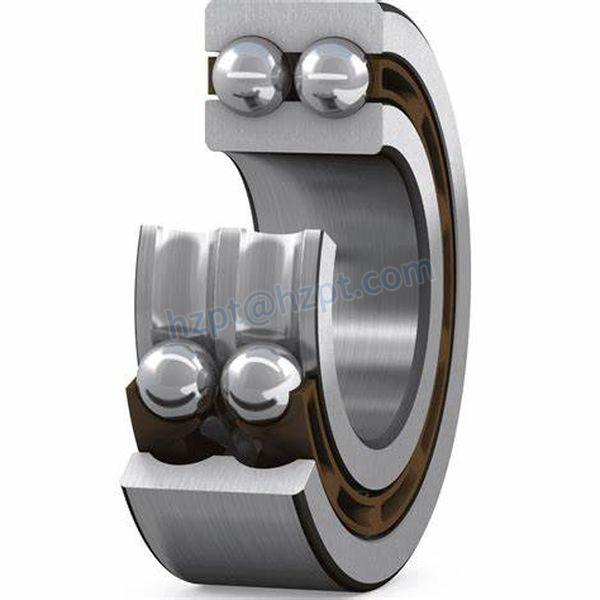
How do Ceramic Ball Bearings Compare to Traditional Steel Ball Bearings in Terms of Performance?
Ceramic ball bearings and traditional steel ball bearings have distinct characteristics that can impact their performance in various applications. Here’s a comparison of how these two types of bearings differ in terms of performance:
- Material Composition:
Ceramic Ball Bearings:
Ceramic ball bearings use ceramic rolling elements, typically made from materials like silicon nitride (Si3N4) or zirconium dioxide (ZrO2). These ceramics are known for their high hardness, low density, and resistance to corrosion and wear.
Traditional Steel Ball Bearings:
Traditional steel ball bearings use steel rolling elements. The type of steel used can vary, but common materials include chrome steel (52100) and stainless steel (440C). Steel bearings are known for their durability and strength.
- Friction and Heat:
Ceramic Ball Bearings:
Ceramic bearings have lower friction coefficients compared to steel bearings. This results in reduced heat generation during operation, contributing to higher efficiency and potential energy savings.
Traditional Steel Ball Bearings:
Steel bearings can generate more heat due to higher friction coefficients. This can lead to increased energy consumption in applications where efficiency is crucial.
- Weight:
Ceramic Ball Bearings:
Ceramic bearings are lighter than steel bearings due to the lower density of ceramics. This weight reduction can be advantageous in applications where minimizing weight is important.
Traditional Steel Ball Bearings:
Steel bearings are heavier than ceramic bearings due to the higher density of steel. This weight may not be as critical in all applications but could impact overall equipment weight and portability.
- Corrosion Resistance:
Ceramic Ball Bearings:
Ceramic bearings have excellent corrosion resistance, making them suitable for applications in corrosive environments, such as marine or chemical industries.
Traditional Steel Ball Bearings:
Steel bearings are susceptible to corrosion, especially in harsh environments. Stainless steel variants offer improved corrosion resistance but may still corrode over time.
- Speed and Precision:
Ceramic Ball Bearings:
Ceramic bearings can operate at higher speeds due to their lower friction and ability to withstand higher temperatures. They are also known for their high precision and low levels of thermal expansion.
Traditional Steel Ball Bearings:
Steel bearings can operate at high speeds as well, but their heat generation may limit performance in certain applications. Precision steel bearings are also available but may have slightly different characteristics compared to ceramics.
- Cost:
Ceramic Ball Bearings:
Ceramic bearings are generally more expensive to manufacture than steel bearings due to the cost of ceramic materials and the challenges in producing precision ceramic components.
Traditional Steel Ball Bearings:
Steel bearings are often more cost-effective to manufacture, making them a more economical choice for many applications.
In conclusion, ceramic ball bearings and traditional steel ball bearings offer different performance characteristics. Ceramic bearings excel in terms of low friction, heat generation, corrosion resistance, and weight reduction. Steel bearings are durable, cost-effective, and widely used in various applications. The choice between the two depends on the specific requirements of the application, such as speed, precision, corrosion resistance, and budget considerations.
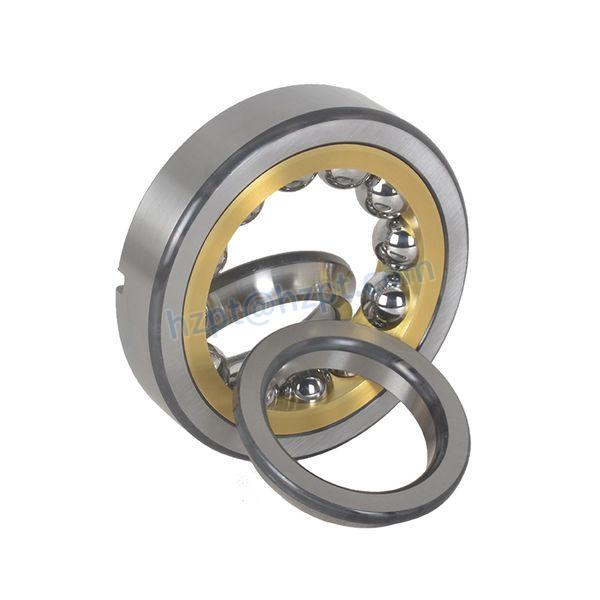
What are the Different Components that Make up a Typical Ball Bearing?
A typical ball bearing consists of several essential components that work together to reduce friction and support loads. Here are the main components that make up a ball bearing:
- Outer Ring:
The outer ring is the stationary part of the bearing that provides support and houses the other components. It contains raceways (grooves) that guide the balls’ movement.
- Inner Ring:
The inner ring is the rotating part of the bearing that attaches to the shaft. It also contains raceways that correspond to those on the outer ring, allowing the balls to roll smoothly.
- Balls:
The spherical balls are the rolling elements that reduce friction between the inner and outer rings. Their smooth rolling motion enables efficient movement and load distribution.
- Cage or Retainer:
The cage, also known as the retainer, maintains a consistent spacing between the balls. It prevents the balls from touching each other, reducing friction and preventing jamming.
- Seals and Shields:
Many ball bearings include seals or shields to protect the internal components from contaminants and retain lubrication. Seals provide better protection against contaminants, while shields offer less resistance to rotation.
- Lubricant:
Lubrication is essential to reduce friction, wear, and heat generation. Bearings are typically filled with lubricants that ensure smooth movement between the balls and raceways.
- Flanges and Snap Rings:
In some designs, flanges or snap rings are added to help position and secure the bearing in its housing or on the shaft. Flanges prevent axial movement, while snap rings secure the bearing radially.
- Raceways:
Raceways are the grooved tracks on the inner and outer rings where the balls roll. The shape and design of the raceways influence the bearing’s load-carrying capacity and performance.
- Anti-Friction Shield:
In certain high-speed applications, a thin anti-friction shield can be placed between the inner and outer rings to minimize friction and heat generation.
These components work together to enable the smooth rolling motion, load support, and reduced friction that characterize ball bearings. The proper design and assembly of these components ensure the bearing’s optimal performance and longevity in various applications.


editor by CX 2024-01-11