Product Description
UCWP202 Metric/Imperial/Non-Standard Spherical Pillow Blocks Bearings
| Unit No. | Shaft Dia | Dimensions(mm) | Bolt Size mm |
Weight kgs |
|||||||||||
| d | h | L | e | B | V | U | g | W | Bi | n | t | ||||
| (in) | (mm) | ||||||||||||||
| UCWP202 | 15 | 30.2 | 125 | 96 | 32 | 12 | 16 | 13 | 57 | 27.4 | 11.5 | M10 | 0.66 | ||
BASIC INFO
Insert bearing with housing is a kind of bearing unit which combines rolling bearing with bearing housing. Most of the outer spherical bearings are made of spherical outer diameter, which are installed together with the imported bearing pedestal with spherical inner hole. The structure is diverse and has good versatility and interchangeability.
The outer spherical ball bearing is actually a variant of the deep groove ball bearing, which is characterized by the spherical outer diameter surface of its outer ring, which can be fitted into the corresponding concave spherical surface of the bearing seat to play the role of self-aligning. Outer spherical bearing is mainly used to bear radial and axial combined load which is mainly radial load. Generally, it is not suitable to bear axial load alone.
The outer spherical bearing with seat is a kind of high precision component product composed of grease sealed deep groove ball bearing and various shape bearing seats. The bearing assembly can be directly installed on the main body of the mechanical device through several bolts. It has the function of self-aligning and can supplement the grease. It is a very simple product for installation and use.
Outer spherical bearing with seat is a kind of bearing unit which combines rolling bearing with bearing seat. Most of the outer spherical bearings are made of spherical outer diameter, which are installed together with the bearing seat with spherical inner hole. The structure is diverse, and the versatility and interchangeability are good.
External spherical bearing
English Name: insert bearing
Features: the outer diameter surface of its outer ring is spherical
Load: mainly in radial direction
Subject: Mechanical Engineering
Although its basic performance and deep groove ball bearing should be similar, but because this kind of bearing is mostly used in relatively rough machinery, installation and positioning is not accurate enough, the axis of the shaft and seat hole is not neutral, or the shaft is long and deflection is large, and the bearing itself is not high enough precision, some structure is also relatively rough, so the actual performance of the performance is relatively the same specification Deep groove ball bearings should be given a considerable discount. For example: the outer spherical ball bearing with jacking wire is applied to the through shaft with large deflection and stiffness difference. This kind of bearing has sealing rings on both sides, which can strictly prevent the invasion of dirt. It has been filled with an appropriate amount of lubricant when leaving the factory. It does not need to be cleaned or added with lubricant before installation. When the jacking screw on the protruding end of the bearing inner ring is fastened on the shaft, the allowable axial load shall not exceed 20% of the rated dynamic load.
The performance of the outer spherical ball bearing with eccentric sleeve is basically the same as that of the outer spherical ball bearing with jacking wire, but the jacking wire is not on the inner ring, but on the eccentric sleeve. The inner hole of the tapered hole outer spherical ball bearing is a tapered hole with a taper of 1:12, which can be directly installed on the tapered shaft, or installed on the shoulderless shaft with the help of the tightening bush, and the bearing clearance can be adjusted.
It is mainly used to bear the combined radial and axial load with radial load as the main load. Generally, it is not suitable to bear the axial load alone. This kind of bearing can be installed with inner ring (with a full set of rollers and retainer) and outer ring respectively. This kind of bearing does not allow the shaft to tilt relative to the shell, which will produce additional axial force under radial load. When the axial clearance is too small, the temperature rise is high; when the axial clearance is large, the bearing is easy to damage. Therefore, special attention should be paid to adjusting the axial clearance of the bearing during installation and operation. If necessary, pre interference installation can be used to increase the rigidity of the bearing.
At the same time, this kind of bearing also has a certain degree of self-aligning in design, easy to install, and has a double structure sealing device, which can work in harsh environment. The bearing block is generally cast. The commonly used seats are vertical seat (P), square seat (f), boss square seat (FS), boss round seat (FC), CZPT seat (FL), ring seat (c), slider seat (T), etc.
USED
Spherical bearings are preferred for applications requiring simple equipment and parts, such as agricultural machinery, transportation system, construction machinery, cotton and hemp machinery, combine harvester, firewood machinery, fan, light load transmission device, etc.
PILLOW SPHERICAL BEARINGS CATEGORYOF
Outer spherical bearing with seat is a high precision component product composed of grease sealed deep groove ball bearing and bearing seat of various shapes. The bearing assembly can be directly installed on the main body of the mechanical device through several bolts. It has the function of self-aligning and can supplement the grease. It is a very simple product for installation and use.
Outer spherical ball bearing with pedestal
Outer spherical bearing with seat is a kind of bearing unit which combines rolling bearing with bearing seat. Most of the outer spherical bearings are made of spherical outer diameter, which are installed together with the bearing seat with spherical inner hole. The structure is diverse, and the versatility and interchangeability are good.
At the same time, this kind of bearing also has a certain degree of self-aligning in design, easy to install, and has a double structure sealing device, which can work in harsh environment. The bearing block is generally cast. The common seats are vertical seat (P), square seat (f), boss square seat (FS), boss round seat (FC), CZPT seat (FL), ring seat (c), slider seat (T).
Outer spherical bearing with seat is divided into bearing center and bearing seat, which is called bearing center plus bearing seat. For example, outer spherical bearing with set screw uc205 is called UCP205 with vertical seat. Because of the strong interchangeability of the spherical bearing with pedestal, the bearing core can be assembled in the bearing pedestal with the same specification and different shapes at will.
Others
Outer spherical ball bearing with vertical seat
Spherical bearing with square seat
Outer spherical ball bearing with CZPT seat
Spherical ball bearing with boss and round seat
Outer spherical ball bearing with ring seat
Outer spherical ball bearing with sliding block seat
External spherical ball bearing with suspended seat
External spherical ball bearing with suspension seat
Spherical ball bearing with adjustable CZPT seat
Outer spherical ball bearing with stamping seat
Outer spherical ball bearing with other seats
According to the method of cooperation with spherical bearings, they can be divided into 3 categories
I. The codes of the outer spherical ball bearing with top wire are uc2 series spherical bearings
I Disassembly
1. First loosen the locking screw on the bearing eccentric sleeve with an internal hexagon wrench, then insert a small iron bar into the counterbore on the top cover eccentric sleeve, and loosen the eccentric sleeve against the rotation direction of the shaft.
2. Loosen the bolts fixing the bearing pedestal. Remove the bearing together with the bearing pedestal from the shaft. Before removing the bearing block at 1 end of the shaft, loosen the bearing block bolts at the other end of the shaft to avoid damage caused by mutual stiffness of the bearings at both ends.
II Installation
1. Before installing the bearing on the shaft, the fixing pin of the bearing sleeve must be pulled out, the surface of the journal must be polished and cleaned, and the journal must be oiled for rust prevention and lubrication (the bearing is allowed to rotate slightly on the shaft).
2. Apply lubricating oil on the matching surface of bearing seat and bearing, and install the bearing into the bearing seat. Then put the assembled bearing and bearing seat together on the shaft and push them to the required position for installation.
3. Don’t tighten the bolts to fix the bearing seat, let the bearing sleeve rotate in the bearing seat. Similarly, install the other end bearing and seat on the same shaft, rotate the shaft for several turns, and let the bearing itself automatically find the correct position. Then tighten the bolts of the bearing seat.
4. Install eccentric sleeve. First, put the eccentric sleeve on the eccentric step of the bearing inner sleeve, and tighten it by hand in the direction of rotation of the shaft. Then, insert the small iron bar into or against the counterbore of the eccentric sleeve. Knock the small iron bar with a hammer in the direction of rotation of the shaft to make the eccentric sleeve firmly installed. Finally, lock the hexagon screw on the eccentric sleeve.
WHY CHOOSE US
1. Reliable Quality Assurance System
2. Cutting-Edge Computer-Controlled CNC Machines
3. Bespoke Solutions from Highly Experienced Specialists
4. Customization and OEM Available for Specific Application
5. Extensive Inventory of Spare Parts and Accessories
6. Well-Developed Worldwide Marketing Network
7. Efficient After-Sale Service System
The 219 sets of advanced automatic production equipment provide guarantees for high product quality. The 167 engineers and technicians with senior professional titles can design and develop products to meet the exact demands of customers, and OEM customizations are also available with us. Our sound global service network can provide customers with timely after-sales technical services.
We are not just a manufacturer and supplier, but also an industry consultant. We work pro-actively with you to offer expert advice and product recommendations in order to end up with a most cost effective product available for your specific application. The clients we serve worldwide range from end users to distributors and OEMs. Our OEM replacements can be substituted wherever necessary and suitable for both repair and new assemblies.
| Aligning: | Aligning Bearing, Aligning Bearing |
|---|---|
| Separated: | Unseparated, Separated |
| Feature: | Vacuum, Magnetically, Low Temperature, Corrosion Resistant, High Temperature, High Speed, Vacuum, Magnetically, Low Temperature, Corrosion Resistant, High Temperature, High Speed |
| Rows Number: | Single, Single |
| Raceway: | Spherical Raceway, Deep Groove Raceway |
| Material: | Bearing Steel, Bearing Steel |
###
| Samples: |
US$ 0/Piece
1 Piece(Min.Order) |
|---|
###
| Customization: |
Available
|
|---|
###
| Unit No. | Shaft Dia | Dimensions(mm) | Bolt Size mm |
Weight kgs |
|||||||||||
| d | h | L | e | B | V | U | g | W | Bi | n | t | ||||
| (in) | (mm) | ||||||||||||||
| UCWP202 | 15 | 30.2 | 125 | 96 | 32 | 12 | 16 | 13 | 57 | 27.4 | 11.5 | M10 | 0.66 | ||
| Aligning: | Aligning Bearing, Aligning Bearing |
|---|---|
| Separated: | Unseparated, Separated |
| Feature: | Vacuum, Magnetically, Low Temperature, Corrosion Resistant, High Temperature, High Speed, Vacuum, Magnetically, Low Temperature, Corrosion Resistant, High Temperature, High Speed |
| Rows Number: | Single, Single |
| Raceway: | Spherical Raceway, Deep Groove Raceway |
| Material: | Bearing Steel, Bearing Steel |
###
| Samples: |
US$ 0/Piece
1 Piece(Min.Order) |
|---|
###
| Customization: |
Available
|
|---|
###
| Unit No. | Shaft Dia | Dimensions(mm) | Bolt Size mm |
Weight kgs |
|||||||||||
| d | h | L | e | B | V | U | g | W | Bi | n | t | ||||
| (in) | (mm) | ||||||||||||||
| UCWP202 | 15 | 30.2 | 125 | 96 | 32 | 12 | 16 | 13 | 57 | 27.4 | 11.5 | M10 | 0.66 | ||
Advantages and disadvantages of different types of bushings
Bushings are a simple but essential part of machinery with sliding or rotating shaft assemblies. This type of bearing is used in a wide variety of industries because its high load-carrying capacity and excellent anti-friction properties make it a necessity for construction, mining, hydropower, transportation and agricultural machinery. In addition to these applications, bushings also play a vital role in material handling and food processing. This article explores the various types of bushings available.
air casing
The air bushing forms a frictionless cylinder that applies the load to the rotating object. Bushings are used to measure torque and provide self-centering force in applications where linear motion is critical. The following are load equations that can be used to select the appropriate air sleeve for your application. To learn more about these air sleeves, read on. This article discusses the benefits and uses of air bushings in linear motion.
Bushings have many advantages over bearings. They are not prone to wear and corrosion. Unlike bearings, they can easily bypass conversion and inspection periods. Their high-quality design guarantees reliable machine performance, yet they are inexpensive and easy to replace. In many industries, air compressors are essential for sports. The air bushing eliminates friction, allowing the compressor to work more efficiently. They can also help eliminate the need for frictionless bearings and improve the overall efficiency of the machine.
Another type of air bearing is the cylindrical bushing. These are used for linear and aerostatic motion. Their low friction properties allow them to support radial loads without wearing out or damaging components. They are usually used for normal sized shafts. Air bushings have several components that can be used with other types of air bearings. Cylindrical air bearings have four o-ring grooves that allow them to be inserted into the structure. They are often used with other types of air bearings for smoother motion.
rubber bushing
If you’re looking to buy a new suspension system, you may be wondering if rubber or polyurethane is the right choice. Rubber is less expensive, but not without its drawbacks. Polyurethane is more durable and offers better handling and suspension. Rubber bushings also reduce road feel, while polyurethane isolates the driver from the road. Both materials will help you improve handling and alignment, but each has advantages and disadvantages.
Typically, rubber bushings are cylindrical components with metal inner and outer surfaces. These metals can be stainless steel, mild steel or aluminum. They are usually stress relieved and prestressed for maximum durability. They are designed to meet the exact specifications of a specific application. For example, shock-absorbing rubber bushings are cushioning pads made of polyurethane that absorb road bumps and noise.
Unlike polyurethane, rubber suspension bushings have a shorter lifespan than polyurethane. This is because rubber is more susceptible to damage from UV rays, road chemicals and oils. The rubber also stretches and warps due to the pressure of the road. The rubber bushing also squeaks, which can be cause for concern. But if the noise persists for a long time, it may be a sign that your vehicle needs a new suspension system.
The main reason why cars use rubber bushings is for shock absorption. During machine use, vibration and noise caused by the movement of parts can cause serious damage. To prevent this, rubber bushings act as shock absorbers and damping agents. Rubber bushings are an excellent choice for automakers, but they are also used in a variety of industrial settings.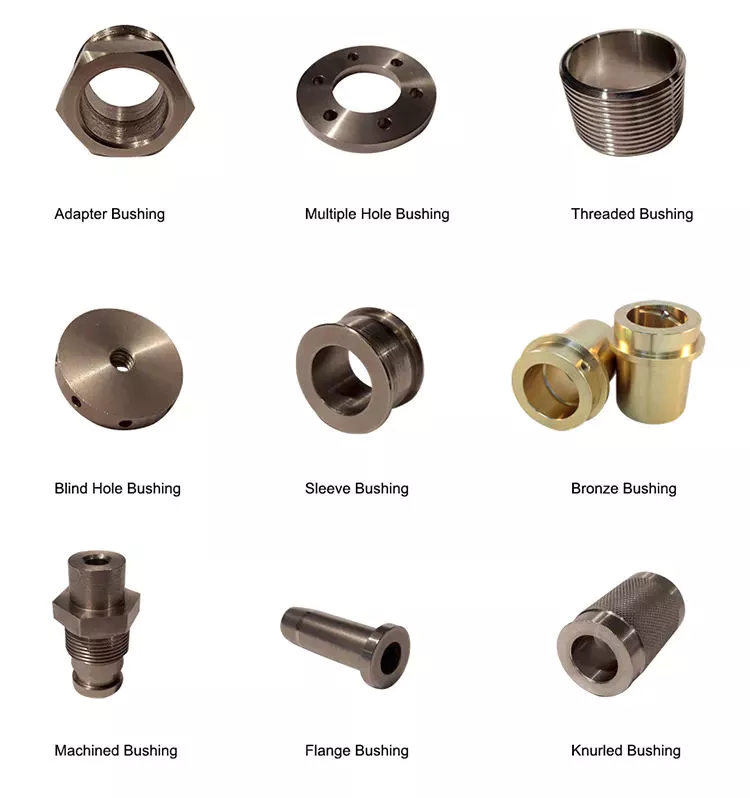
Polyurethane bushing
If you want to make your vehicle handle better, polyurethane bushings may be the answer. They come in different shapes and sizes and can improve a wide range of areas. This article will explore the advantages and disadvantages of polyurethane bushings and their potential place in your car. However, before you decide to upgrade your suspension, you should understand the various advantages and disadvantages of polyurethane bushings.
The main difference between a polyurethane bushing and a rubber bushing is how the bushing rides on the suspension arm. Polyurethane bushings do not have faces that slide against each other like rubber bushings. This means they allow for more rotation and flexion, as well as consistent alignment of the control arms. Polyurethane bushings require lubrication, but only need to be lubricated every five years, much longer than equivalent rubber bushings.
Another difference between polyurethane and rubber bushings is hardness. The former has the least elasticity and is generally the most suitable for street use. While rubber bushings provide the best NVH quality, they are also notorious for changing suspension geometry. Rubber is known to be an excellent choice for street use, but polyurethane has a lifespan that far outlasts rubber.
bronze bushing
There are two main types of bronze bushings, sintered and cast. The latter require additional lubrication and are typically used in applications where powder metal products cannot be secured. The former is cheaper than the latter, but the process is more expensive. Bronze bushings can be used in environments where the material will be exposed to high temperature and vibration. For these reasons, the production process is relatively slow and expensive.
The strength of bronze is the main reason why they are so popular. Brass is a softer metal that deforms and corrodes easily. The bronze casing can withstand continuous immersion in water and can last for hundreds of years with little or no maintenance. However, it is important to note that this metal is not resistant to aggressive chemicals and requires regular maintenance to keep it in good condition.
Bronze bushings offer many advantages, including durability and aesthetics. Bronze bushings are available in a variety of sizes and can be ordered in imperial and metric sizes. They can be built to your specifications and are very durable. You can even custom order them if you want. And because they can be customized, they are an excellent choice for high-end applications. The quality of the bronze bushings is second to none.
Plastic bushing
Engineered composite plastic bushings have been shown to last longer than bronze bushings and have also been found to reduce maintenance costs by up to 40%. Plastic bushings have become the first choice for thousands of applications, including medical equipment, food processing machinery, pumps, and more. Bronze bushings are oil-impregnated, but their performance is limited by their inherent weaknesses: oil-impregnated bronze tends to develop high levels of capillary action and requires rotational motion to maintain an intact oil film. Low speed and intermittent use of bronze bushings can also hinder the ability of the lubricant to provide adequate lubrication.
Advantages of plastic bushings over metal include low friction, non-reactive surfaces, and long life. CZPT offers a variety of engineering plastics that outperform traditional metals in a range of applications. For example, nylon bushings resist wear while requiring little lubrication. In addition, polymer-shaped plastics are lightweight and highly resistant to aggressive cleaning agents and chemicals.
Besides being less expensive than metal bushings, plastic bushings offer many other advantages. They are very durable, have a low coefficient of friction, and are more wear-resistant than metal. Unlike metal, plastic bushings do not require lubrication and do not absorb dust and oil like metal bushings. They are lightweight, easy to maintain and last longer. This makes them an excellent choice for many applications.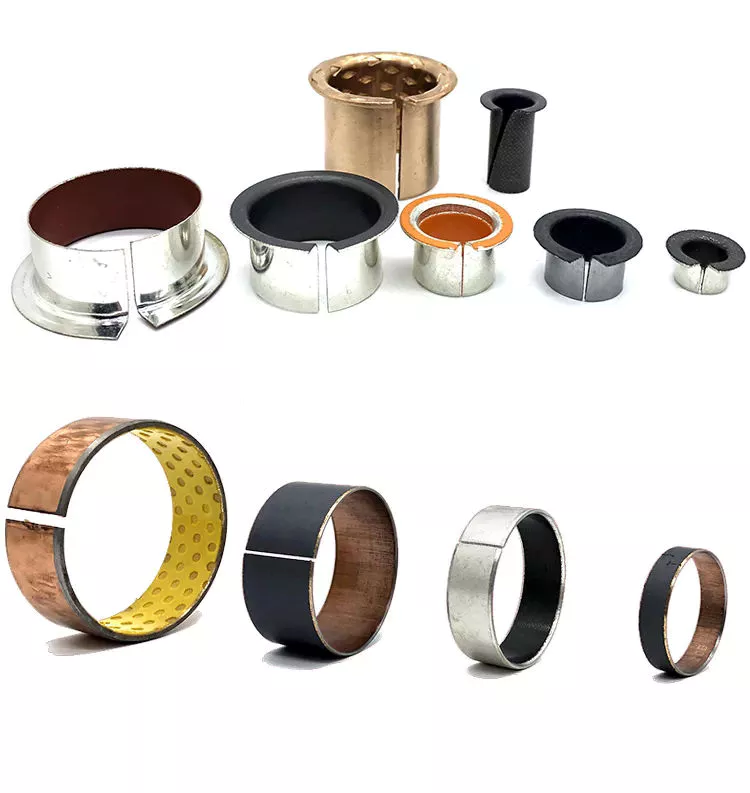
Sleeve bearing
Sleeve bearings are simple pipes with matching components. They facilitate linear motion by absorbing friction and vibration. They can withstand heavy loads and work at high temperatures for long periods of time. Flange bearings are similar to sleeve bearings, but are enclosed and rotated in a housing unit. Sleeve bearings have higher load-carrying capacity and resistance to shock loads. Furthermore, they are lightweight and low cost.
Another name for sleeve bearings is babbitt radial bearings. These bearings are usually made of bronze and have straight inner and outer diameters. They are also impregnated with oil and can withstand radial loads. Typical uses for sleeve bearings are agriculture, automotive and machine tools. Sleeves can also be solid or cored material, depending on the intended use.
The type of sleeve bearing used in the bushing is important in determining which type of bushing to buy. Sleeve bearings are sized based on pressure and speed considerations. Typically, the PV limit is an upper bound on the combined pressure and velocity for a given casing material. In some cases, the sleeve bearing used in the bushing is the same as the plain bearing.
Sleeve bearings are simple in design and made from a variety of materials, including bronze and plastic. They are more affordable than metal, but plastic is still not inaudible. Plastic sleeve bearings will rattle like metal bearings if the gap between the two bushings is not accurate. Additionally, high temperature electronic painting can permanently thin the casing. The stainless steel backing provides a good surface for electronic painting and enhances abrasion resistance.


editor by czh 2022-12-08