Product Description
Detailed Photos
Product Description
Our precision deep groove ball bearings are designed for high precision, low noise, small vibration, high reliability and long life. They are mainly used in various types of electric motors. They are also known as EMQ (Electric Motor Quality) bearings.
EMQ bearings are widely used in household appliances, toys, electric power tools, car motors and other fields. With optimal design, high reliability heat treatment, precision manufacturing processes and high-grade grease, these products perform better on reliability, vibration and noise levels than standard products making them more suitable for electric motor applications. These products can also be applied to most gearbox applications as well.
| Item | Deep Groove Ball Bearing | Closure type | ZZ/RS |
| OEM ODM | Technical drawing or sample is needed | d(mm) | 5 |
| Original | ZheJiang , China | D(mm) | 19 |
| Material | Chrome steel, Carbon steel, Stainless steel, etc. | B(mm) | 6 |
| Cage Material | Steel / Nylon | Number of row | single |
| Tolerance | P0 P6 P5 P2 P4 | Clearance | C0 C2 C3 C4 |
| Vibration | V1 V2 V3 | Noise | Z1 Z2 Z3 Z4 |
| MOQ | 1000 pcs | Application | Motor/electric/sliding/furniture accessories/ Skateboard/etc. |
| Feature | heavy-duty,adjustable,low noise, easy installation,sliding smoothly,long life,standard,customized,etc | Leading Time | According to the order q’ty |
Company Profile
ABOUT US
Haibite was set up in 1996 and located at HangZhou, a beautiful city in China, covering an area of 16000 square meters. Our company is bearing manufacturer&bearing distributor.
We have own factory that specialize in the production of bearings. We are in a good position to supply you high quality bearing, the finest price and customized service.
Since it was first established, Haibite was dedicated in research, development and manufacture of bearings.
Haibite deep groove ball bearing has numerous technical advantages, such as increased service life of bearing over a broad of operating temperature and all these combined with the highest level of cost effectiveness.
Now, Haibite has become main and 1 of the first grade suppliers of all kinds of bearings. We could develop the products constructed from different materials, structures, shapes, colors etc.
1. Our bearing are in stable quality with smooth rotation, long life operation, small movement, advanced heat treatment etc.
2. The Balls with smooth and long lasting operation, higher performing features like wider adjustment ranges, long rolling life performance, easy installment. It’s adapt in multiple housing choices with any wheels to fit different aluminnum. Our bearing ensure alignment across the full adjustment ranges within built-in retention system.
3. If you need, we also could offer customized hardware service, like plastic parts, stamping patrs, cold forging steel patrs are widely applied in the window and doors, furniture, householders, transmission system, industrial drive system etc.
We are constantly improving and striving for excellent service. We hold a very high regard for our customers, the quality of our products, and our level of customer service.
Packaging & Shipping
Packaging Details
Packaging
A.Polybag +Box+Carton
B.B.Tube+Box+Carton
C.As per customer’s request
We have kinds of packages, such as plastic bags, cartons, special boxes. We use different packages based on the products and our customers’ requirements.
Port :HangZhou
Our Advantages
FAQ
If you have any other questions, please feel free to contact us as follows.
Q: Why did you choose us?
A. We provide the best quality bearings with reasonable price, low friction, low noise and long service life.
B. With sufficient stock and fast delivery, you can choose our freight forwarder or your freight forwarder.
C. The best service provided by a well-trained international sales team.
Q: Do you accept small orders?
100% quality check, once your bearings are standard size bearings, even one, we also accept.
Q: Do you provide samples? Is it free or extra?
Yes, we can provide a small amount of free samples. Do you mind paying the freight?
Q: What should I do if I don’t see the type of bearings I need?
We have too many bearing series numbers. Sometimes we can’t put them all on web. Just send us the inquiry and we will be very happy to send you the bearing details.
Q: What services can we provide?
Accepted Delivery Terms: FOB, CFR, CIF, EXW;
Accepted Payment Currency: USD, EUR, JPY, CNY;
Accepted Payment Type: T/T, L/C, D/P, D/A
Language Spoken: English, Chinese;
Purchase Notice
1. Please send us an inquiry or leave us a message, there will be a dedicated staff to serve you within 1 hours.
2. You can ask us to take actual photos of the products for you, and free samples would be provide.
3. Welcome to visit our factory to negotiate orders, we will do our best to protect the safety of your business journey.
4. Packaging can be customized according to customer requirements.
Finally, please be sure to click “Contact Supplier” to contact us, or “call us” with any questions that you may have.
Welcome to contact me anytime!
| Aligning: | Aligning Bearing |
|---|---|
| Separated: | Unseparated |
| Rows Number: | Single |
| Samples: |
US$ 0.5/Piece
1 Piece(Min.Order) | Order Sample |
|---|
| Customization: |
Available
| Customized Request |
|---|
.shipping-cost-tm .tm-status-off{background: none;padding:0;color: #1470cc}
|
Shipping Cost:
Estimated freight per unit. |
about shipping cost and estimated delivery time. |
|---|
| Payment Method: |
|
|---|---|
|
Initial Payment Full Payment |
| Currency: | US$ |
|---|
| Return&refunds: | You can apply for a refund up to 30 days after receipt of the products. |
|---|
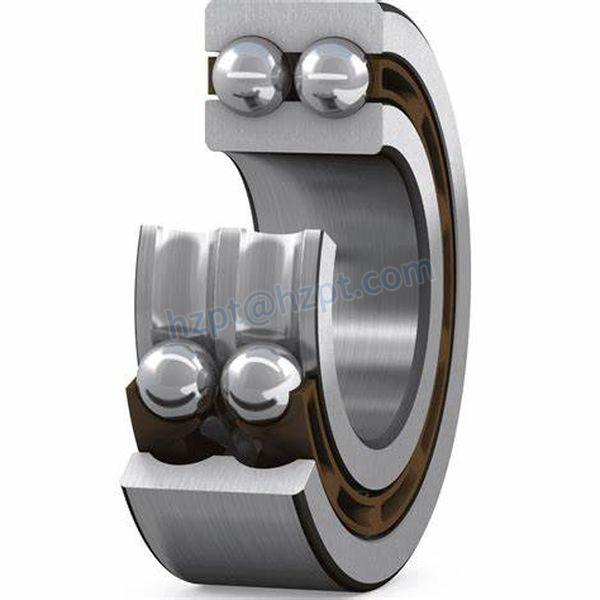
What are the Challenges Associated with Noise Reduction in Ball Bearings?
Noise reduction in ball bearings is a crucial consideration, especially in applications where noise levels must be minimized for operational efficiency and user comfort. While ball bearings are designed to operate smoothly, there are several challenges associated with reducing noise in their operation:
- Vibration:
Vibration generated by the movement of rolling elements and raceways can lead to noise. Even minor irregularities in bearing components or the mounting system can cause vibration that translates into audible noise.
- Bearing Type and Design:
The type and design of the ball bearing can impact noise generation. For example, deep groove ball bearings are known for their quiet operation, while angular contact bearings can generate more noise due to their higher contact angles.
- Lubrication:
Improper or inadequate lubrication can result in increased friction and wear, leading to noise. Choosing the right lubricant and maintaining proper lubrication levels are essential for reducing noise in ball bearings.
- Bearing Clearance and Preload:
Incorrect clearance or preload settings can lead to noise issues. Excessive clearance or inadequate preload can cause the rolling elements to impact the raceways, resulting in noise during rotation.
- Material and Manufacturing Quality:
The quality of materials and manufacturing processes can affect noise levels. Inconsistent or low-quality materials, improper heat treatment, or manufacturing defects can lead to noise generation during operation.
- Surface Finish:
The surface finish of the rolling elements and raceways can impact noise. Rough surfaces can generate more noise due to increased friction and potential irregularities.
- Sealing and Shielding:
Seals and shields that protect bearings can influence noise levels. While they are necessary for contamination prevention, they can also cause additional friction and generate noise.
- Operating Conditions:
External factors such as temperature, speed, and load can influence noise levels. High speeds or heavy loads can amplify noise due to increased stress on the bearing components.
- Wear and Deterioration:
As ball bearings wear over time, noise levels can increase. Worn components or inadequate lubrication can lead to more significant noise issues as the bearing operates.
To address these challenges and reduce noise in ball bearings, manufacturers and engineers employ various techniques, such as optimizing design, selecting suitable bearing types, using proper lubrication, maintaining accurate preload settings, and ensuring high-quality materials and manufacturing processes. Noise reduction efforts are essential to improve overall product quality, meet noise regulations, and enhance user experience in various applications.
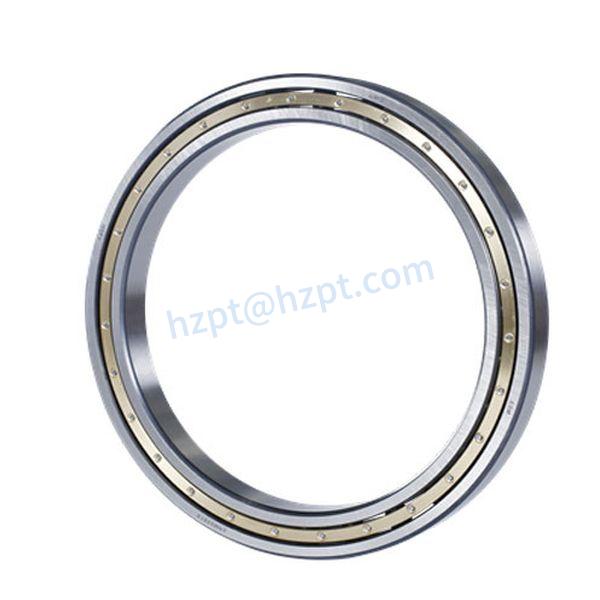
What are the Differences between Deep Groove Ball Bearings and Angular Contact Ball Bearings?
Deep groove ball bearings and angular contact ball bearings are two common types of ball bearings, each designed for specific applications and load conditions. Here are the key differences between these two types of bearings:
- Design and Geometry:
Deep Groove Ball Bearings:
Deep groove ball bearings have a simple design with a single row of balls that run along deep raceways in both the inner and outer rings. The rings are usually symmetrical and non-separable, resulting in a balanced load distribution.
Angular Contact Ball Bearings:
Angular contact ball bearings have a more complex design with two rows of balls, oriented at an angle to the bearing’s axis. This arrangement allows for the transmission of both radial and axial loads, making them suitable for combined loads and applications requiring high precision.
- Load Carrying Capacity:
Deep Groove Ball Bearings:
Deep groove ball bearings are primarily designed to carry radial loads. They can handle axial loads in both directions, but their axial load-carrying capacity is generally lower compared to angular contact ball bearings.
Angular Contact Ball Bearings:
Angular contact ball bearings are specifically designed to handle both radial and axial loads. The contact angle between the rows of balls determines the bearings’ axial load-carrying capacity. They can handle higher axial loads and are commonly used in applications with thrust loads.
- Contact Angle:
Deep Groove Ball Bearings:
Deep groove ball bearings have no defined contact angle, as the balls move in a deep groove along the raceways. They are primarily designed for radial loads.
Angular Contact Ball Bearings:
Angular contact ball bearings have a specified contact angle between the rows of balls. This contact angle allows them to carry both radial and axial loads and is crucial for their ability to handle combined loads.
- Applications:
Deep Groove Ball Bearings:
Deep groove ball bearings are commonly used in applications that primarily require radial loads, such as electric motors, pumps, and conveyor systems. They are also suitable for high-speed operation.
Angular Contact Ball Bearings:
Angular contact ball bearings are used in applications where both radial and axial loads are present, such as in machine tools, automotive wheel hubs, and aerospace components. They are especially useful for applications that require precise axial positioning and handling of thrust loads.
- Limitations:
Deep Groove Ball Bearings:
Deep groove ball bearings are not as suitable for handling significant axial loads and may experience skidding under certain conditions due to their deep raceways.
Angular Contact Ball Bearings:
Angular contact ball bearings can experience increased heat generation and wear at higher speeds due to the contact angle of the balls.
In summary, the design, load-carrying capacity, contact angle, and applications differ between deep groove ball bearings and angular contact ball bearings. Choosing the appropriate type depends on the specific load conditions and requirements of the application.
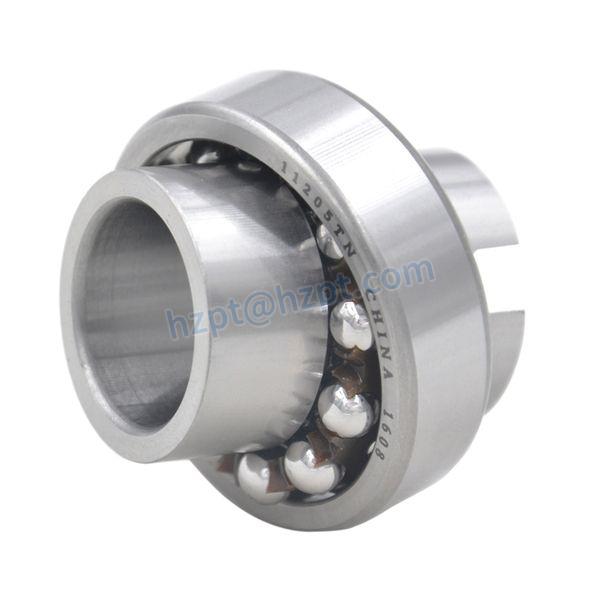
What Factors should be Considered when Selecting a Ball Bearing for a Particular Application?
Selecting the right ball bearing for a specific application involves careful consideration of various factors to ensure optimal performance, longevity, and reliability. Here are the key factors that should be taken into account:
- Load Type and Magnitude:
Determine the type of load (radial, axial, or combined) and the magnitude of the load that the bearing will need to support. Choose a bearing with the appropriate load-carrying capacity to ensure reliable operation.
- Speed and Operating Conditions:
Consider the rotational speed of the application and the operating conditions, such as temperature, humidity, and exposure to contaminants. Different bearing types and materials are suited for varying speeds and environments.
- Accuracy and Precision:
For applications requiring high accuracy and precision, such as machine tool spindles or optical instruments, choose high-precision bearings that can maintain tight tolerances and minimize runout.
- Space Limitations:
If the application has limited space, choose miniature or compact ball bearings that can fit within the available dimensions without compromising performance.
- Thrust and Radial Loads:
Determine whether the application requires predominantly thrust or radial load support. Choose the appropriate type of ball bearing (thrust, radial, or angular contact) based on the primary load direction.
- Alignment and Misalignment:
If the application experiences misalignment between the shaft and housing, consider self-aligning ball bearings that can accommodate angular misalignment.
- Mounting and Installation:
Consider the ease of mounting and dismounting the bearing. Some applications may benefit from features like flanges or snap rings for secure installation.
- Lubrication and Maintenance:
Choose a bearing with appropriate lubrication options based on the application’s speed and temperature range. Consider whether seals or shields are necessary to protect the bearing from contaminants.
- Environmental Conditions:
Factor in the operating environment, including exposure to corrosive substances, chemicals, water, or dust. Choose materials and coatings that can withstand the specific environmental challenges.
- Bearing Material:
Select a bearing material that suits the application’s requirements. Common materials include stainless steel for corrosion resistance and high-carbon chrome steel for general applications.
- Bearing Arrangement:
Consider whether a single-row, double-row, or multiple bearings in a specific arrangement are needed to accommodate the loads and moments present in the application.
By carefully evaluating these factors, engineers and designers can choose the most suitable ball bearing that aligns with the specific demands of the application, ensuring optimal performance, durability, and overall operational efficiency.


editor by CX 2023-11-10