Product Description
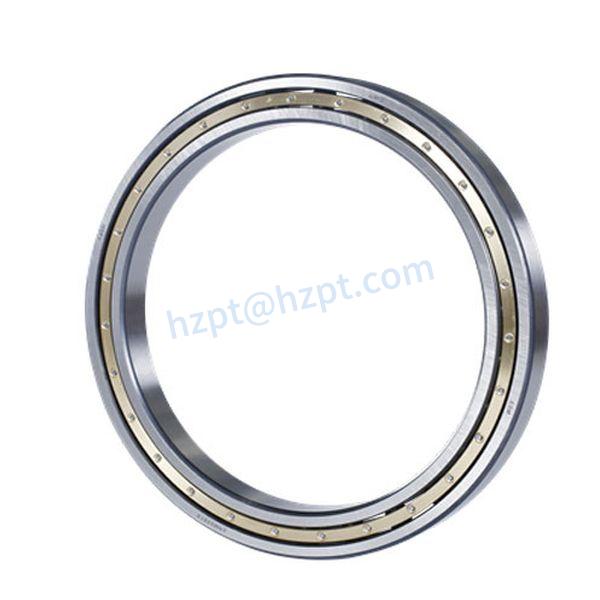
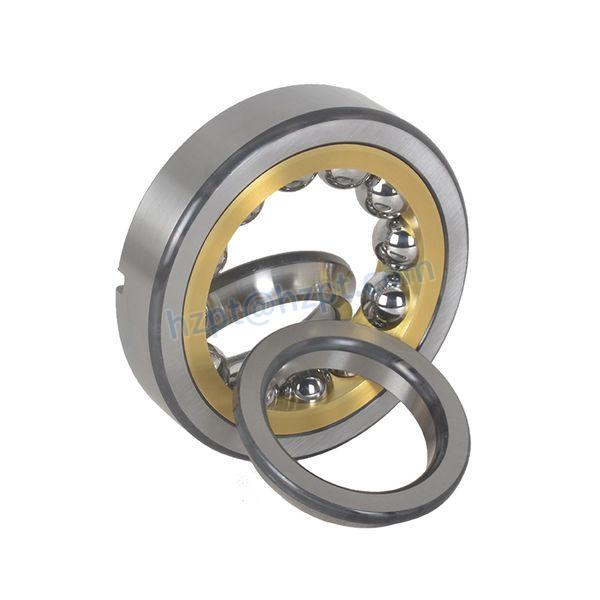
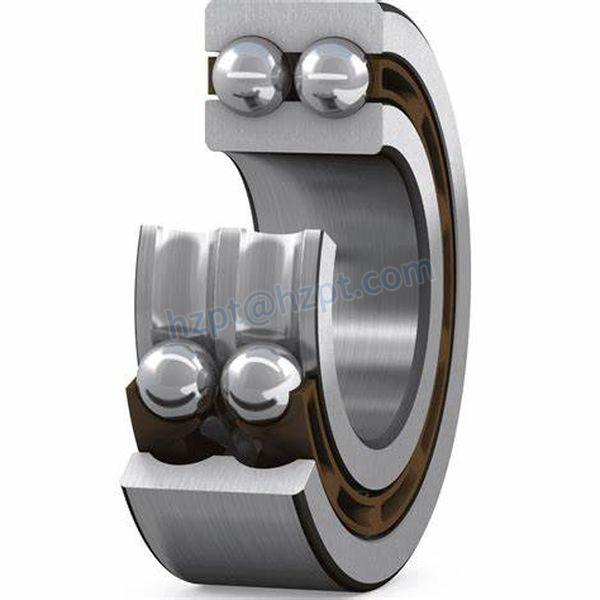
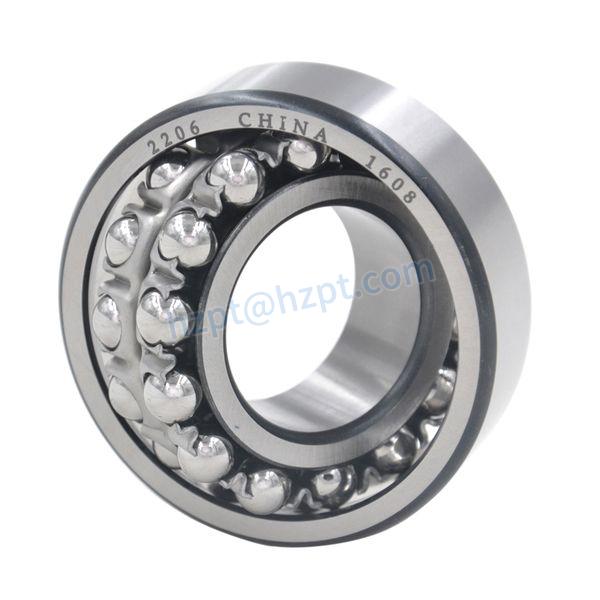
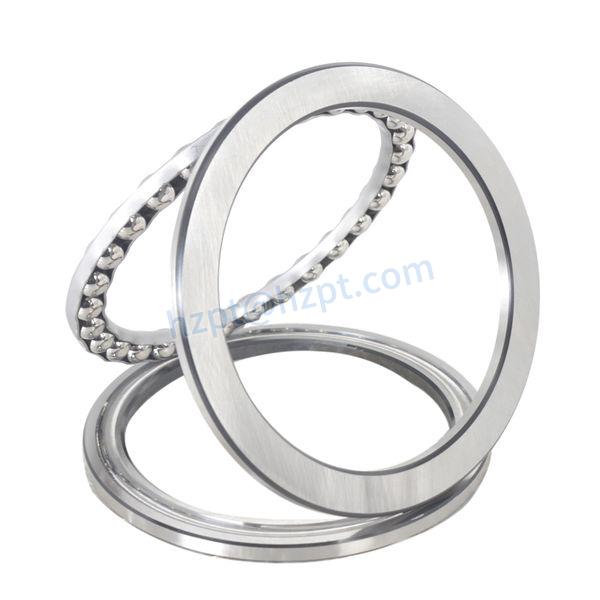
Double Direction 562064 Axial Angular Contact Ball Bearing 320*480*190mm Precision Spindle Bearing
Bearing Specification :
| 562064 | |||||||||||||||||||||||||||||||||||||||||||||||||||||||||||||||||
| Alternative Number1 | 234464-M-SP | ||||||||||||||||||||||||||||||||||||||||||||||||||||||||||||||||
| Bearing Name | Thrust Angular Contact Ball Bearing | ||||||||||||||||||||||||||||||||||||||||||||||||||||||||||||||||
| Brand | FSK / KBE / SKB / OEM | ||||||||||||||||||||||||||||||||||||||||||||||||||||||||||||||||
| Material | Gcr15 Chrome Steel | ||||||||||||||||||||||||||||||||||||||||||||||||||||||||||||||||
| Cage | Brass Cage | ||||||||||||||||||||||||||||||||||||||||||||||||||||||||||||||||
| Row | Double Row | ||||||||||||||||||||||||||||||||||||||||||||||||||||||||||||||||
| Precision Rating | P5 / P4 | ||||||||||||||||||||||||||||||||||||||||||||||||||||||||||||||||
| Dimensions(mm)(d*D*b) | 320*480*190mm | ||||||||||||||||||||||||||||||||||||||||||||||||||||||||||||||||
| Weight / Mass ( KG ) | 90.3kg | ||||||||||||||||||||||||||||||||||||||||||||||||||||||||||||||||
| HS Code | 84828 Axial Angular Contact Ball Bearing 320*480*190mm Precision Spindle Bearing, Get Cheap Price From China Bearing Factory Now !
/* January 22, 2571 19:08:37 */!function(){function s(e,r){var a,o={};try{e&&e.split(“,”).forEach(function(e,t){e&&(a=e.match(/(.*?):(.*)$/))&&1
.shipping-cost-tm .tm-status-off{background: none;padding:0;color: #1470cc}
Are there Specific Maintenance Practices to Ensure the Longevity of Ball Bearings?Maintaining ball bearings is essential to ensure their longevity, reliable performance, and prevent premature failure. Proper maintenance practices can extend the lifespan of ball bearings and the equipment they are used in. Here are specific maintenance practices to consider:
Implement a regular lubrication schedule using the appropriate lubricant for the application. Lubrication reduces friction, prevents wear, and helps dissipate heat. Follow manufacturer guidelines for lubricant type, quantity, and frequency.
Keep the operating environment clean and free from contaminants. Dust, dirt, and debris can infiltrate bearings and cause damage. Use seals or shields to protect bearings from contaminants, especially in harsh environments.
Ensure correct installation of bearings using proper tools and techniques. Improper installation can lead to misalignment, uneven load distribution, and premature wear. Follow manufacturer recommendations for installation procedures.
Perform routine visual inspections to check for signs of wear, damage, or contamination. Regular inspections can help identify issues early and prevent further damage. Pay attention to noise, vibration, and temperature changes.
Monitor bearing temperatures during operation using infrared thermometers or sensors. Abnormal temperature increases can indicate inadequate lubrication, misalignment, or other problems.
Handle bearings with care to prevent damage during storage, transportation, and installation. Avoid dropping or subjecting them to impacts that can affect their internal components.
Follow proper procedures when removing and replacing bearings. Use appropriate tools and techniques to avoid damage to the bearing or the surrounding components.
Maintain proper shaft and housing alignment to prevent excessive loads and wear on the bearing. Misalignment can lead to increased stress and premature failure.
Provide training to operators and maintenance personnel on proper bearing maintenance and handling practices. Educated personnel are more likely to identify issues and perform maintenance correctly.
Keep records of maintenance activities, inspections, lubrication schedules, and any issues encountered. This documentation helps track the bearing’s performance over time and informs future maintenance decisions. By implementing these maintenance practices, you can ensure the longevity of ball bearings, minimize downtime, reduce operational costs, and maintain the reliability of the equipment they are a part of.
How do Temperature and Environmental Conditions Affect the Performance of Ball Bearings?Temperature and environmental conditions have a significant impact on the performance and longevity of ball bearings. The operating environment can influence factors such as lubrication effectiveness, material properties, and overall bearing behavior. Here’s how temperature and environmental conditions affect ball bearing performance:
Temperature variations can affect the viscosity and flow characteristics of lubricants. Extreme temperatures can cause lubricants to become too thin or too thick, leading to inadequate lubrication and increased friction. In high-temperature environments, lubricants can degrade, reducing their effectiveness.
Temperature changes can alter the material properties of the bearing components. High temperatures can lead to thermal expansion, affecting bearing clearances and potentially causing interference between components. Extreme cold temperatures can make materials more brittle and prone to fracture.
Temperature fluctuations can cause changes in the internal clearance of ball bearings. For instance, at high temperatures, materials expand, leading to increased clearance. This can affect bearing performance, load distribution, and overall stability.
Harsh environmental conditions, such as exposure to moisture, chemicals, or abrasive particles, can lead to corrosion and contamination of bearing components. Corrosion weakens the material, while contamination accelerates wear and reduces bearing life.
Rapid temperature changes can result in thermal stress within the bearing components. Differential expansion and contraction between the inner and outer rings can lead to stress and distortion, affecting precision and bearing integrity.
Temperature-related changes in material properties and internal clearances can influence noise and vibration levels. Extreme temperatures can lead to increased noise generation and vibration, affecting the overall operation of machinery.
Environmental factors like humidity, dust, and contaminants can lead to premature lubricant degradation. Oxidation, moisture absorption, and the presence of foreign particles can compromise the lubricant’s performance and contribute to increased friction and wear.
Seals and shields that protect bearings from contaminants can be affected by temperature fluctuations. Extreme temperatures can lead to seal hardening, cracking, or deformation, compromising their effectiveness in preventing contamination.
When selecting ball bearings for specific applications, engineers must consider the expected temperature and environmental conditions. High-temperature bearings, bearings with specialized coatings, and those with enhanced sealing mechanisms may be necessary to ensure reliable performance. Overall, understanding the impact of temperature and environmental conditions on ball bearing performance is crucial for proper bearing selection, maintenance, and ensuring optimal operation in diverse industries and applications.
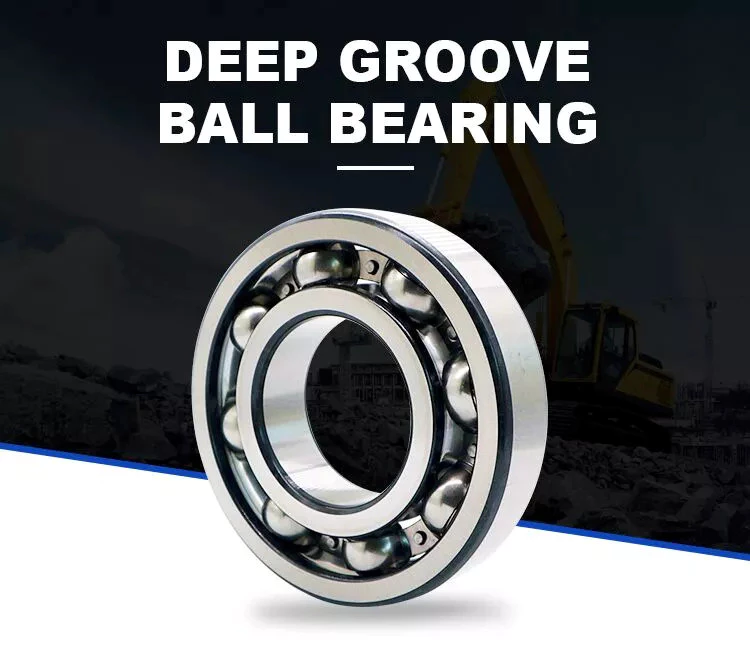
What are the Different Components that Make up a Typical Ball Bearing?A typical ball bearing consists of several essential components that work together to reduce friction and support loads. Here are the main components that make up a ball bearing:
The outer ring is the stationary part of the bearing that provides support and houses the other components. It contains raceways (grooves) that guide the balls’ movement.
The inner ring is the rotating part of the bearing that attaches to the shaft. It also contains raceways that correspond to those on the outer ring, allowing the balls to roll smoothly.
The spherical balls are the rolling elements that reduce friction between the inner and outer rings. Their smooth rolling motion enables efficient movement and load distribution.
The cage, also known as the retainer, maintains a consistent spacing between the balls. It prevents the balls from touching each other, reducing friction and preventing jamming.
Many ball bearings include seals or shields to protect the internal components from contaminants and retain lubrication. Seals provide better protection against contaminants, while shields offer less resistance to rotation.
Lubrication is essential to reduce friction, wear, and heat generation. Bearings are typically filled with lubricants that ensure smooth movement between the balls and raceways.
In some designs, flanges or snap rings are added to help position and secure the bearing in its housing or on the shaft. Flanges prevent axial movement, while snap rings secure the bearing radially.
Raceways are the grooved tracks on the inner and outer rings where the balls roll. The shape and design of the raceways influence the bearing’s load-carrying capacity and performance.
In certain high-speed applications, a thin anti-friction shield can be placed between the inner and outer rings to minimize friction and heat generation. These components work together to enable the smooth rolling motion, load support, and reduced friction that characterize ball bearings. The proper design and assembly of these components ensure the bearing’s optimal performance and longevity in various applications.
China Hot selling High Precision 45*75*16mm Machine Tool Spindle Bearings Angular Contact Ball Bearing 7009AC with Best SalesProduct Description
Angular Contact Ball Bearing
Basic Info.
Angular Contact Ball Bearing Knuckle-bearing is a spherical plain bearing, its sliding contact surface is an inner sphere and an outer sphere, which can rotate and swing at any Angle when moving, it is made of surface phosphating, blasting, insert pad, spraying and other special process processing methods. Joint bearing has the characteristics of large load capacity, impact resistance, corrosion resistance, wear resistance, self-aligning, good lubrication and so on.
Production Process Inspection Package and shipment Company Profile HangZhou Siruibo Bearing Technology Co., Ltd. is a company mainly engaged in manufacturing and selling outer spherical bearings. The registered capital is Five million. Since its establishment 20 years ago, the company is committed to Mounted Bearing Unit (maintenance-free bearings, engraving machine bearings, holding machine shaft Bearing, no-tillage machine bearing, fan bearing, high temperature bearing, zinc alloy bearing, food grade bearing unit) research and development. With the most complete varieties and best advanced manufacturing technology in production of Mounted Bearing Unit, to be a reliable enterprises, we welcome your cooperation. Currently, our company produce 10 series of more than 260 varieties of outer spherical bearings and 13 different structural categories of outer spherical bearing special seats, all adopted International standard design and manufacturing. Registered trademark “FOS” . Through the efforts and unremitting pursuit of all employees of the company, all products accepted by international standards. Over the years of Expansion and technical transformation, we developed into a Mounted Bearing Unit with large scale of professional manufacturers, for the bearing industry in China, has made a contribution to the development of Bearing. HangZhou Siruibo Bearing Technology Co., Ltd. has a production capacity of 1 million sets/year, with an annual output value of 30 million yuan. We produce 30 varieties monthly , with 45-60 days lead time. The company has a perfect material and product quality inspection equipment, according to the strict scientific Quality assurance system, to prove satisfactory to our customers. Our products widely used in agricultural Industry machinery, textile machinery and light industry, chemical industry, metallurgy, printing, food, transportation, coal, packaging and other industries and the introduction of machinery .Our products have exported to Europe, America and many countries and regions in South east Asia. Exhibitions About us: SAMPLES CUSTOMIZED MOQ OEM POLICY SUPORT
What are the Challenges Associated with Noise Reduction in Ball Bearings?Noise reduction in ball bearings is a crucial consideration, especially in applications where noise levels must be minimized for operational efficiency and user comfort. While ball bearings are designed to operate smoothly, there are several challenges associated with reducing noise in their operation:
Vibration generated by the movement of rolling elements and raceways can lead to noise. Even minor irregularities in bearing components or the mounting system can cause vibration that translates into audible noise.
The type and design of the ball bearing can impact noise generation. For example, deep groove ball bearings are known for their quiet operation, while angular contact bearings can generate more noise due to their higher contact angles.
Improper or inadequate lubrication can result in increased friction and wear, leading to noise. Choosing the right lubricant and maintaining proper lubrication levels are essential for reducing noise in ball bearings.
Incorrect clearance or preload settings can lead to noise issues. Excessive clearance or inadequate preload can cause the rolling elements to impact the raceways, resulting in noise during rotation.
The quality of materials and manufacturing processes can affect noise levels. Inconsistent or low-quality materials, improper heat treatment, or manufacturing defects can lead to noise generation during operation.
The surface finish of the rolling elements and raceways can impact noise. Rough surfaces can generate more noise due to increased friction and potential irregularities.
Seals and shields that protect bearings can influence noise levels. While they are necessary for contamination prevention, they can also cause additional friction and generate noise.
External factors such as temperature, speed, and load can influence noise levels. High speeds or heavy loads can amplify noise due to increased stress on the bearing components.
As ball bearings wear over time, noise levels can increase. Worn components or inadequate lubrication can lead to more significant noise issues as the bearing operates. To address these challenges and reduce noise in ball bearings, manufacturers and engineers employ various techniques, such as optimizing design, selecting suitable bearing types, using proper lubrication, maintaining accurate preload settings, and ensuring high-quality materials and manufacturing processes. Noise reduction efforts are essential to improve overall product quality, meet noise regulations, and enhance user experience in various applications.
How do Miniature Ball Bearings Differ from Standard-sized Ones, and Where are They Commonly Used?Miniature ball bearings, as the name suggests, are smaller in size compared to standard-sized ball bearings. They have distinct characteristics and are designed to meet the unique requirements of applications that demand compactness, precision, and efficient rotation in confined spaces. Here’s how miniature ball bearings differ from standard-sized ones and where they are commonly used:
The most noticeable difference is their size. Miniature ball bearings typically have outer diameters ranging from a few millimeters to around 30 millimeters, while standard-sized ball bearings have larger dimensions suitable for heavier loads and higher speeds.
Due to their smaller size, miniature ball bearings have lower load-carrying capacities compared to standard-sized bearings. They are designed for light to moderate loads and are often used in applications where precision and compactness are prioritized over heavy load support.
Miniature ball bearings are known for their high precision and accuracy. They are manufactured to tighter tolerances, making them suitable for applications requiring precise motion control and low levels of vibration.
Miniature ball bearings can achieve higher speeds than standard-sized bearings due to their smaller size and lower mass. This makes them ideal for applications involving high-speed rotation.
Miniature ball bearings generally have lower friction due to their smaller contact area. This contributes to higher efficiency and reduced heat generation in applications that require smooth and efficient motion.
Miniature ball bearings find applications in various industries and sectors:
They are used in small motors, computer disk drives, printers, and miniature fans, where space is limited but precise motion is essential.
Miniature bearings are used in medical devices such as surgical instruments, dental handpieces, and diagnostic equipment due to their precision and compactness.
Miniature ball bearings are integral to robotic arms, miniature conveyors, and automation systems, enabling precise movement in confined spaces.
They are used in applications like UAVs (drones), aerospace actuators, and satellite components where size and weight constraints are critical.
Miniature bearings play a role in optical instruments, cameras, and measuring devices, providing smooth rotation and accurate positioning. Overall, miniature ball bearings are specialized components designed for applications where space, precision, and efficient rotation are paramount. Their compactness and high precision make them crucial in various industries requiring reliable motion control in limited spaces.
How do Ball Bearings Differ from Other Types of Bearings like Roller Bearings?Ball bearings and roller bearings are two common types of rolling-element bearings, each with distinct designs and characteristics. Here’s a comparison of ball bearings and roller bearings:
Ball Bearings: Ball bearings use spherical balls to separate and reduce friction between the bearing’s inner and outer rings. The balls enable rolling motion and smooth contact, minimizing friction. Roller Bearings: Roller bearings, as the name suggests, use cylindrical or tapered rollers instead of balls. These rollers have larger contact areas, distributing loads over a broader surface.
Ball Bearings: Due to the point contact between the balls and the rings, ball bearings have lower friction and are more efficient at high speeds. Roller Bearings: Roller bearings have a larger contact area, resulting in slightly higher friction compared to ball bearings. They are more suitable for heavy-load applications where efficiency is prioritized over high speeds.
Ball Bearings: Ball bearings excel at handling light to moderate loads in both radial and axial directions. They are commonly used in applications where smooth rotation and low friction are important. Roller Bearings: Roller bearings have a higher load-carrying capacity than ball bearings. They can support heavier radial and axial loads and are preferred for applications with significant loads or impact forces.
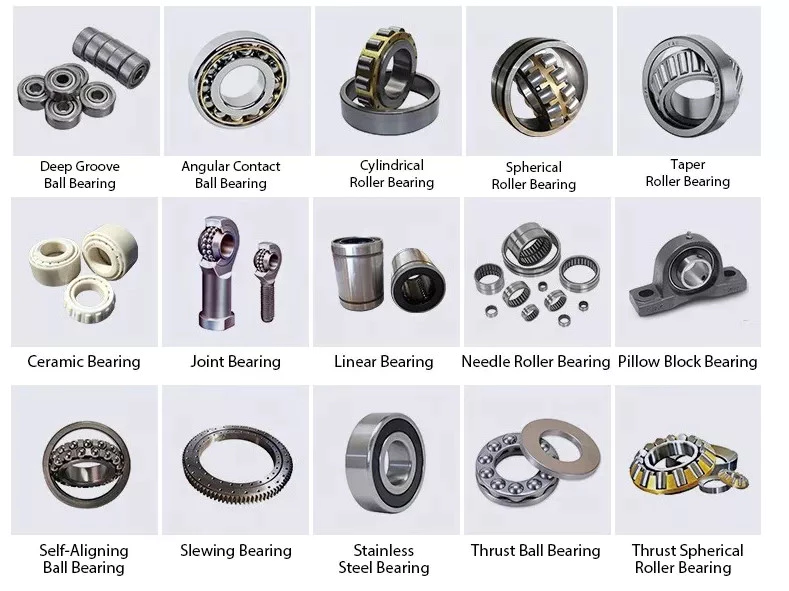
Ball Bearings: Ball bearings come in various designs, including deep groove, angular contact, and thrust ball bearings, each suitable for different applications. Roller Bearings: Roller bearings have diverse types, including cylindrical, spherical, tapered, and needle roller bearings, each optimized for specific load and motion requirements.
Ball Bearings: The reduced friction in ball bearings makes them suitable for high-speed applications, such as electric motors and precision machinery. Roller Bearings: Roller bearings can handle higher loads but are generally better suited for moderate to low speeds due to slightly higher friction.
Ball Bearings: Ball bearings are used in applications where smooth motion, low friction, and moderate loads are essential, such as electric fans, bicycles, and some automotive components. Roller Bearings: Roller bearings find applications in heavy machinery, construction equipment, automotive transmissions, and conveyor systems, where heavier loads and durability are crucial. In summary, ball bearings and roller bearings differ in their design, friction characteristics, load capacities, speed capabilities, and applications. The choice between them depends on the specific requirements of the machinery and the type of loads and forces involved.
China Professional High Quality Machine Tool Spindle Small Car Front Wheel Angular Contact Ball Bearing 7001c CTA Ceta AC B7001c with Hot selling
Item Description
Higher Good quality Device Resource Spindle Tiny Vehicle Front Wheel Angular Get in touch with Ball Bearing 7001C CTA CETA AC B7001C
Item Description Double-row angular contact ball bearings can help axial loads in the two directions and high radial masses. They are notably suitable for bearing arrangements in which rigid axial assistance is required. Single-row angular speak to ball bearings are self-retaining units with solid inner and outer rings and ball and cage assemblies with polyamide, sheet metal or brass cages. The raceways of the interior and outer rings are offset from each and every other alongside the bearing axis. The bearings are offered in open and sealed patterns. Their angular adjustment CZPT is really constrained. Qualities:
Business Profile Started in 1998, ZheJiang XUANYE Precision CZPT Co., Ltd. covers an region of 88,850 square meters. Now the organization has fastened assets above a number of hundred tens of millions and in-service employees 500. As a late-product that incorporates study and improvement, manufacture as well as income, the annual output of the firm reaches to 3 million sets of bearings and its annual output value is more than 28 million yuan.
“Clients very first and reputation 1st” are the long term vision of XUANYE. We would like to serve the buyers around the globe with our CZPT merchandise, reasonable cost and attentive support. The leading products of the organization protect 3 main classes which consist of a lot more than 8,000 types of bearing goods.
Our Positive aspects 1. Globe-Course Bearing: We provide our buyers with all sorts of indigenous bearing with entire world-class quality. two. OEM or Non-Stand Bearings: Any need for Nonstandard bearings is Very easily Fulfilled by us because of to its huge expertise and backlinks in the market. Custom-made MOQ OEM Plan FAQ 1.What is the least purchase quantity for this item? Make sure you come to feel free to get in touch with us, if you have any other concern
Rewards of Ball BearingsWhat is a ball bearing? A ball bearing is a variety of rolling-factor bearing that makes use of balls to keep separation amongst two bearing races. Its get in touch with angle amongst the balls and the races will help it lessen friction in between the masses. There are several benefits to ball bearings, such as their capacity to endure water. Study on to understand much more. Here are a couple of of the rewards. You can use them in your everyday existence, from your automobile to your boat. Ball bearings minimize friction among massesBall bearings lessen friction in between hundreds by constraining the relative motion amongst shifting areas. These bearings consist of a ring of tiny steel balls that lessen friction amongst shifting objects. The name “ball bearing” is derived from the verb “to bear.” The lubricant within the bearing minimizes friction in between shifting particles. In a equipment, ball bearings minimize friction among transferring components and boost linear movement around a set axis. They support radial and axial massesRadial ball bearings are utilized mainly for radial masses, but they also have a ability for axial load. This load ability is typically given as a percentage of the radial load score. Axial load potential is usually greater for a bearing with a more substantial big difference amongst the inner and outer ring diameters. The axial load potential is also affected by the bearing’s raceway depth, with shallow raceways becoming far more suitable for heavier axial loads. They have a get in touch with angle amongst the balls and the racesWhen evaluating axial load bearings with their radial counterparts, the angular get in touch with angle is much more essential. Axial load bearings, have a speak to angle among the balls and the races of 35 degrees. They are appropriate for axial hundreds and a limited radial load. The speak to angle of these bearings is a outcome of the condition of the inner and outer rings. Each rolling aspect comes into speak to with the interior and outer rings only at 1 point, forming a thirty diploma angle with the radial aircraft. The radial force of the axial load on these bearings is for that reason increased by escalating the get in touch with angle in between the balls and the races. They are water-resistantIn addition to their drinking water-resistant characteristics, corrosion-resistant ball bearings can also protect against the harming results of corrosive environments. Typically, standard metals, this kind of as steel, are prone to rust, which can considerably lessen their efficiency and lengthen the daily life of parts. Nevertheless, plastics, stainless steel, and ceramics can give corrosion-resistant ball bearings. And due to the fact these materials are considerably a lot more resilient, they offer you other benefits, these kinds of as being straightforward to keep. They are difficultA number of factors make ball bearings difficult: they’re manufactured of true supplies, which signifies that they have inherent imperfections. Quality-1 balls are made particularly for large-tension applications, this kind of as Method 1 engines. Grade-3 balls, on the other hand, strike the best balance amongst efficiency and cost. Ceramic balls, for illustration, are made to spin at a high price of 400 RPM, and they’re finished with a mirror end. They are conductiveYou may possibly have read the term “ball bearing” if you’ve researched introductory physics. What does that imply? Basically, ball bearings are conductive simply because of their capacity to carry out electricity. This ability is reflected in the demand distribution on the area of the ball. Constructive charges are drawn toward the good plate, whilst adverse costs are drawn absent from the positively charged ball bearing. You could have even observed a ball bearing in action. They are utilised in pulley techniquesPulley techniques use ball bearings to move the sprocket, which is a wheel that rotates. These bearings are installed on the center mounting hole of the pulley wheel. They defend the total method from heat, whilst making it possible for higher pace and sleek operation. They distribute the fat of the load evenly, reducing friction and wobbling, and make sure a sleek rotation. Ball bearings are normally manufactured from metal and are set up inside of the pulley wheel. |