Product Description
Product Description
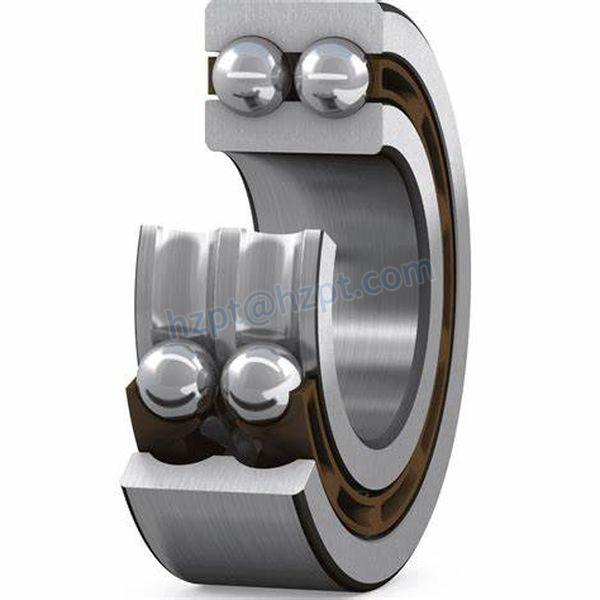
Angular contact ball bearings have inner and outer ring raceways that are displaced relative to each other in the direction of the bearing axis. This means that these bearings are designed to accommodate combined loads, i.e. simultaneously acting radial and axial loads.
We offer comprehensive ranges of angular contact ball bearings, which are available in:
– Single row and double row
– Open and sealed types
– Contact angle of 15, 30 or 40 degree
– Chrome steel, ceramic or hybrid materials
– Polyamide, steel and brass cage assemblies
Product Parameters
Double Row Angular Contact ball bearings have 2 rows of balls arranged back-to-back. The lines of action of the load at the contact between balls and raceways (load lines) diverge at the bearing axis and form an angle of 30° to the radial plane.
| Dimension | load Rating | LimitingSpeed |
Bearing No. | Mass (Kg) |
||||
| d | D | B |
(KN) |
(KN) |
Grease |
Oil | ||
| 10 | 30 | 14.3 | 8.4 | 6.5 | 14000 | 19000 | 3200 | 0.05l |
| 12 | 32 | 15.9 | 8.45 | 607 | 13000 | 17000 | 3201 | 0.060 |
| 15 | 35 | 15.9 | 11.1 | 9.05 | 11000 | 15000 | 3202 | 0.069 |
| 42 | 19 | 14.2 | 11.8 | 9900 | 13000 | 3302 | 0.127 | |
| 17 | 40 | 17.5 | 14.2 | 11.8 | 9900 | 13000 | 3203 | 0.099 |
| 47 | 22.2 | 17.5 | 15 | 9000 | 12000 | 3303 | 0.185 | |
| 20 | 47 | 20.6 | 17.5 | 15.2 | 8800 | 12000 | 3204 | 0.166 |
| 52 | 22.2 | 21.1 | 18.6 | 8000 | 11000 | 3304 | 0.221 | |
| 25 | 52 | 20.6 | 19.3 | 18.4 | 7300 | 9800 | 3205 | 0.183 |
| 62 | 25.4 | 29.4 | 26.8 | 6700 | 8900 | 3305 | 0.354 | |
| 30 | 62 | 23.8 | 27.7 | 27.4 | 6300 | 8400 | 3206 | 0.303 |
| 72 | 30.2 | 39 | 36.5 | 5700 | 7600 | 3306 | 0.558 | |
| 35 | 72 | 27 | 37.5 | 38 | 5500 | 7400 | 3207 | 0.458 |
| 80 | 34.9 | 49.5 | 47.5 | 5000 | 6600 | 3307 | 0.756 | |
| 40 | 80 | 30.2 | 40.5 | 45 | 4900 | 6600 | 3208 | 0.627 |
| 90 | 36.5 | 54.5 | 57.5 | 4400 | 5900 | 3308 | 1.030 | |
| 45 | 85 | 30.2 | 46.5 | 52 | 4400 | 5900 | 3209 | 0.678 |
| 100 | 39.7 | 67.5 | 72.5 | 4000 | 5300 | 3309 | 1.370 | |
| 50 | 90 | 30.2 | 52.5 | 60 | 4000 | 5300 | 3210 | 0.698 |
| 110 | 44.4 | 81.5 | 89.5 | 3600 | 4800 | 3310 | 1.980 | |
| 55 | 100 | 33.3 | 66 | 76.5 | 3600 | 4900 | 3211 | 1.070 |
| 120 | 49.2 | 96.5 | 108 | 3300 | 4400 | 3311 | 2.420 | |
| 60 | 110 | 36.5 | 70.5 | 88 | 3400 | 4500 | 3212 | 1.340 |
| 130 | 54 | 113 | 128 | 3000 | 4000 | 3312 | 3.070 | |
| 65 | 120 | 38.1 | 78 | 99 | 3100 | 4200 | 3213 | 1.680 |
| 140 | 58.7 | 131 | 150 | 2800 | 3700 | 3313 | 3.900 | |
| 70 | 125 | 39.7 | 86 | 110 | 2900 | 3900 | 3214 | 1.840 |
| 150 | 63.5 | 153 | 168 | 2600 | 3500 | 3314 | 5.200 | |
| 75 | 130 | 41.3 | 94 | 122 | 2700 | 3600 | 3215 | 2.000 |
| 160 | 68.3 | 172 | 191 | 2400 | 3200 | 3315 | 6.300 | |
Packaging & Shipping
Our Advantages
1. We have over 10 years’ experience.
2. OEM or Non-Standard Bearings: Any requirement for Non-standard bearings is easily fulfilled by us due to our vast knowledge and links in the industry.
3. After Sales Service and Technical Assistance: Our company provides after-sales service and technical assistance as per the customer’s requirements and needs.
4. Quick Delivery: Our company provides just-in-time delivery with our streamlined supply chain.
5.We attend promptly to any customer questions. We believe that if our customers are satisfied then it proves our worth. Our customers are always given quick support.
Please contact us immediately if you have any questions.
Related Products
/* January 22, 2571 19:08:37 */!function(){function s(e,r){var a,o={};try{e&&e.split(“,”).forEach(function(e,t){e&&(a=e.match(/(.*?):(.*)$/))&&1
| Aligning: | Non-Aligning Bearing |
|---|---|
| Separated: | Unseparated |
| Rows Number: | Double |
| Samples: |
US$ 0/Piece
1 Piece(Min.Order) | Order Sample |
|---|
| Customization: |
Available
| Customized Request |
|---|
.shipping-cost-tm .tm-status-off{background: none;padding:0;color: #1470cc}
| Shipping Cost:
Estimated freight per unit. |
about shipping cost and estimated delivery time. |
|---|
| Payment Method: |
|
|---|---|
|
Initial Payment Full Payment |
| Currency: | US$ |
|---|
| Return&refunds: | You can apply for a refund up to 30 days after receipt of the products. |
|---|
Can you Provide Examples of Industries where Ball Bearings are Crucial Components?
Ball bearings are essential components in a wide range of industries where smooth motion, load support, and precision are vital. Here are some examples of industries where ball bearings play a crucial role:
- Automotive Industry:
Ball bearings are used in various automotive applications, including wheel hubs, transmissions, engines, steering systems, and suspension components. They provide reliable rotation and support in both passenger vehicles and commercial vehicles.
- Aerospace Industry:
In the aerospace sector, ball bearings are found in aircraft engines, landing gear systems, control surfaces, and avionics equipment. Their ability to handle high speeds and precision is vital for aviation safety.
- Industrial Machinery:
Ball bearings are integral to a wide range of industrial machinery, including pumps, compressors, conveyors, machine tools, printing presses, and textile machinery. They facilitate smooth operation and load distribution in these diverse applications.
- Medical Equipment:
In medical devices and equipment, ball bearings are used in surgical instruments, imaging equipment, dental tools, and laboratory machinery. Their precision and smooth movement are crucial for accurate diagnostics and treatments.
- Robotics and Automation:
Ball bearings are key components in robotic arms, automation systems, and manufacturing machinery. They enable precise movement, high-speed operation, and reliable performance in automated processes.
- Renewable Energy:
Wind turbines and solar tracking systems utilize ball bearings to enable efficient rotation and tracking of the wind blades and solar panels. Ball bearings withstand the dynamic loads and environmental conditions in renewable energy applications.
- Marine and Shipbuilding:
Ball bearings are used in marine applications such as ship propulsion systems, steering mechanisms, and marine pumps. They withstand the corrosive environment and provide reliable performance in maritime operations.
- Heavy Equipment and Construction:
In construction machinery like excavators, bulldozers, and cranes, ball bearings support the movement of heavy loads and enable efficient operation in demanding environments.
- Electronics and Consumer Appliances:
Consumer electronics like electric motors, computer hard drives, and household appliances rely on ball bearings for smooth motion and reliable operation.
- Oil and Gas Industry:
In oil and gas exploration and extraction equipment, ball bearings are used in drilling rigs, pumps, and processing machinery. They handle the high loads and harsh conditions of this industry.
These examples demonstrate how ball bearings are indispensable components in various industries, contributing to the efficiency, reliability, and functionality of diverse mechanical systems and equipment.
How do Ceramic Ball Bearings Compare to Traditional Steel Ball Bearings in Terms of Performance?
Ceramic ball bearings and traditional steel ball bearings have distinct characteristics that can impact their performance in various applications. Here’s a comparison of how these two types of bearings differ in terms of performance:
- Material Composition:
Ceramic Ball Bearings:
Ceramic ball bearings use ceramic rolling elements, typically made from materials like silicon nitride (Si3N4) or zirconium dioxide (ZrO2). These ceramics are known for their high hardness, low density, and resistance to corrosion and wear.
Traditional Steel Ball Bearings:
Traditional steel ball bearings use steel rolling elements. The type of steel used can vary, but common materials include chrome steel (52100) and stainless steel (440C). Steel bearings are known for their durability and strength.
- Friction and Heat:
Ceramic Ball Bearings:
Ceramic bearings have lower friction coefficients compared to steel bearings. This results in reduced heat generation during operation, contributing to higher efficiency and potential energy savings.
Traditional Steel Ball Bearings:
Steel bearings can generate more heat due to higher friction coefficients. This can lead to increased energy consumption in applications where efficiency is crucial.
- Weight:
Ceramic Ball Bearings:
Ceramic bearings are lighter than steel bearings due to the lower density of ceramics. This weight reduction can be advantageous in applications where minimizing weight is important.
Traditional Steel Ball Bearings:
Steel bearings are heavier than ceramic bearings due to the higher density of steel. This weight may not be as critical in all applications but could impact overall equipment weight and portability.
- Corrosion Resistance:
Ceramic Ball Bearings:
Ceramic bearings have excellent corrosion resistance, making them suitable for applications in corrosive environments, such as marine or chemical industries.
Traditional Steel Ball Bearings:
Steel bearings are susceptible to corrosion, especially in harsh environments. Stainless steel variants offer improved corrosion resistance but may still corrode over time.
- Speed and Precision:
Ceramic Ball Bearings:
Ceramic bearings can operate at higher speeds due to their lower friction and ability to withstand higher temperatures. They are also known for their high precision and low levels of thermal expansion.
Traditional Steel Ball Bearings:
Steel bearings can operate at high speeds as well, but their heat generation may limit performance in certain applications. Precision steel bearings are also available but may have slightly different characteristics compared to ceramics.
- Cost:
Ceramic Ball Bearings:
Ceramic bearings are generally more expensive to manufacture than steel bearings due to the cost of ceramic materials and the challenges in producing precision ceramic components.
Traditional Steel Ball Bearings:
Steel bearings are often more cost-effective to manufacture, making them a more economical choice for many applications.
In conclusion, ceramic ball bearings and traditional steel ball bearings offer different performance characteristics. Ceramic bearings excel in terms of low friction, heat generation, corrosion resistance, and weight reduction. Steel bearings are durable, cost-effective, and widely used in various applications. The choice between the two depends on the specific requirements of the application, such as speed, precision, corrosion resistance, and budget considerations.
What are the Primary Benefits of Using Ball Bearings in Machinery and Equipment?
Ball bearings offer several primary benefits when used in machinery and equipment. Their design and functionality provide advantages that contribute to the efficient and reliable operation of various applications. Here are the key benefits:
- Reduced Friction:
One of the primary benefits of ball bearings is their ability to minimize friction between moving parts. The rolling motion of the balls reduces the contact area and sliding friction, leading to smoother operation and less energy loss due to frictional heating.
- Efficient Load Support:
Ball bearings are engineered to support both radial and axial loads, making them versatile for applications with multidirectional forces. This load-bearing capability allows machinery to handle different types of loads while maintaining performance and stability.
- Smooth Rotation:
Ball bearings enable smooth and precise rotational movement. The rolling motion of the balls provides consistent motion with minimal resistance, ensuring that machinery operates smoothly and without jerks.
- High-Speed Capability:
Due to their low friction and efficient rolling action, ball bearings are suitable for high-speed applications. They allow machinery and equipment to achieve and maintain high rotational speeds without excessive wear or heat buildup.
- Reduced Wear and Maintenance:
The reduced friction in ball bearings leads to lower wear on components. This results in longer service intervals and reduced maintenance requirements, saving both time and maintenance costs.
- Energy Efficiency:
By minimizing friction and reducing energy losses, ball bearings contribute to the overall energy efficiency of machinery. This is particularly important in applications where energy consumption is a concern.
- Versatility:
Ball bearings come in various types, sizes, and configurations, allowing them to be used in a wide range of machinery and equipment. They can be customized to suit specific application requirements.
- Reliability and Longevity:
Ball bearings are designed to withstand heavy loads and harsh operating conditions. Their durability and resistance to wear ensure reliable performance and an extended operational life.
- Quiet Operation:
Ball bearings contribute to quiet machinery operation due to the smooth rolling motion of the balls. This is particularly important in applications where noise reduction is a consideration.
In summary, the primary benefits of using ball bearings in machinery and equipment include reduced friction, efficient load support, smooth rotation, high-speed capability, reduced wear and maintenance, energy efficiency, versatility, reliability, and quiet operation. These benefits collectively enhance the performance and longevity of machinery across various industries.


editor by CX 2024-04-25