Product Description
Deep Groove Ball Bearing
Deep groove ball bearing consists of an outer ring, an inner ring, a group of steel balls and a group of cages. There are 2 types of deep groove ball bearings: single row and double row. Deep groove ball structure is also divided into seal and open structure. The open type means that the bearing has no sealing structure. The sealed deep groove ball is divided into dust-proof seal and oil-proof seal.
<<Material>> The bearing is made of high-quality bearing steel, good durability, and resistance to heavy loads.
<<Features>> high level of hardness , Dimensional sablility,normal accuracy, less friction, higher speed and low noise
<<Strictly Shielded>> Shields on both sides of the bearing help to keep dust out.
Basic Info.
| Trade Mark | Allout or DEM | |||
|
Product Name |
6207 Deep Groove Ball Bearing |
|||
|
Size |
35X72X17mm; | |||
|
Material |
Stainless Steel ,Chrome Steel |
|||
|
Precision |
P0 P5 P6 |
|||
| Vibration level | V4,V3,V2,V1 | |||
|
Sealing shiled |
opening ball bearing ,unopening ball bearing ,Z,ZZ ,RS,2RS,2RZ |
|||
|
Delivery date |
Normally ready goods and stock within 3-15 days |
|||
|
Payment terms |
A:100% TT |
|||
|
Application |
Auto machinery , electric machinery ,precision machinery ,home appliances ,customization options with drawings |
|||
|
Package |
standered package or Industrial package or customzied package |
|||
|
Details |
Miniature Bearing 1, Robust seals for longer service life 2, Maufacturing percison to meet high-standered requirements 3, Widely used bearing type of machinery |
|||
|
Special properties |
1. High speed and High temperature rsistance |
|||
Product parameter
Why Choose Us ?
1. Dry lube/ Grease/ Oil Related Products
2. Rubber seals/ ZZ metal shields
3. Customized option is available with your drawings
4. High speed
5. Long spin time
6. Low friction
7. Rustproof and corrosion resistance
8. Less maintance
FAQ
Q1: Are you a Manufacturer or trading company?
Answer: We are professional manufactuer of bearings since 1998 with ISO standards.
Q2: Can I get a sample to check out the quality?
Answer: Sure, free samples are available for stock products if you can pay for the shipping cost.
Q3: Do you accept small orders?
Answer:Standard size bearings are available ,but for non-Standard size bearings ,we have MOQ for your option.
Q4: Can you do OEM to print my logo/brand on the products?
Answer: Yes, we can print your logo/brand on the products, you just need to send us your logo/brand files, we will show you how it looks like.We can also make custom package to your request.
Q5: How soon can I expect my order to be finished?
Answer: We have regular stock for standard bearings that can be shipped right after your payment. It will take 15-60 days for new production order,which depends on your order quantity.
Q6: What if I receive defective products for my order?
Answer: All our bearings are 100% inspected strictly before packing. If any defective products received, please provide photos and video to show us the problem and help us improve the quality. New products will be sent to you as replacement if the probelm is product quality.
Q7.How to contact us if you have any questions?
Answer: Please feel free to send us an inquiry or any specific contact information, such as email address, account or account, we are looking forward to keeping you dated.
| Aligning: | Non-Aligning Bearing |
|---|---|
| Separated: | Unseparated |
| Rows Number: | Single |
| Load Direction: | Radial Bearing |
| Material: | Stainless Steel |
| Contact Angle: | 0 |
| Samples: |
US$ 0/Piece
1 Piece(Min.Order) | |
|---|
| Customization: |
Available
| Customized Request |
|---|
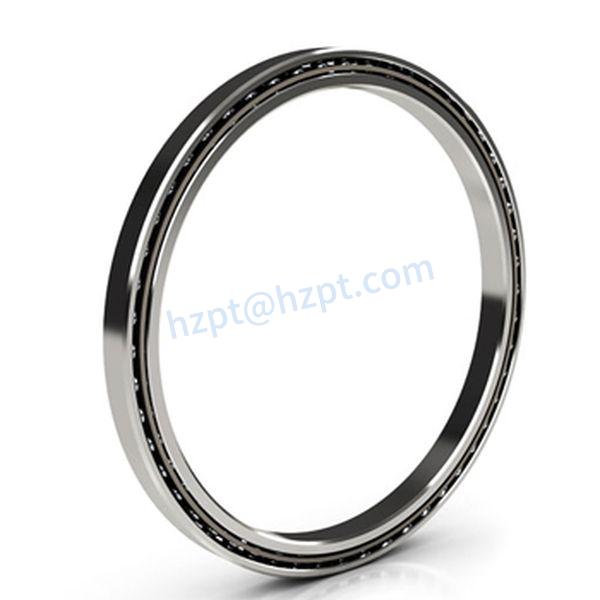
How does Preload Affect the Performance and Efficiency of Ball Bearings?
Preload is a crucial factor in ball bearing design that significantly impacts the performance, efficiency, and overall behavior of the bearings in various applications. Preload refers to the intentional axial force applied to the bearing’s rolling elements before it is mounted. This force eliminates internal clearance and creates contact between the rolling elements and the raceways. Here’s how preload affects ball bearing performance:
- Reduction of Internal Clearance:
Applying preload reduces the internal clearance between the rolling elements and the raceways. This eliminates play within the bearing, ensuring that the rolling elements are in constant contact with the raceways. This reduced internal clearance enhances precision and reduces vibrations during operation.
- Increased Stiffness:
Preloaded bearings are stiffer due to the elimination of internal clearance. This increased stiffness improves the bearing’s ability to handle axial and radial loads with higher accuracy and minimal deflection.
- Minimized Axial Play:
Preload minimizes or eliminates axial play within the bearing. This is especially important in applications where axial movement needs to be minimized, such as machine tool spindles and precision instruments.
- Enhanced Rigidity:
The stiffness resulting from preload enhances the bearing’s rigidity, making it less susceptible to deformation under load. This is critical for maintaining precision and accuracy in applications that require minimal deflection.
- Reduction in Ball Slippage:
Preload reduces the likelihood of ball slippage within the bearing, ensuring consistent contact between the rolling elements and the raceways. This leads to improved efficiency and better load distribution.
- Improved Running Accuracy:
Preloading enhances the running accuracy of the bearing, ensuring that it maintains precise rotational characteristics even under varying loads and speeds. This is essential for applications requiring high accuracy and repeatability.
- Optimized Performance at High Speeds:
Preload helps prevent skidding and slipping of the rolling elements during high-speed operation. This ensures that the bearing remains stable, reducing the risk of noise, vibration, and premature wear.
- Impact on Friction and Heat Generation:
While preload reduces internal clearance and friction, excessive preload can lead to higher friction and increased heat generation. A balance must be struck between optimal preload and minimizing friction-related issues.
- Application-Specific Considerations:
The appropriate amount of preload depends on the application’s requirements, such as load, speed, accuracy, and operating conditions. Over-preloading can lead to increased stress and premature bearing failure, while under-preloading may result in inadequate rigidity and reduced performance.
Overall, preload plays a critical role in optimizing the performance, accuracy, and efficiency of ball bearings. Engineers must carefully determine the right preload level for their specific applications to achieve the desired performance characteristics and avoid potential issues related to overloading or inadequate rigidity.
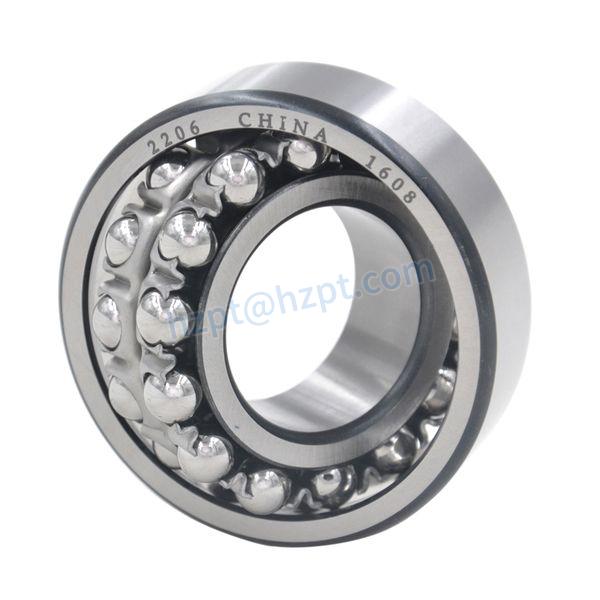
How do Miniature Ball Bearings Differ from Standard-sized Ones, and Where are They Commonly Used?
Miniature ball bearings, as the name suggests, are smaller in size compared to standard-sized ball bearings. They have distinct characteristics and are designed to meet the unique requirements of applications that demand compactness, precision, and efficient rotation in confined spaces. Here’s how miniature ball bearings differ from standard-sized ones and where they are commonly used:
- Size:
The most noticeable difference is their size. Miniature ball bearings typically have outer diameters ranging from a few millimeters to around 30 millimeters, while standard-sized ball bearings have larger dimensions suitable for heavier loads and higher speeds.
- Load Capacity:
Due to their smaller size, miniature ball bearings have lower load-carrying capacities compared to standard-sized bearings. They are designed for light to moderate loads and are often used in applications where precision and compactness are prioritized over heavy load support.
- Precision:
Miniature ball bearings are known for their high precision and accuracy. They are manufactured to tighter tolerances, making them suitable for applications requiring precise motion control and low levels of vibration.
- Speed:
Miniature ball bearings can achieve higher speeds than standard-sized bearings due to their smaller size and lower mass. This makes them ideal for applications involving high-speed rotation.
- Friction and Efficiency:
Miniature ball bearings generally have lower friction due to their smaller contact area. This contributes to higher efficiency and reduced heat generation in applications that require smooth and efficient motion.
- Applications:
Miniature ball bearings find applications in various industries and sectors:
- Electronics and Consumer Devices:
They are used in small motors, computer disk drives, printers, and miniature fans, where space is limited but precise motion is essential.
- Medical and Dental Equipment:
Miniature bearings are used in medical devices such as surgical instruments, dental handpieces, and diagnostic equipment due to their precision and compactness.
- Robotics and Automation:
Miniature ball bearings are integral to robotic arms, miniature conveyors, and automation systems, enabling precise movement in confined spaces.
- Aerospace and Defense:
They are used in applications like UAVs (drones), aerospace actuators, and satellite components where size and weight constraints are critical.
- Optics and Instrumentation:
Miniature bearings play a role in optical instruments, cameras, and measuring devices, providing smooth rotation and accurate positioning.
Overall, miniature ball bearings are specialized components designed for applications where space, precision, and efficient rotation are paramount. Their compactness and high precision make them crucial in various industries requiring reliable motion control in limited spaces.
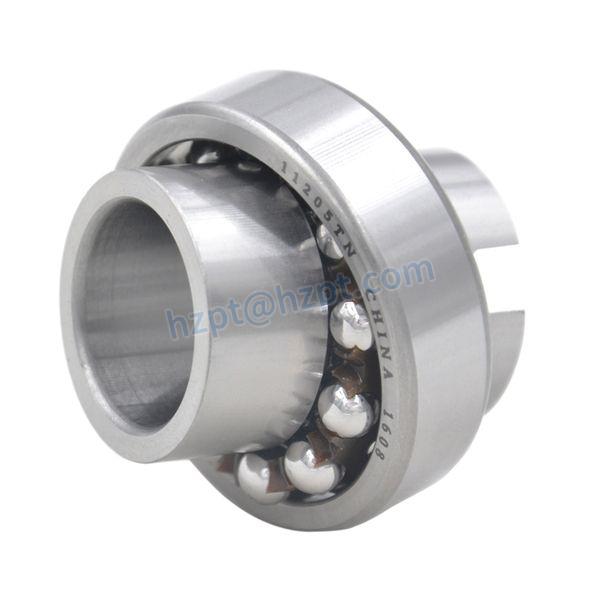
What Factors should be Considered when Selecting a Ball Bearing for a Particular Application?
Selecting the right ball bearing for a specific application involves careful consideration of various factors to ensure optimal performance, longevity, and reliability. Here are the key factors that should be taken into account:
- Load Type and Magnitude:
Determine the type of load (radial, axial, or combined) and the magnitude of the load that the bearing will need to support. Choose a bearing with the appropriate load-carrying capacity to ensure reliable operation.
- Speed and Operating Conditions:
Consider the rotational speed of the application and the operating conditions, such as temperature, humidity, and exposure to contaminants. Different bearing types and materials are suited for varying speeds and environments.
- Accuracy and Precision:
For applications requiring high accuracy and precision, such as machine tool spindles or optical instruments, choose high-precision bearings that can maintain tight tolerances and minimize runout.
- Space Limitations:
If the application has limited space, choose miniature or compact ball bearings that can fit within the available dimensions without compromising performance.
- Thrust and Radial Loads:
Determine whether the application requires predominantly thrust or radial load support. Choose the appropriate type of ball bearing (thrust, radial, or angular contact) based on the primary load direction.
- Alignment and Misalignment:
If the application experiences misalignment between the shaft and housing, consider self-aligning ball bearings that can accommodate angular misalignment.
- Mounting and Installation:
Consider the ease of mounting and dismounting the bearing. Some applications may benefit from features like flanges or snap rings for secure installation.
- Lubrication and Maintenance:
Choose a bearing with appropriate lubrication options based on the application’s speed and temperature range. Consider whether seals or shields are necessary to protect the bearing from contaminants.
- Environmental Conditions:
Factor in the operating environment, including exposure to corrosive substances, chemicals, water, or dust. Choose materials and coatings that can withstand the specific environmental challenges.
- Bearing Material:
Select a bearing material that suits the application’s requirements. Common materials include stainless steel for corrosion resistance and high-carbon chrome steel for general applications.
- Bearing Arrangement:
Consider whether a single-row, double-row, or multiple bearings in a specific arrangement are needed to accommodate the loads and moments present in the application.
By carefully evaluating these factors, engineers and designers can choose the most suitable ball bearing that aligns with the specific demands of the application, ensuring optimal performance, durability, and overall operational efficiency.


editor by CX 2023-11-17