Product Description
Product Description
Bearing No. 6206-2RS/6206-2RZ-deep groove ball bearing-radial ball bearing
·Dimensions: 30x62x16mm
·Rubber seal on both sides
·100% Chrome Steel for higher resistance and durability
·Supports 8,700 rpm with grease, 10000 rpm with oil
·Our high-quality bearing is made to reduce your replacement frequency and maintenance cost
Specifications for this item
Bearing Type: deep groove ball bearing-high speed electric motor bearing,water pump bearing
Brand: HXB or OEM brand
Material: chrome steel GCr15, AISL52100, SUJ2
Part No.: 6206-2RS, 6206-2RZ, 6206-DD,6206-DDU,6206-LLU
Clearance: C2, CM, C0, C3
Vibration: ZV2,ZV3,ZV4
Precision Class: P0, P6, P5, ABEC-1, ABEC-3,ABEC-5
Application: electric motor, motorcycle, household appliance, electric tools, water pump
| Bearing Number | Boundary dimensions(mm) | Load Rating(KN) | Limiting Speed(rpm) | Weight(kg) | |||||
| d | D | B | rmin | Cr | Cor | Grease | Oil | ||
| 6000 | 10 | 26 | 8 | 0.3 | 4.55 | 1.96 | 29000 | 34000 | 0.019 |
| 6200 | 30 | 9 | 0.6 | 5.10 | 2.39 | 25000 | 30000 | 0.032 | |
| 6300 | 35 | 11 | 0.6 | 8.20 | 3.50 | 23000 | 27000 | 0.052 | |
| 6001 | 12 | 28 | 8 | 0.3 | 5.10 | 2.39 | 26000 | 30000 | 0.571 |
| 6201 | 32 | 10 | 0.6 | 6.10 | 2.75 | 22000 | 26000 | 0.035 | |
| 6301 | 37 | 12 | 1.0 | 9.70 | 4.20 | 20000 | 24000 | 0.051 | |
| 6002 | 15 | 32 | 9 | 0.3 | 5.60 | 2.84 | 22000 | 26000 | 0.031 |
| 6202 | 35 | 11 | 0.6 | 7.75 | 3.60 | 19000 | 23000 | 0.045 | |
| 6302 | 42 | 13 | 1.0 | 11.40 | 5.45 | 17000 | 21000 | 0.080 | |
| 6003 | 17 | 35 | 10 | 0.3 | 6.80 | 3.35 | 20000 | 24000 | 0.040 |
| 6203 | 40 | 12 | 0.6 | 9.60 | 4.60 | 18000 | 21000 | 0.064 | |
| 6303 | 47 | 14 | 1.0 | 13.50 | 6.55 | 16000 | 19000 | 0.109 | |
| 6004 | 20 | 42 | 12 | 0.6 | 9.40 | 5.05 | 18000 | 21000 | 0.068 |
| 6204 | 47 | 14 | 1.0 | 12.80 | 6.65 | 16000 | 18000 | 0.103 | |
| 6304 | 52 | 15 | 1.1 | 15.90 | 7.90 | 14000 | 17000 | 0.142 | |
| 6005 | 25 | 47 | 12 | 0.6 | 10.10 | 5.85 | 15000 | 18000 | 0.078 |
| 6205 | 52 | 15 | 1.0 | 14.00 | 7.85 | 13000 | 15000 | 0.127 | |
| 6305 | 62 | 17 | 1.1 | 21.20 | 10.90 | 12000 | 14000 | 0.219 | |
| 6006 | 30 | 55 | 13 | 1.0 | 13.20 | 8.30 | 13000 | 15000 | 0.110 |
| 6206 | 62 | 16 | 1.0 | 19.50 | 11.30 | 11000 | 13000 | 0.200 | |
| 6306 | 72 | 19 | 1.1 | 26.70 | 15.00 | 10000 | 12000 | 0.349 | |
| 6007 | 35 | 62 | 14 | 1.0 | 16.00 | 10.30 | 12000 | 14000 | 0.148 |
| 6207 | 72 | 17 | 1.1 | 25.70 | 15.30 | 9800 | 11000 | 0.288 | |
| 6307 | 80 | 21 | 1.5 | 33.50 | 19.10 | 8800 | 10000 | 0.455 | |
| 6008 | 40 | 68 | 15 | 1.0 | 16.80 | 11.50 | 10000 | 12000 | 0.185 |
| 6208 | 80 | 18 | 1.1 | 29.10 | 17.80 | 8700 | 10000 | 0.368 | |
| 6308 | 90 | 23 | 1.5 | 40.50 | 24.00 | 7800 | 92000 | 0.639 | |
| 6009 | 45 | 75 | 16 | 1.0 | 21.00 | 15.10 | 9200 | 11000 | 0.230 |
| 6209 | 85 | 19 | 1.1 | 32.50 | 20.40 | 7800 | 9200 | 0.414 | |
| 6309 | 100 | 25 | 1.5 | 53.00 | 32.00 | 7000 | 8200 | 0.837 | |
| 6571 | 50 | 80 | 16 | 1.0 | 21.80 | 16.60 | 8400 | 9800 | 0.258 |
| 6210 | 90 | 20 | 1.1 | 35.00 | 23.20 | 7100 | 8300 | 0.463 | |
| 6310 | 110 | 27 | 2.0 | 62.00 | 38.50 | 6400 | 7500 | 1.082 | |
| 6011 | 55 | 90 | 18 | 1.1 | 28.30 | 21.20 | 7700 | 9000 | 0.383 |
| 6211 | 100 | 21 | 1.5 | 43.50 | 29.20 | 6400 | 7600 | 0.603 | |
| 6311 | 120 | 29 | 2.0 | 71.50 | 45.00 | 5800 | 6800 | 1.355 | |
| 6012 | 60 | 95 | 18 | 1.1 | 29.50 | 23.20 | 7000 | 8300 | 0.391 |
| 6212 | 110 | 22 | 1.5 | 52.50 | 36.00 | 6000 | 7000 | 0.780 | |
| 6312 | 130 | 31 | 2.1 | 82.00 | 52.00 | 5400 | 6300 | 1.710 | |
| 6013 | 65 | 100 | 18 | 1.1 | 30.5 | 25.2 | 6500 | 7700 | 0.41 |
| 6213 | 120 | 23 | 1.5 | 57.5 | 40 | 5500 | 6500 | 0.957 | |
| 6313 | 140 | 33 | 2.1 | 92.5 | 60 | 4900 | 5800 | 2.1 | |
| 6014 | 70 | 110 | 20 | 1.1 | 38.00 | 31.00 | 6100 | 7100 | 0.575 |
| 6214 | 125 | 24 | 1.5 | 62.00 | 44.00 | 5100 | 6000 | 1.100 | |
| 6314 | 150 | 35 | 2.1 | 104.00 | 68.00 | 4600 | 5400 | 2.550 | |
Application
Company Profile
Established in 1995, as a leading ball bearing manufacturer in China, HXB offers more than 1,000 kinds of ball bearing to fulfill our customers’ needs. With excellent production team and technical team, we can supply high quality products consistently.
After more than 20 years of development, HXB’s main products involves deep groove ball bearings, angular contact ball bearings, high precision spindle bearings, etc. Our bearings are wildly used in electric motors, machinery tool spindle, CNC, NEVs and other fields.
| Precision Class: | P6 |
|---|---|
| Noise&Vibration: | Zv3 |
| Clearance: | C0 |
| Grease: | Bld-K |
| Rows Number: | Single |
| Load Direction: | Radial Bearing |
| Samples: |
US$ 1/Piece
1 Piece(Min.Order) | |
|---|
| Customization: |
Available
| Customized Request |
|---|
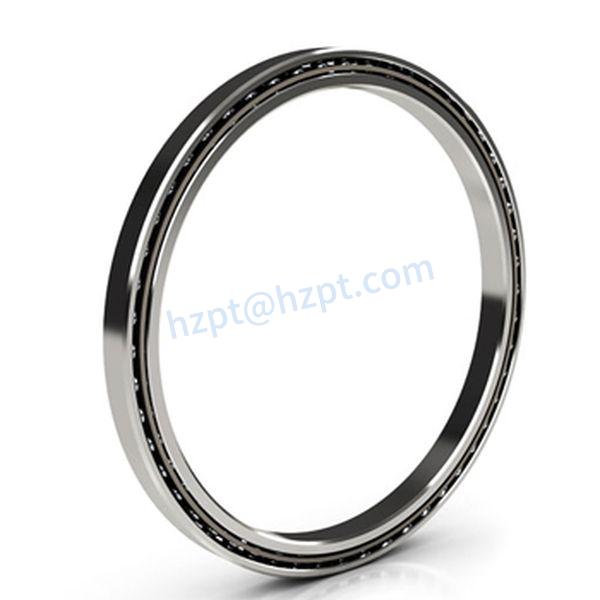
How does Preload Affect the Performance and Efficiency of Ball Bearings?
Preload is a crucial factor in ball bearing design that significantly impacts the performance, efficiency, and overall behavior of the bearings in various applications. Preload refers to the intentional axial force applied to the bearing’s rolling elements before it is mounted. This force eliminates internal clearance and creates contact between the rolling elements and the raceways. Here’s how preload affects ball bearing performance:
- Reduction of Internal Clearance:
Applying preload reduces the internal clearance between the rolling elements and the raceways. This eliminates play within the bearing, ensuring that the rolling elements are in constant contact with the raceways. This reduced internal clearance enhances precision and reduces vibrations during operation.
- Increased Stiffness:
Preloaded bearings are stiffer due to the elimination of internal clearance. This increased stiffness improves the bearing’s ability to handle axial and radial loads with higher accuracy and minimal deflection.
- Minimized Axial Play:
Preload minimizes or eliminates axial play within the bearing. This is especially important in applications where axial movement needs to be minimized, such as machine tool spindles and precision instruments.
- Enhanced Rigidity:
The stiffness resulting from preload enhances the bearing’s rigidity, making it less susceptible to deformation under load. This is critical for maintaining precision and accuracy in applications that require minimal deflection.
- Reduction in Ball Slippage:
Preload reduces the likelihood of ball slippage within the bearing, ensuring consistent contact between the rolling elements and the raceways. This leads to improved efficiency and better load distribution.
- Improved Running Accuracy:
Preloading enhances the running accuracy of the bearing, ensuring that it maintains precise rotational characteristics even under varying loads and speeds. This is essential for applications requiring high accuracy and repeatability.
- Optimized Performance at High Speeds:
Preload helps prevent skidding and slipping of the rolling elements during high-speed operation. This ensures that the bearing remains stable, reducing the risk of noise, vibration, and premature wear.
- Impact on Friction and Heat Generation:
While preload reduces internal clearance and friction, excessive preload can lead to higher friction and increased heat generation. A balance must be struck between optimal preload and minimizing friction-related issues.
- Application-Specific Considerations:
The appropriate amount of preload depends on the application’s requirements, such as load, speed, accuracy, and operating conditions. Over-preloading can lead to increased stress and premature bearing failure, while under-preloading may result in inadequate rigidity and reduced performance.
Overall, preload plays a critical role in optimizing the performance, accuracy, and efficiency of ball bearings. Engineers must carefully determine the right preload level for their specific applications to achieve the desired performance characteristics and avoid potential issues related to overloading or inadequate rigidity.
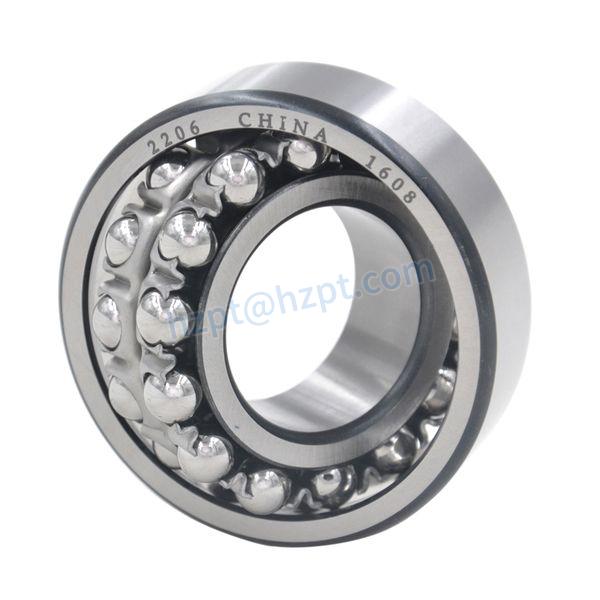
How do Miniature Ball Bearings Differ from Standard-sized Ones, and Where are They Commonly Used?
Miniature ball bearings, as the name suggests, are smaller in size compared to standard-sized ball bearings. They have distinct characteristics and are designed to meet the unique requirements of applications that demand compactness, precision, and efficient rotation in confined spaces. Here’s how miniature ball bearings differ from standard-sized ones and where they are commonly used:
- Size:
The most noticeable difference is their size. Miniature ball bearings typically have outer diameters ranging from a few millimeters to around 30 millimeters, while standard-sized ball bearings have larger dimensions suitable for heavier loads and higher speeds.
- Load Capacity:
Due to their smaller size, miniature ball bearings have lower load-carrying capacities compared to standard-sized bearings. They are designed for light to moderate loads and are often used in applications where precision and compactness are prioritized over heavy load support.
- Precision:
Miniature ball bearings are known for their high precision and accuracy. They are manufactured to tighter tolerances, making them suitable for applications requiring precise motion control and low levels of vibration.
- Speed:
Miniature ball bearings can achieve higher speeds than standard-sized bearings due to their smaller size and lower mass. This makes them ideal for applications involving high-speed rotation.
- Friction and Efficiency:
Miniature ball bearings generally have lower friction due to their smaller contact area. This contributes to higher efficiency and reduced heat generation in applications that require smooth and efficient motion.
- Applications:
Miniature ball bearings find applications in various industries and sectors:
- Electronics and Consumer Devices:
They are used in small motors, computer disk drives, printers, and miniature fans, where space is limited but precise motion is essential.
- Medical and Dental Equipment:
Miniature bearings are used in medical devices such as surgical instruments, dental handpieces, and diagnostic equipment due to their precision and compactness.
- Robotics and Automation:
Miniature ball bearings are integral to robotic arms, miniature conveyors, and automation systems, enabling precise movement in confined spaces.
- Aerospace and Defense:
They are used in applications like UAVs (drones), aerospace actuators, and satellite components where size and weight constraints are critical.
- Optics and Instrumentation:
Miniature bearings play a role in optical instruments, cameras, and measuring devices, providing smooth rotation and accurate positioning.
Overall, miniature ball bearings are specialized components designed for applications where space, precision, and efficient rotation are paramount. Their compactness and high precision make them crucial in various industries requiring reliable motion control in limited spaces.
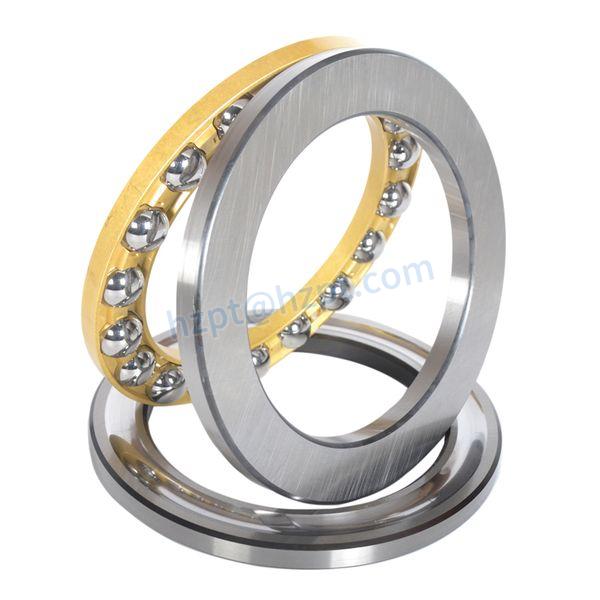
What are the Primary Benefits of Using Ball Bearings in Machinery and Equipment?
Ball bearings offer several primary benefits when used in machinery and equipment. Their design and functionality provide advantages that contribute to the efficient and reliable operation of various applications. Here are the key benefits:
- Reduced Friction:
One of the primary benefits of ball bearings is their ability to minimize friction between moving parts. The rolling motion of the balls reduces the contact area and sliding friction, leading to smoother operation and less energy loss due to frictional heating.
- Efficient Load Support:
Ball bearings are engineered to support both radial and axial loads, making them versatile for applications with multidirectional forces. This load-bearing capability allows machinery to handle different types of loads while maintaining performance and stability.
- Smooth Rotation:
Ball bearings enable smooth and precise rotational movement. The rolling motion of the balls provides consistent motion with minimal resistance, ensuring that machinery operates smoothly and without jerks.
- High-Speed Capability:
Due to their low friction and efficient rolling action, ball bearings are suitable for high-speed applications. They allow machinery and equipment to achieve and maintain high rotational speeds without excessive wear or heat buildup.
- Reduced Wear and Maintenance:
The reduced friction in ball bearings leads to lower wear on components. This results in longer service intervals and reduced maintenance requirements, saving both time and maintenance costs.
- Energy Efficiency:
By minimizing friction and reducing energy losses, ball bearings contribute to the overall energy efficiency of machinery. This is particularly important in applications where energy consumption is a concern.
- Versatility:
Ball bearings come in various types, sizes, and configurations, allowing them to be used in a wide range of machinery and equipment. They can be customized to suit specific application requirements.
- Reliability and Longevity:
Ball bearings are designed to withstand heavy loads and harsh operating conditions. Their durability and resistance to wear ensure reliable performance and an extended operational life.
- Quiet Operation:
Ball bearings contribute to quiet machinery operation due to the smooth rolling motion of the balls. This is particularly important in applications where noise reduction is a consideration.
In summary, the primary benefits of using ball bearings in machinery and equipment include reduced friction, efficient load support, smooth rotation, high-speed capability, reduced wear and maintenance, energy efficiency, versatility, reliability, and quiet operation. These benefits collectively enhance the performance and longevity of machinery across various industries.


editor by CX 2023-11-09